Households with several regular decaf drinkers
If several people share the beans, a 500 g or 1 kg pack may be practical. Estimate how quickly you will finish it after opening rather than choosing by pack size alone.


Choose a decaf bean pack that your household can finish while it still tastes good, then check that its stated brewing guidance and flavour profile suit the people drinking it. A 500 g bag is worth considering for regular shared use; a 200–250 g pack makes more sense when decaf use varies, while a 1 kg bag calls for consistently high use. Decaf does not necessarily mean caffeine-free, so check the current pack if residual caffeine matters.
If several people share the beans, a 500 g or 1 kg pack may be practical. Estimate how quickly you will finish it after opening rather than choosing by pack size alone.
For evenings, guests or one occasional decaf drinker, a 200–250 g pack may be easier to finish. Taylors of Harrogate and Waitrose give a two-week post-opening best-taste window for their listed beans.
Espresso, moka, filter, cafetière and bean-to-cup equipment can call for different preparation. Check the product’s brewing guidance and grind whole beans for the equipment you use.
Start with the amount of decaf your household actually drinks, then narrow the choice by brewing method, flavour and any need to check residual caffeine.
| Priority | What to check | Your needs |
|---|---|---|
| Pack size | Compare the pack weight with how quickly you use decaf. Taylors of Harrogate and Waitrose advise using their listed beans within two weeks of opening for the best taste. | Several of us drink decaf regularly, so a larger bag may get used promptly. If demand changes from week to week, I would rather open a smaller pack. |
| Storage | Follow the pack instructions after opening. KitchenAid UK advises protecting beans from air, light, heat and moisture and keeping them somewhere cool, dark and dry. | I need a way to keep an opened bag properly between family coffees, especially if it will last more than a few days. |
| Brewing method | Check the stated preparation methods and grind guidance for your main machine. Lavazza lists espresso, moka and filter for Decaf Intenso; Union recommends espresso or bean-to-cup preparation for its Decaf Blend. | Our main brewer needs to suit the beans I choose. If we use more than one method, I will adjust the grind rather than use one setting for everything. |
| Flavour profile | Compare the supplier’s roast and flavour descriptions with household preferences. Treat tasting notes as a guide to style, not a promise that everyone will taste the same thing. | We are more likely to finish a shared bag if its roast and flavour suit the people who drink it most often. |
| Residual caffeine | Read the current pack’s caffeine statement if a precise limit matters. Illy UK states that its listed 250 g decaf beans contain no more than 0.1% caffeine; that does not mean zero. | Someone in our household may need more certainty than the word ‘decaf’ provides. For a medical restriction, we will seek personalised clinical advice. |
Decaffeinated beans can still contain caffeine. Illy UK states a content of no more than 0.1% for its listed 250 g decaf beans, rather than zero.
Check the current pack when residual caffeine matters. If someone has a medical restriction, seek personalised clinical advice.
Taylors of Harrogate and Waitrose advise using their listed beans within two weeks of opening for the best taste. A household with irregular decaf use may struggle to finish a large opened bag promptly.
Estimate how much decaf you make in a typical fortnight and choose a pack size accordingly. Store opened beans as the supplier directs.
An unfinished bag can leave you with beans whose flavour has deteriorated before you use them.
Product guidance distinguishes between preparations such as espresso, filter and cafetière. A grind that suits one method may not suit another.
Check the bean supplier’s preparation advice and set the grinder for the equipment you are using.
These range examples can help you compare pack formats and brewing guidance; a brand reference does not mean every product in its range has the same characteristics.
Lavazza UK lists Decaf Intenso as a 500 g whole-bean option for households considering a larger shared bag.
The No.1 Organic Fairtrade Peru Decaf is a 227 g whole-bean option for households that prefer a smaller bag.
Decaffé Beans come in a 200 g whole-bean pack. The supplier describes a natural-water decaffeination method.
Union lists a 1 kg whole-bean Decaf Blend and recommends espresso or bean-to-cup preparation.
Illy UK lists decaffeinated whole beans in a 250 g can.
M&S lists a coffee-bean range and a separate decaf ground-coffee product.
These two whole-bean options cover different pack sizes for a household shop: 500 g for regular shared use and 200 g for more variable decaf drinking. Check the exact listing and pack for details that matter to your brewer or caffeine requirements.
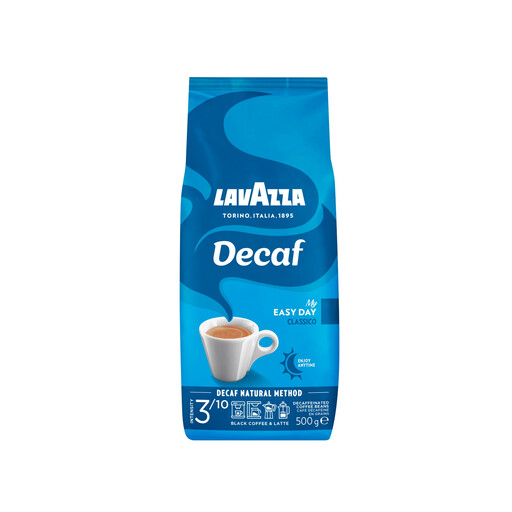 No image available
The 500 g pack is worth considering when several people regularly drink decaf. Plan how quickly you will use it after opening; the listing advises cool, dry storage in an airtight container. Check the current product’s brewing guidance for your equipment.
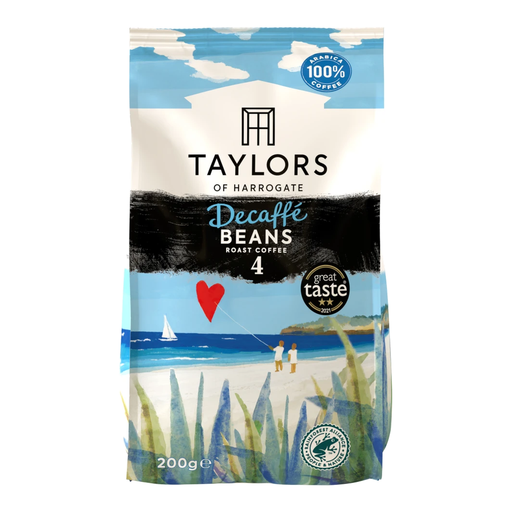 No image available
The 200 g pack may suit a household that drinks decaf less consistently. The listing advises using the beans within two weeks of opening and keeping them sealed, cool and dry. Check the current pack’s brewing and caffeine information where those details affect your choice.
No. Illy UK states that its listed 250 g decaf beans contain no more than 0.1% caffeine, which is not zero. Check the current pack if the amount matters; for a medical restriction, seek personalised clinical advice.
No. Choose a size your household can use while the beans remain enjoyable after opening. Taylors of Harrogate and Waitrose advise using their listed beans within two weeks of opening for the best taste, so a smaller pack may suit irregular decaf use.
Follow the instructions on the pack. Taylors advises sealing its listed beans and keeping them cool and dry; KitchenAid UK recommends a cool, dark, dry place that protects beans from air, light, heat and moisture.
It can if the product guidance covers your brewing methods and you grind the beans appropriately for each one. Lavazza lists espresso, moka and filter for Decaf Intenso, while illy lists moka, filter, espresso and lungo for its decaf beans.
Check the exact product name, quantity, ingredients, date marking and storage directions, along with any caffeine statement relevant to your household. GOV.UK’s pre-packed food guidance identifies required labelling information including the food name, ingredients and allergens, quantity, date marking and the responsible food business operator.