Afternoon coffee drinkers reducing caffeine
Whole-bean decaf keeps freshly ground coffee in the afternoon routine. It can still contain caffeine, so check the product declaration if the amount matters to you.


Choose whole-bean decaf for an afternoon break by your brewer and the cup style you enjoy, rather than by roast intensity alone. Waitrose & Partners describes Taylors Decaffé as smooth and balanced and its No.1 Peru beans as sweeter with lemon acidity; Union recommends its darker Decaf Blend for espresso or bean-to-cup brewing. Check pack size against how often you make coffee, and do not assume decaf means caffeine-free.
The useful starting point is whether you are changing your caffeine intake, matching beans to a brewer or looking for a particular flavour.
Whole-bean decaf keeps freshly ground coffee in the afternoon routine. It can still contain caffeine, so check the product declaration if the amount matters to you.
An espresso machine, bean-to-cup machine, moka pot, filter brewer and cafetière call for different preparation choices. Check the beans’ stated brewing guidance before choosing a flavour profile.
A balanced caramel-and-malt description, brighter lemon-and-caramel notes and a dark-roast espresso profile point to different tastes. Retailer and brand tasting notes are useful for narrowing the choice, not a guarantee of how every cup will taste.
Start with the coffee’s decaf declaration and your brewing equipment. Then compare stated flavour and pack size for the way you use beans during the week.
| Priority | What to check | Your needs |
|---|---|---|
| Decaf declaration | Check that the beans are labelled decaffeinated. If you need an exact product declaration, check the pack: Waitrose & Partners states no more than 0.10% caffeine for Lavazza Decaf Classico, and illy UK states no more than 0.1% for its Whole Bean Decaffeinated Coffee. | I want an afternoon coffee with less caffeine, without treating the word ‘decaf’ as a promise of none. |
| Brewing method | Look for guidance for your brewer and grind. Waitrose & Partners gives espresso, filter and cafetière grind guidance for Taylors Decaffé; illy UK lists moka, filter, espresso and lungo preparations. Union recommends its Decaf Blend for espresso or bean-to-cup brewing. | My beans need to work with the equipment I already use, whether that is a cafetière, filter brewer or espresso machine. |
| Cup style | Compare the stated roast, body and tasting notes rather than intensity numbers across different brands. Waitrose & Partners describes Taylors Decaffé as smooth with caramel and malt notes and Waitrose No.1 Peru as sweet with lemon acidity and caramel; Union describes its dark-roast blend with chocolate and caramel notes. | For a relaxed break, I might prefer a balanced or brighter cup; on another day, I may want the darker style Union describes. |
| Pack size and use | Check the quantity and the product’s advice after opening. Waitrose & Partners lists a 200g Taylors bag and advises consuming opened beans within two weeks. Lavazza decaf options described by Waitrose & Partners and Lavazza UK come in 500g packs. | If I make decaf only occasionally, I need a pack I can use at a pace that suits its freshness guidance. |
Decaffeinated beans can retain caffeine. Product declarations also refer to the beans, not a guaranteed caffeine amount in every prepared cup.
Check the specific pack declaration if residual caffeine matters to your choice. Lavazza Decaf Classico and illy Whole Bean Decaffeinated Coffee each have declarations of no more than 0.1% in their respective retailer or brand information.
A flavour description does not tell you which preparation the supplier recommends. Union positions its Decaf Blend particularly for espresso or bean-to-cup brewing, while Taylors Decaffé has guidance for espresso, filter and cafetière grinds.
Check brewing guidance first, then choose between the stated roast and tasting notes. Where grind guidance is given, follow the setting for your method.
Beans may remain open longer than the supplier recommends if you only make decaf during occasional afternoon breaks. Waitrose & Partners advises consuming opened Taylors Decaffé beans within two weeks.
Compare pack size with how quickly you expect to use it, and follow the storage and after-opening advice on the product you buy.
Descriptions such as ‘caramel’, ‘lemon acidity’ and ‘chocolate’ come from retailer or brand product information. They help distinguish styles but do not establish which coffee every drinker will prefer.
Use the notes to shortlist a cup style, then consider a smaller pack when trying an unfamiliar profile.
These descriptions concern particular decaf beans, not every coffee made by each brand or what is available in the Joybuy selection below.
Decaffé Beans are a whole-bean option for a balanced cup and several home-brewing methods.
The Peru decaf beans offer a medium-roast, 100% Arabica option with Organic and Fairtrade labelling.
Classico and Intenso are distinct 500g whole-bean decaf options; their stated profiles should not be treated as interchangeable.
Whole Bean Decaffeinated Coffee is a 250g, 100% Arabica option for households using more than one brewing method.
Decaf Blend is a dark-roast option aimed particularly at espresso and bean-to-cup preparation.
Roast & Ritual Decaf Coffee Beans are a 227g Arabica whole-bean option described by M&S as bold and rich.
These whole-bean decaf options cover a 200g Taylors pack for a balanced afternoon cup and a 500g Lavazza pack with stated caramel and chocolate notes. Check the Lavazza pack for brewing guidance rather than applying details from a differently named Lavazza blend.
 No image available
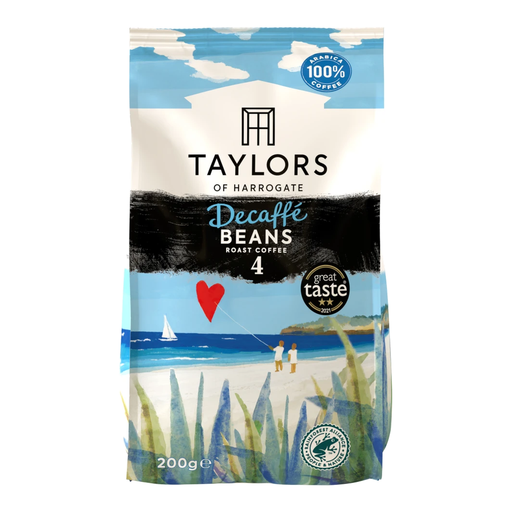
For an afternoon cup when you prefer a smooth profile, the matching Taylors product information describes caramel and malt notes and gives grind guidance for espresso, filter and cafetière. These are 100% Arabica, water-decaffeinated beans; the product advises consuming them within two weeks of opening. Check the pack if you need its specific residual-caffeine declaration.
 No image available
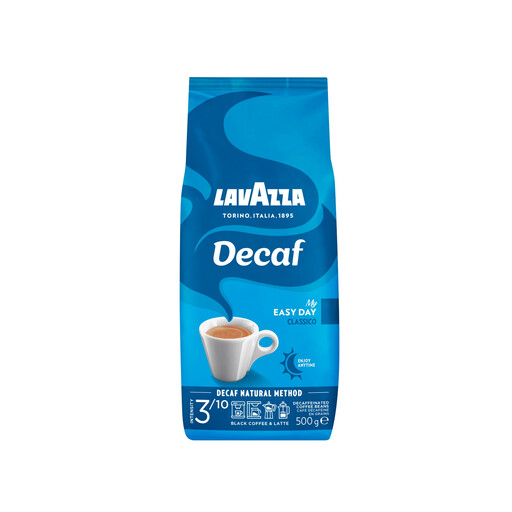
For a larger pack, this whole-bean decaf is described with caramel, chocolate and fruity notes. Its product information advises airtight storage after opening. Check the pack for brewing-method guidance, an after-opening period and a specific caffeine declaration if those details affect your choice; do not assume it has the specifications of Lavazza Classico or Intenso.
No. Decaffeinated coffee can retain caffeine. If the amount matters to you, check the declaration for the exact product: Waitrose & Partners states no more than 0.10% for Lavazza Decaf Classico, while illy UK states no more than 0.1% for its Whole Bean Decaffeinated Coffee.
Taylors Decaffé and Waitrose No.1 Peru both have cafetière and filter grind guidance from Waitrose & Partners; illy UK also lists filter coffee as a suitable preparation for its whole-bean decaf. After matching your brewer, choose between Taylors’ stated caramel-and-malt profile and the brighter lemon-and-caramel description of Waitrose No.1 Peru.
Consider the stated styles and preparation guidance for Lavazza Decaf Intenso and Union Decaf Blend. Lavazza UK describes Intenso as medium-dark with tobacco and woody notes and lists espresso among its preparations; Union describes a dark roast with chocolate and caramel notes and recommends espresso or bean-to-cup brewing.
Follow the instructions for the beans you buy rather than applying one storage period to every pack. Waitrose & Partners advises consuming opened Taylors Decaffé beans within two weeks; M&S advises an airtight container for its Roast & Ritual beans, with two weeks in the refrigerator or four weeks in the freezer.