Hosts with a grinder or bean-to-cup machine
Choose beans guests can prepare with the equipment in the cottage. If there is a separate grinder, leave straightforward instructions for the brewer alongside it.


Provide whole-bean decaf only if the cottage has a grinder or bean-to-cup machine. For irregular stays, a 200–250g bag is easier to use promptly after opening; a 500g bag makes more sense when coffee use is consistently high. Match the beans to the brewer, follow the pack’s storage guidance and label them as decaf rather than caffeine-free.
Choose beans guests can prepare with the equipment in the cottage. If there is a separate grinder, leave straightforward instructions for the brewer alongside it.
A smaller bag may be easier to finish between short or irregular stays. Check the exact product’s instructions for storage and use after opening.
Roast and flavour descriptions can help guests recognise the coffee on offer. Keep the original packaging available so they can check product-specific information, including any caffeine statement.
Start with the cottage’s coffee equipment, then choose a bag size that fits how quickly opened beans are likely to be used.
| Priority | What to check | Your needs |
|---|---|---|
| Equipment | Confirm there is a grinder or bean-to-cup machine. Check the product’s stated brew methods and provide the appropriate grind instructions; Waitrose & Partners gives coarse guidance for cafetière, medium for filter and fine for espresso. | I want guests to be able to make coffee with the equipment supplied, without having to bring their own grinder. |
| Pack size and storage | Compare the bag size with expected use between stays. Waitrose & Partners advises using its No.1 Peru decaf beans within two weeks of opening for the best taste; its Taylors Decaffé listing also gives a two-week opened-pack period. | If bookings are irregular, I would rather open a smaller bag than leave much of a 500g bag between stays. |
| Caffeine information | Check the exact product’s caffeine statement if guests need one. illy states that its 250g whole-bean decaf contains no more than 0.1% caffeine; that figure does not describe other coffees. | I need to label the coffee accurately as decaf, without promising guests that it contains no caffeine. |
| Flavour and process | Read the product’s roast and flavour description, as well as any stated decaffeination method. A water or carbon-dioxide process does not, by itself, establish which coffee guests will prefer. | For a shared cottage supply, I want to know what the coffee is likely to taste like rather than choosing it by process name alone. |
Whole beans cannot be brewed as supplied. Guests also need a grind suited to the cottage’s brewer.
Check the equipment before ordering. Provide a grinder and simple instructions, or choose a decaf format that works with the brewer already there.
An opened bag may remain between stays. Waitrose & Partners gives a two-week opened-pack period for its Taylors and No.1 Peru decaf bean listings.
Consider a 200–250g pack when use is irregular; reserve a 500g pack for a cottage where coffee is used consistently.
Decaf need not mean zero caffeine: illy states that its 250g whole-bean decaf contains no more than 0.1% caffeine.
Label the provision as decaf coffee beans and retain its packaging for guests who want to check the exact product.
A stated process tells you how a particular coffee is described, not whether its flavour or brew suitability will work for every guest.
Check the exact product’s process if it matters to you, then consider its pack size, brewer guidance and flavour description too.
These examples illustrate different pack sizes and product descriptions; check the exact coffee rather than applying one product’s details to an entire brand.
Lavazza UK lists Decaf Intenso as a 500g whole-bean coffee for espresso, filter, French press and moka preparation.
illy UK lists a 250g whole-bean decaf with stated suitability for moka, filter, espresso and lungo coffee.
Waitrose & Partners lists Taylors Decaffé Beans in a 200g pack, with grind guidance for espresso, filter and cafetière.
Union Coffee recommends its Decaf Blend and Decaf Maraba for espresso or bean-to-cup preparation.
Marks & Spencer lists Eat Well Roast and Ritual Decaf Coffee Beans in a 227g pack alongside other decaf formats.
Waitrose & Partners lists No.1 Organic Fairtrade Peru Decaf Coffee Beans and gives instructions for grinding and storing this product.
These whole-bean options suit different levels of coffee use in a holiday cottage. Both require a grinder or bean-to-cup machine; choose the pack size with likely use after opening in mind.
 No image available
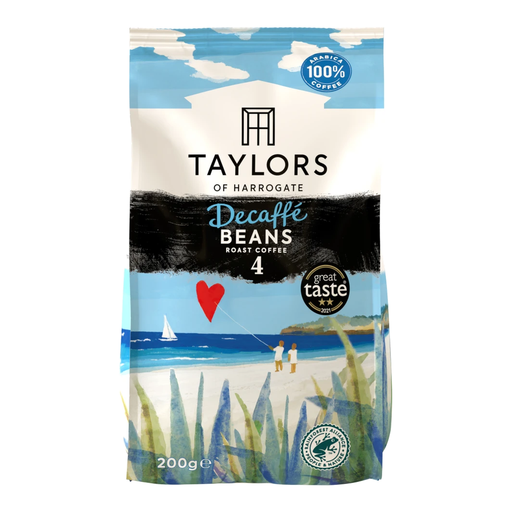
The 200 g bag is an option when cottage coffee use is irregular. Joybuy lists 100% Arabica beans, water decaffeination and guidance to use them within two weeks of opening. Provide a grinder or bean-to-cup machine; check the brewer’s grind requirements before leaving instructions for guests.
 No image available
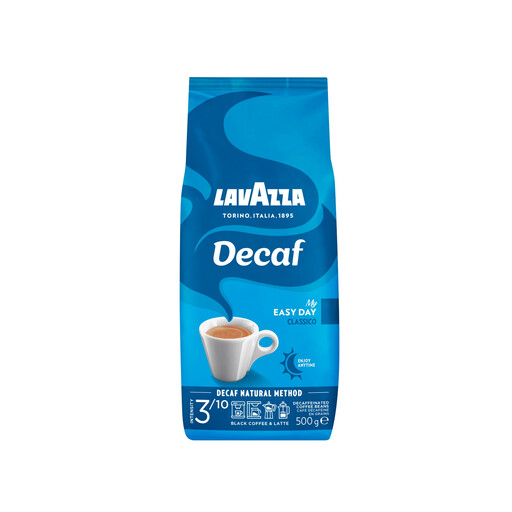
The 500 g pack is worth considering where the cottage uses beans consistently. Joybuy describes carbon-dioxide decaffeination and advises keeping the opened coffee cool and dry, in an airtight container away from strong odours. Ensure a grinder or bean-to-cup machine is available, and check suitability for the cottage’s brewer if required.
Yes, unless the cottage has a bean-to-cup machine with an integrated grinder. Whole beans need grinding before brewing; match the grind to the equipment and leave guests clear instructions.
Do not assume so. illy states that its 250g whole-bean decaf contains no more than 0.1% caffeine. Keep the exact product packaging available rather than describing all decaf beans as caffeine-free.
A 200–250g bag is a practical starting point when coffee use is irregular; consider 500g where guests use beans consistently. Check each product’s opened-pack guidance: Waitrose & Partners gives a two-week period for its Taylors Decaffé and No.1 Peru decaf bean listings.
Follow the instructions for the exact coffee. Waitrose & Partners advises sealing its Taylors Decaffé beans and storing them cool and dry for up to two weeks; for its No.1 Peru decaf beans, it recommends an airtight container and use within two weeks for the best taste.
Neither process alone tells you which coffee will suit the cottage. Taylors describes a water method, while Lavazza describes carbon-dioxide decaffeination for Decaf Intenso. Check the exact product’s brewer guidance, pack size and flavour description as well.