Gift buyers who know the recipient drinks decaf
Start with their usual coffee: a familiar roast and a pack size suited to how often they drink it are more useful clues than the decaf label alone.


Choose whole-bean decaf for a Mother's Day gift if the recipient has a grinder or bean-to-cup machine, then match the roast and brewing guidance to the coffee they normally enjoy. A smaller pack makes more sense when their taste is uncertain; a larger bag is easier to choose when you already know their preference. Decaf does not necessarily mean caffeine-free, so check the current product label if caffeine avoidance matters.
Whole-bean decaf is a more considered gift when you know how the recipient makes coffee and have some idea of the flavours they like.
Start with their usual coffee: a familiar roast and a pack size suited to how often they drink it are more useful clues than the decaf label alone.
If the recipient grinds beans for espresso or uses a bean-to-cup machine, compare the maker's brewing guidance alongside roast and tasting notes. Union, for example, recommends its Decaf Blend for those two methods.
Decaf may suit someone who wants less caffeine but does not require a caffeine-free drink. The British Coffee Association notes that decaf can still contain a small amount of caffeine.
Confirm the brewing equipment first, then use the recipient's usual flavour preferences to narrow the beans and pack size.
| Priority | What to check | Your needs |
|---|---|---|
| Brewing setup | Confirm access to a grinder or bean-to-cup machine. Compare the product's stated brewing methods with the recipient's usual equipment. | I want beans they can prepare with the equipment they already use, rather than a gift that requires another appliance. |
| Roast and flavour | Look at the stated roast, bean blend and tasting notes. Union describes a dark, chocolate-and-caramel-led Decaf Blend; Waitrose describes its medium-roast Peru beans with lemon acidity and caramel notes. | If they usually favour darker espresso coffee, I would choose differently than if they enjoy a brighter medium roast. |
| Pack size | Compare the formats: Taylors lists 200g and 1kg Decaffé beans, illy lists a 250g can, and Lavazza lists a 500g Decaf Intenso bag. | For an unfamiliar taste, I would rather give a smaller pack. A larger bag makes more sense when I know they already enjoy that coffee. |
| Residual caffeine | Read the exact product's caffeine statement, rather than assuming 'decaf' means none. illy UK states no higher than 0.1% caffeine for its listed whole-bean decaf. | I need a clear product statement if the recipient pays particular attention to caffeine. The British Coffee Association says decaf can retain some caffeine. |
| Decaffeination method | If the recipient has a process preference, check the maker's description. Taylors describes a Pure Water Process for Decaffé; Union describes using water and carbon dioxide for its Decaf Blend. | A stated process matters to me only if it is something the recipient cares about; I would still check the roast and flavour separately. |
The British Coffee Association says a small amount of caffeine can remain in decaf coffee. A general decaf label does not establish the amount in a particular pack.
Check the current product's caffeine statement. If the recipient must avoid caffeine completely for medical reasons, they should confirm what is suitable with their clinician.
Whole beans need grinding before brewing. A recipient who normally buys ground coffee may not have a way to use them.
Find out whether they have a grinder or bean-to-cup machine, and check that the coffee's brewing guidance fits their routine.
Otherwise, using the gift could require grinding equipment.
Decaf beans differ in roast and flavour. A 500g or 1kg format commits the recipient to more coffee if those characteristics are not to their taste.
Consider a 200g–250g format when their preferences are uncertain; choose a larger pack when you know the coffee or their usual tastes.
An unwanted large pack may leave more coffee unused.
Water and carbon-dioxide process descriptions do not tell you whether a recipient will prefer a coffee's roast, flavour or recommended brewing method.
Use the stated method to meet a known preference, then compare the characteristics of the particular beans.
These references describe particular decaf products or ranges; a brand name alone does not tell you which beans will suit the recipient.
Lavazza UK lists Decaf Intenso as a 500g whole-bean option with an Arabica-and-Robusta blend.
illy UK lists a 250g whole-bean decaf made with 100% Arabica beans.
Taylors lists Decaffé beans in 200g and 1kg formats and describes caramel and malt flavours.
Union describes its Decaf Blend as a dark roast and recommends espresso or bean-to-cup preparation.
Waitrose lists No.1 Organic Fairtrade Peru Decaf Coffee Beans as a 227g, medium-roast, 100% Arabica option.
M&S lists coffee beans and decaf coffee in its ranges.
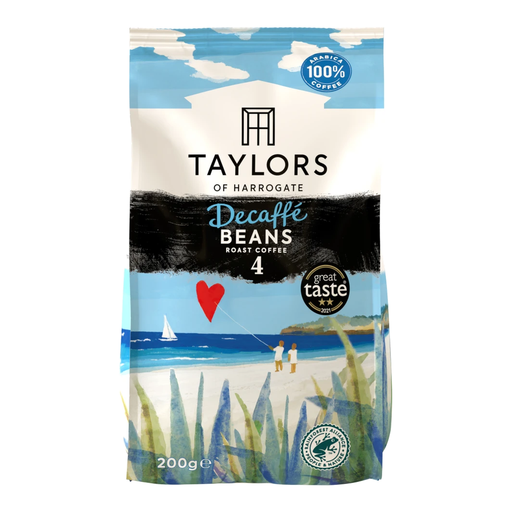
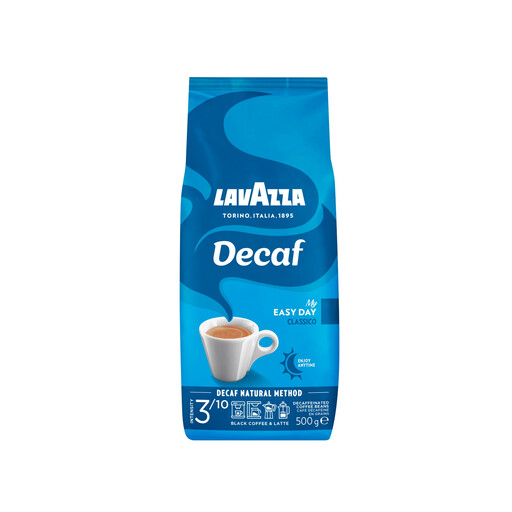
These whole-bean decaf packs offer two gift sizes: a 200 g Taylors pack for a smaller gift and a 500g Lavazza pack for someone whose tastes are better known. Confirm the recipient can grind beans before choosing either.
 No image available
A smaller whole-bean decaf pack to consider when the recipient's tastes are not yet familiar. Check that they have a grinder or bean-to-cup machine, and compare the pack's flavour and brewing guidance with their usual coffee.
 No image available
A larger whole-bean decaf pack to consider when you know the recipient's coffee preferences. Check the exact variant and roast on the pack, as well as whether they have equipment for grinding beans.
It can. The British Coffee Association says a small amount may remain after decaffeination; illy UK states no higher than 0.1% caffeine for its listed whole-bean decaf. Check the current label of the specific coffee if the amount matters to the recipient.
Check their equipment first: whole beans need grinding. A grinder or bean-to-cup machine makes the gift usable, but the coffee's stated brewing methods should also fit how the recipient normally makes coffee.
Follow the instructions on the pack. Waitrose advises keeping opened beans in an airtight container and grinding them fresh; check the chosen product's own storage guidance as well.
No single process description establishes which flavour a recipient will prefer. Taylors describes a Pure Water Process, while Union describes using water and carbon dioxide for its Decaf Blend. Use that information if the recipient has a process preference, but check roast, tasting notes and brewing guidance too.
Check the current pack label rather than relying only on an online description. Waitrose warns that recipes can change, so the label of the coffee being given is the relevant check.