Teams with a grinder or bean-to-cup machine
Whole beans are an option for a shared kitchen or meeting area when staff can grind them for the equipment they use. Check the machine or grinder before choosing a bag.


Choose whole-bean decaf for an office snack area only if there is a suitable grinder or bean-to-cup machine. Then match the bag to the brewing method, likely decaf use and staff flavour preferences; if a stated residual-caffeine level matters, check the exact product rather than assuming decaf means caffeine-free.
Whole beans are an option for a shared kitchen or meeting area when staff can grind them for the equipment they use. Check the machine or grinder before choosing a bag.
A separate decaf supply gives staff another coffee choice, including those who prefer to limit caffeine. Check the particular product’s caffeine statement when the remaining amount matters.
Product descriptions range from caramel-and-malt notes to darker, fuller-bodied profiles. A smaller first bag lets staff try a flavour before the office commits to a regular supply.
Start with the equipment: pack size and flavour only become useful comparisons once the beans can be prepared in the office.
| Priority | What to check | Your needs |
|---|---|---|
| Brewing setup | Confirm there is a grinder or bean-to-cup machine. Match the grind to the brewer; Tesco’s Taylors listing gives fine for espresso, medium for filter and coarse for cafetière. | Our office needs beans that staff can prepare with the equipment already in the kitchen. |
| Residual caffeine | Read the exact pack or product page for a caffeine statement. The illy UK page states less than 0.1% caffeine for its decaffeinated whole beans; that figure should not be applied to other products. | If the remaining caffeine matters to someone choosing a cup, I want a product-specific statement rather than relying on the word “decaf”. |
| Flavour | Compare product-specific descriptions, then try a bag. Waitrose describes Taylors Decaffé with caramel and malt notes; Union describes its Decaf Blend as rich and full-bodied with dark-caramel notes. | A shared supply needs a flavour staff will choose, rather than one picked solely for its decaffeination process. |
| Pack size | Compare the bag with likely decaf use and follow its storage instructions. Waitrose lists Taylors Decaffé in a 200 g format; the illy UK whole-bean decaf product is 250 g. | When demand is uncertain, I would start with a smaller bag and see how quickly the office uses it. |
Decaf products can retain caffeine: illy UK states less than 0.1% for its decaffeinated whole beans, not zero.
Check the statement on the exact product when residual caffeine affects someone’s choice.
Whole beans need grinding, and a suitable grind depends on whether the office makes espresso, filter coffee or cafetière coffee.
Confirm the grinder or bean-to-cup machine and the brewing method before ordering.
An opened bag may be difficult to finish promptly if only a few staff choose decaf. The Taylors retailer guidance says to seal its opened beans, keep them cool and dry, and use them within up to two weeks.
Try a smaller format first, then reconsider bag size once the office knows how much it uses.
A process description does not tell a buyer whether staff will prefer the finished coffee. Taylors describes a water-based process, while flavour descriptions differ across products.
Compare the stated flavour direction and let staff try a small bag before settling on one office decaf.
These product-line details help narrow a choice; they do not mean that every named product is in the Joybuy selection below.
Lavazza UK lists Decaf Intenso for espresso, filter, French press and moka preparation, with an intensity rating of 6/10 on its own scale.
illy UK lists a 250 g classic-roast decaffeinated whole-bean product and states less than 0.1% caffeine for it.
Taylors describes a water-based decaffeination process for Decaffé beans. Waitrose lists a 200 g bag and describes caramel and malt notes.
Union describes its Decaf Blend as rich and full-bodied, with dark-caramel notes.
M&S lists Roast & Ritual Decaf Coffee Beans, described as made with decaffeinated Arabica beans.
Waitrose lists No.1 Organic Fairtrade Peru Decaf Coffee Beans as an own-label whole-bean option.
These two bag sizes give offices with suitable grinding equipment a smaller starting option and a larger option to consider when decaf use is steadier. Check the exact product details for any brewing or caffeine specification important to your office.
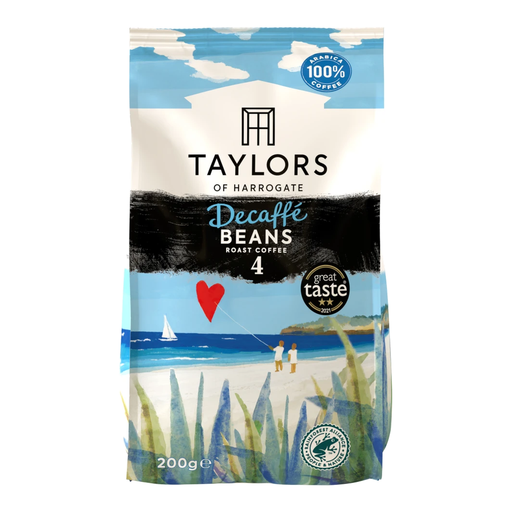 No image available
The 200 g bag is a starting size to consider when office decaf use is uncertain. Confirm that the beans suit the office equipment and check the exact pack if a residual-caffeine statement matters.
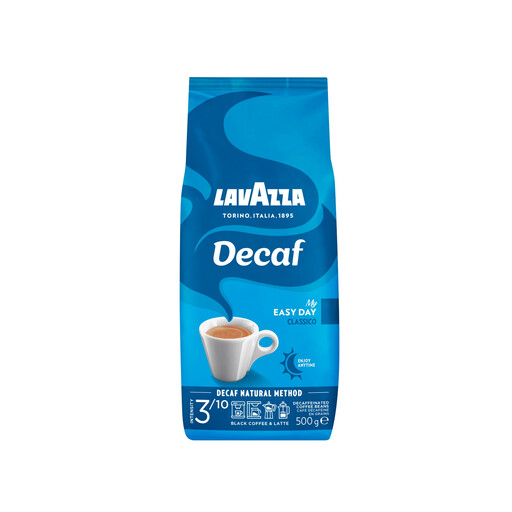 No image available
Consider the 500 g bag if the office expects to use decaf regularly. Check that staff can prepare the beans with the available equipment and that the bag size matches likely use after opening.
Do not assume they are. illy UK states less than 0.1% caffeine for its decaffeinated whole beans, while a Waitrose listing states not higher than 0.10% for Lavazza Decaf Classico. Check the exact product rather than applying either statement to all decaf beans.
No: whole beans need a suitable grinder or bean-to-cup machine. Confirm the equipment and brewing method first; Tesco’s Taylors listing specifies different grinds for espresso, filter and cafetière preparation.
Follow the instructions for the chosen product. For Taylors Decaffé beans, the retailer guidance is to seal the opened pack, keep it cool and dry, and use the beans within up to two weeks; choose a bag size the office is likely to finish in that period.