Regular decaf households
If several people use decaf throughout the week, a 500 g or 1 kg format may mean fewer purchases. Check how quickly you finish an opened bag before choosing the larger size.


Choose decaf coffee beans by how quickly you will use the pack after opening, then check the roast and brewing guidance against your usual method. A smaller pack makes sense for occasional decaf, while a larger one is practical when several people will use it regularly; follow the storage directions on the particular pack. If a stated caffeine limit matters, illy’s UK whole-bean decaf listing declares no higher than 0.1% caffeine.
How often you make decaf determines whether a larger bag is convenient or leaves too many beans open at once.
If several people use decaf throughout the week, a 500 g or 1 kg format may mean fewer purchases. Check how quickly you finish an opened bag before choosing the larger size.
A 200–250 g pack is easier to plan around when decaf is only one of the coffees in your cupboard. Look at the opened-pack storage directions as well as the size.
If a stated caffeine maximum matters to your choice, distinguish a general decaf label from a figure published for the exact product. You will also need beans suited to your usual brewing method.
Start with pack turnover and storage, then narrow the options by your brewer, preferred flavour description and any product-specific caffeine information you need.
| Priority | What to check | Your needs |
|---|---|---|
| Pack size | Compare the stated weight with how quickly you finish beans. Taylors of Harrogate lists Decaffé in 200 g and 1 kg formats; Lavazza lists Decaf Intenso at 500 g. | I make decaf often enough to use a larger bag, or I would rather open a smaller pack because decaf is an occasional drink. |
| Opened-pack storage | Read the directions for the exact pack. Waitrose advises using its No.1 Peru decaf within two weeks of opening for best taste; M&S gives refrigerated and frozen storage periods for its Roast & Ritual beans. | If a bag will stay open for weeks, I need a size and storage routine that fit the product’s own directions. |
| Brewer and flavour | Check the recommended brewing methods and roast description separately. Lavazza lists Decaf Intenso for espresso, moka, filter and French press; Union describes its Decaf Blend as a dark roast especially suited to espresso. | My usual brewer and preferred cup matter more to me than the word “decaf” alone. |
| Caffeine statement | Look for a maximum stated for the exact product rather than assuming decaf means zero caffeine. illy’s UK whole-bean decaf listing states no higher than 0.1% caffeine. | I want a published product-specific figure before choosing beans, rather than relying only on a decaf label. |
| Decaffeination method | Check the brand’s description of its process, then consider pack size, brewing guidance and caffeine information independently. Taylors describes its Pure Water Process; Lavazza describes carbon-dioxide decaffeination for Decaf Intenso. | I have a process preference, but I still need the beans to suit the way I store and brew them. |
A decaf description does not give you an exact caffeine figure for every product. illy’s UK whole-bean listing, for example, states a maximum of 0.1% rather than zero.
If a published limit affects your choice, check the exact product page and pack; do not apply one product’s figure to another.
A large pack may remain open beyond the period advised for the particular beans. The Waitrose listing for Taylors Decaffé 200 g advises use within two weeks of opening, while other products give different storage directions.
Choose a smaller pack for slow turnover. Consider 500 g or 1 kg only if your use and the pack’s storage directions make that size practical.
A brand’s water- or carbon-dioxide-process description does not establish how every coffee made by that method will taste or what its residual caffeine figure will be.
Treat the method as one preference to check alongside the exact product’s size, roast, brewing guidance and any stated caffeine maximum.
Union describes its dark-roast Decaf Blend as especially suited to espresso; Waitrose describes its No.1 Peru decaf as medium roast with lemon acidity and caramel notes. Those descriptions point to different flavour preferences.
Check the beans against the brewer you use most, then choose a stated roast and flavour direction that appeals to you.
These examples show how pack formats and product directions vary; each description applies to the named decaf beans, not every coffee from the brand.
Decaf Intenso is a 500 g whole-bean option listed for espresso, moka, filter and French press.
Its UK whole-bean decaf comes in a 250 g can and has a stated caffeine maximum.
Decaffé whole beans come in 200 g and 1 kg formats for different rates of use.
Decaf Blend is a dark-roast whole-bean coffee that Union recommends particularly for espresso.
Roast & Ritual Decaf Coffee Beans are a 227 g option for a smaller pantry stock.
No.1 Organic Fairtrade Peru Decaf is a 227 g, medium-roast, single-origin whole-bean coffee.
These two whole-bean packs offer different pantry sizes: a 500 g Lavazza option for more regular use and a 200 g Taylors option for slower turnover. Check each product’s own storage and brewing details before choosing.
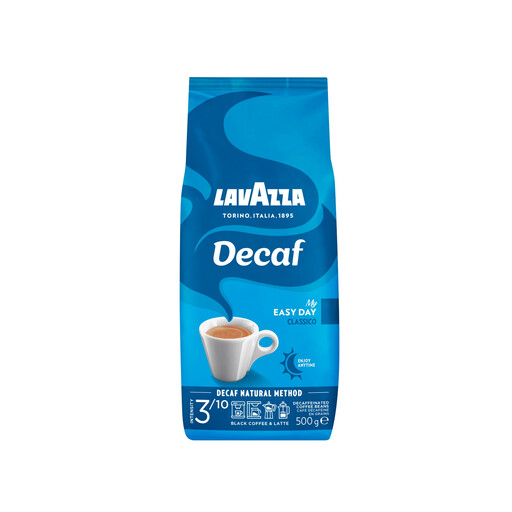 Image unavailable
The 500 g pack is worth considering if your household uses decaf regularly. Its product description states carbon-dioxide decaffeination and roasted-caramel and chocolate notes, with directions to keep opened beans airtight in a cool, dry place. Check the exact pack for brewing guidance and a caffeine figure if either matters to your choice.
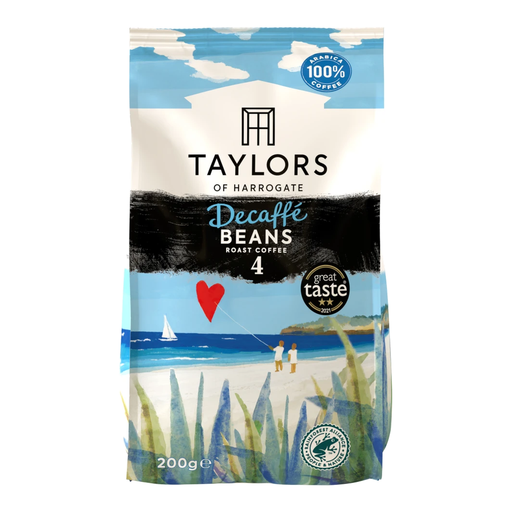 Image unavailable
The 200 g pack suits a pantry where decaf is used more slowly. Its product description states water decaffeination and caramel-and-malt notes; it advises sealing the opened pack with a clip, storing it somewhere cool and dry, and using it within two weeks. Check the exact pack for brewer guidance or a caffeine figure if needed.
No: do not treat a decaf label as a statement of zero caffeine. illy’s UK whole-bean decaf listing, for example, declares no higher than 0.1% caffeine. If a particular limit matters to you, check the figure for the exact product.
A 1 kg bag is a practical choice only if you will use it at a rate that fits its opened-pack directions. Taylors of Harrogate offers Decaffé in 200 g and 1 kg formats, while the Waitrose listing for its 200 g beans advises use within two weeks of opening. For occasional decaf, start by considering the smaller format.
Follow the directions for the particular beans. illy advises keeping its opened beans away from light and heat, preferably refrigerated; M&S gives refrigerated and frozen periods for Roast & Ritual; and Waitrose advises an airtight container and use within two weeks for best taste for its No.1 Peru decaf. These are product-specific instructions, not one rule for every bag.
Match the grind to your brewing method. Waitrose recommends a coarse grind for cafetière, medium for filter, and fine for espresso or moka when preparing its No.1 Peru decaf. If you switch brewers, adjust the grind rather than relying on the same setting for every method.