Travellers brewing after arrival
If your airport-food plans include making coffee at your destination, check that you will have a grinder and brewer before choosing a pack to carry.


For coffee alongside airport-food plans, choose whole-bean decaf only if you will have a grinder and suitable brewer after arrival. A 200–250 g pack is easier to manage for limited brewing, while a 500 g pack makes more sense if you expect to brew repeatedly; match the stated brewing methods and flavour notes to your plans, and remember that decaf does not necessarily mean caffeine-free.
If your airport-food plans include making coffee at your destination, check that you will have a grinder and brewer before choosing a pack to carry.
Whole-bean decaf preserves the option to grind coffee just before brewing. Check the exact product label if its stated residual caffeine matters to your choice; decaf is not a promise of zero caffeine.
If either machine will be available after your journey, look for beans the maker recommends for that preparation method rather than choosing by pack size alone.
Start with the equipment you will use, then choose a pack size and stated flavour profile that fit the stay.
| Priority | What to check | Your needs |
|---|---|---|
| Brewing equipment | Confirm a grinder is available. Compare the maker’s recommended methods with the brewer at your destination: Lavazza UK lists espresso, moka and filter for Decaf Intenso, while Union Coffee recommends espresso or bean-to-cup for Decaf Blend. | I’ll be making coffee after arrival, so the beans need to suit the equipment I can actually use. |
| Pack and storage | Compare the stated pack sizes with the number of drinks planned. Waitrose & Partners advises sealing Taylors Decaffé Beans after opening and storing them in a cool, dry place for up to two weeks. | For a short stay, I’d rather carry a manageable pack than bring more beans than I expect to use. |
| Residual caffeine | Read the exact product’s caffeine statement rather than assuming decaf means none. illy states less than 0.1% caffeine for its 250 g whole-bean decaf. | I want decaf, but the stated amount of remaining caffeine may affect which product I choose. |
| Roast and flavour | Compare product descriptions, not assumed taste-test results. Waitrose & Partners describes caramel and malt notes for Taylors; Union Coffee describes chocolate and caramel notes for Decaf Blend. | With food or a milk drink, I’d choose between the stated flavour profiles according to what I enjoy. |
Whole beans need grinding before brewing, and the products’ recommended preparation methods differ.
Check the equipment where you are staying. If there is no grinder, consider pre-ground decaf instead of taking whole beans.
illy states that its whole-bean decaf contains less than 0.1% caffeine, rather than none.
Check the exact label if the remaining caffeine matters to you. Seek individual professional advice if you have been told to avoid caffeine completely.
A larger pack may be awkward for a brief stay. Waitrose & Partners advises sealing opened Taylors Decaffé Beans and keeping them cool and dry for up to two weeks.
Estimate how many drinks you plan to make and follow the storage instructions on the pack you buy.
Airport procedures and food-import requirements depend on the journey. GOV.UK advises checking the departure airport’s current security guidance and publishes separate guidance on bringing food into Great Britain.
Check the airport, airline and destination’s requirements for your itinerary before packing beans; check the applicable import rules again if you will bring food home.
These examples describe particular decaf beans and ranges, not every product made by each brand.
Lavazza UK lists Decaf Intenso as a 500 g whole-bean option for several brewing methods.
illy offers decaffeinated whole beans in a 250 g format.
Waitrose & Partners lists Taylors Decaffé Beans as a 200 g, 100% Arabica option.
Union Coffee offers Decaf Blend whole beans in 200 g and 1 kg packs.
M&S Food lists Roast & Ritual Decaf Coffee Beans in a 227 g format.
The Waitrose No.1 range includes Organic Fairtrade Peru Decaf Coffee Beans in a 227 g format.
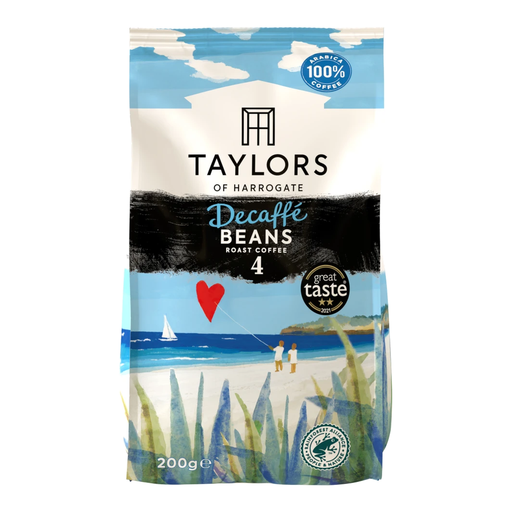
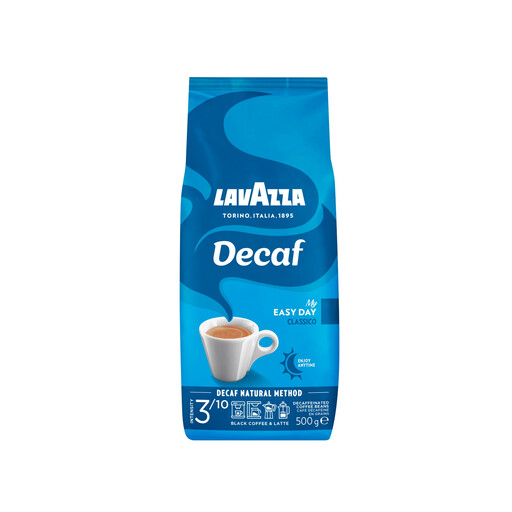
These two whole-bean decaf packs offer different amounts to carry for brewing after arrival: 200 g for more limited use or 500 g if you expect to make coffee repeatedly. Confirm that you will have a grinder and suitable brewer.
 No image available
The 200 g whole-bean decaf pack is an option if you expect to make fewer drinks during your stay. Check that you can grind and brew the beans after arrival, and follow the pack’s storage instructions once opened.
 No image available
The 500 g whole-bean decaf pack gives you more coffee to carry if you plan to brew repeatedly. Before choosing it, check the exact product’s brewing guidance against your destination equipment and consider how much of the pack you will use.
No: decaf can contain residual caffeine. illy, for example, states less than 0.1% caffeine for its whole-bean decaf, not zero. Check the exact product label if the amount matters to you.
Union Coffee specifically recommends its Decaf Blend for bean-to-cup or espresso brewing. Check your machine’s instructions and the exact beans you intend to buy before use.
Choose according to how many drinks you expect to make and how much you want to carry. The examples here include 200 g Taylors beans, 250 g illy beans and a 500 g Lavazza option; Waitrose & Partners advises keeping opened Taylors beans sealed in a cool, dry place for up to two weeks.
No: a stated decaffeination method is not an organic claim. Union Coffee describes using water and carbon dioxide for decaffeination; check a product’s separate organic claim if that distinction matters to you.