Households using whole beans regularly
If you have a bean-to-cup machine or grinder, compare pack sizes against the amount you use before buying. A larger bag is practical only if its opened-pack storage guidance fits your routine.


Choose a decaf whole-bean pack that fits how much coffee your household uses, then check that you have a bean-to-cup machine or grinder and that the stated flavour suits your usual brew. A smaller bag may be easier to use within its storage guidance; a 500 g or 1 kg bag makes more sense when you will use it promptly. If residual caffeine matters, read the statement for the exact product rather than assuming decaf means caffeine-free.
For a weekly shop, the useful starting point is how you brew coffee and how quickly you use an opened bag.
If you have a bean-to-cup machine or grinder, compare pack sizes against the amount you use before buying. A larger bag is practical only if its opened-pack storage guidance fits your routine.
If you choose decaf to reduce caffeine in later cups, check the wording for the specific beans. For example, illy states that its whole-bean decaf contains no more than 0.1% caffeine; that figure should not be applied to other products.
If origin or sourcing affects your choice, compare the claims attached to individual products. Waitrose describes its No.1 Peru decaf as Organic and Fairtrade, while Union describes a direct-trade sourcing approach for its Decaf Blend.
Start with the bag you can use and the equipment you own, then narrow the choice by caffeine information, flavour and storage instructions.
| Priority | What to check | Your needs |
|---|---|---|
| Pack size | Compare the quantity with your weekly use. The cited options include 200 g, 227 g, 250 g, 500 g and 1 kg packs; check the storage instructions before committing to a larger bag. | A smaller bag suits me if I make decaf occasionally; a larger one needs to fit how quickly my household gets through beans. |
| Brewing setup | Confirm that you have a bean-to-cup machine or grinder. Match the grind to your brewer: Waitrose advises coarse for cafetière, medium for filter and fine for espresso or moka for its No.1 beans. | I want beans I can prepare with the equipment I already use, rather than discovering at home that I need a grinder. |
| Residual caffeine | Read the exact product statement if a caffeine limit affects your choice. illy states a maximum of 0.1% caffeine for its whole-bean decaf; do not assume that applies to other beans. | For later cups, I want to know what the particular pack says about caffeine, not rely on the word decaf alone. |
| Roast and flavour | Look at the stated roast and tasting notes for the particular blend. Waitrose describes lemon acidity and caramel in its Peru beans; Union describes a dark-roast Decaf Blend with chocolate and caramel notes. | I prefer to choose a flavour direction that fits the coffee I usually make, especially if I mainly drink espresso. |
| Opened-pack storage | Follow the instructions on the chosen pack. Ocado advises a cool, dry place and use within two weeks of opening for Taylors Decaffé; M&S gives separate refrigerated and frozen storage periods for Roast & Ritual. | Before picking up a large bag, I need to know whether I can use and store it as directed after opening. |
| Sourcing claims | Check the claim on the exact product rather than treating it as a brand-wide feature. Waitrose labels its No.1 Peru beans Organic and Fairtrade; Union describes direct-trade sourcing for its Decaf Blend. | When sourcing matters to me, I want to compare the specific statements attached to the beans I am considering. |
Decaf is not a zero-caffeine guarantee. illy, for example, states a maximum of 0.1% caffeine for its whole-bean decaf, rather than describing it as caffeine-free.
If residual caffeine affects your decision, read the label or product specification for the exact beans you plan to buy.
A 1 kg format only fits a weekly-shop routine if you can use and store the opened beans as directed. Storage advice differs between products: Ocado gives up to two weeks in a cool, dry place for Taylors Decaffé, while M&S gives different refrigerated and frozen periods for Roast & Ritual.
Estimate how much decaf you use, then check the chosen pack’s instructions before settling on its size.
A bag that remains open beyond its stated storage period may not fit the way your household uses coffee.
Whole beans require a bean-to-cup machine or grinder. The grind also needs to suit the brewing method; Waitrose gives different guidance for cafetière, filter, espresso and moka preparation of its No.1 beans.
Check your equipment before choosing whole beans, and follow the grind guidance for the brewer you use.
These are references for comparing particular decaf beans and pack formats, not claims about every coffee sold under each name.
Lavazza describes Decaf Intenso as a 500 g whole-bean option for espresso, moka, filter and French press preparation.
illy offers a 250 g whole-bean decaf can for shoppers who prefer a smaller format.
Taylors lists Decaffé whole beans in 200 g and 1 kg formats.
Union describes its Decaf Blend as a dark-roast option and recommends it particularly for espresso or bean-to-cup brewing.
M&S describes Roast & Ritual Decaf Coffee Beans as a 227 g pack of decaffeinated Arabica beans.
Waitrose describes its No.1 Organic Fairtrade Peru Decaf Coffee Beans as a 227 g, single-origin whole-bean option.
These two whole-bean options offer different bag sizes for a weekly shop: Lavazza in 500 g and Taylors in 200 g. Choose between them according to your rate of use, then check any brewing or caffeine details important to you on the specific pack.
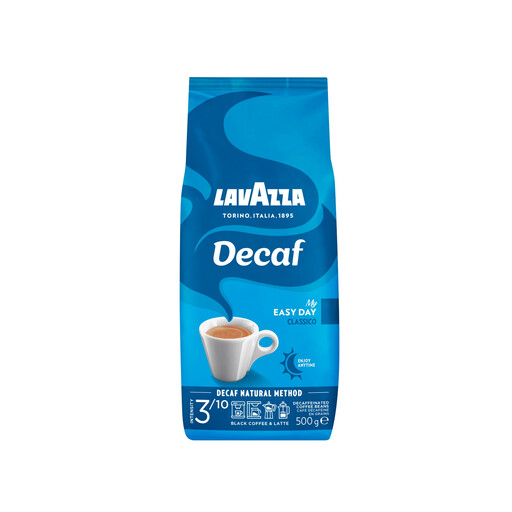 No image available
The 500 g whole-bean pack is worth considering if that quantity fits your weekly use. Its description states carbon-dioxide decaffeination and advises cool, dry, airtight storage. Check the pack’s bean composition, brewing guidance and caffeine statement if those details affect your choice.
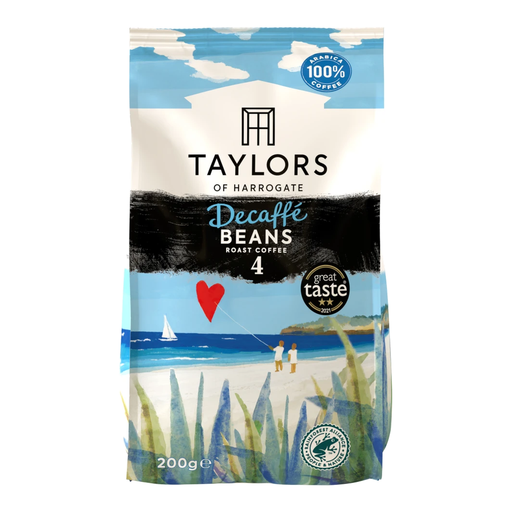 No image available
The 200 g whole-bean pack offers a smaller quantity for a weekly shop. Its description states a water-process decaffeination method and caramel-and-malt notes, with guidance to use the beans within two weeks of opening. Check the specific brewing and caffeine information if either is important to you.
No: do not read decaf as a guarantee of zero caffeine. illy states that its whole-bean decaf contains no more than 0.1% caffeine; if the amount matters to you, check the statement for the exact product you choose.
You need a bean-to-cup machine or a grinder to prepare whole beans. Grind size depends on the brewer: Waitrose advises coarse for cafetière, medium for filter and fine for espresso or moka when preparing its No.1 decaf beans.
Follow the instructions for your chosen pack rather than applying one storage period to every bean. Ocado advises a cool, dry place and use within two weeks of opening for Taylors Decaffé; M&S advises an airtight container for Roast & Ritual, with two weeks refrigerated or four weeks frozen.