Organisers with a grinder or bean-to-cup machine
Whole beans are an option if the venue can grind them for its brewing setup. Check the planned method before choosing a pack: the preparation guidance differs between products.


Choose whole-bean decaf when the meeting venue has a grinder or bean-to-cup machine, then match the beans to the brewing method and the amount likely to be used. A smaller pack may suit occasional meetings, while a 500 g pack makes more sense when decaf is served regularly. Check the decaf label rather than judging caffeine content by roast intensity; decaf is not necessarily caffeine-free.
Whole beans are an option if the venue can grind them for its brewing setup. Check the planned method before choosing a pack: the preparation guidance differs between products.
A clearly labelled decaf gives attendees a distinct choice. Flavour still matters: the product descriptions from Lavazza, Taylors of Harrogate and Waitrose describe different roast and flavour profiles.
If only a little decaf is likely to be used, a 200–250 g pack may be easier to finish after opening than a larger bag. Check the storage and use guidance on the chosen pack.
Start with the equipment at the venue, then choose the caffeine information, flavour and pack size that fit the meeting.
| Priority | What to check | Your needs |
|---|---|---|
| Brewing equipment | Confirm that a grinder or bean-to-cup machine is available. Check the product's preparation guidance and use a grind appropriate to the planned method. | I need to serve coffee using the equipment at the meeting venue, without buying whole beans that cannot be prepared there. |
| Decaf information | Look for an explicit decaf designation and any product-specific caffeine statement. Do not use roast colour, intensity or flavour notes to estimate caffeine content. | Some attendees want a decaf option; if anyone needs particularly strict caffeine limits, I need to check the exact product information with them. |
| Flavour | Compare the stated roast, blend and flavour notes. These describe a preference, not a guarantee that everyone will like the cup. | For a mixed group, I want to know whether the beans are described as smooth, rich or brighter-tasting before I choose. |
| Pack size and storage | Match 200–250 g or larger formats to likely decaf use. Read the chosen pack's instructions for storage after opening. | Will we use the beans after this meeting, or would a smaller pack better fit occasional demand? |
Whole beans need grinding, and preparation guidance varies by product and brewing method. A bag of beans is not ready to use in every office setup.
Confirm the venue's equipment first. If it cannot grind beans, choose a coffee format it can prepare.
Otherwise, preparing the coffee may require access to a separate grinder.
Decaffeinated coffee can still contain caffeine. For example, illy states that its decaf whole beans contain no more than 0.1% caffeine.
Describe the meeting option as decaf and check the current pack's caffeine information if an attendee needs a particularly strict limit.
Opened beans need to be stored according to their pack instructions. The Taylors of Harrogate listing advises using its beans within two weeks of opening.
Estimate how much decaf the office will actually serve before choosing between a smaller pack and a 500 g or 1 kg format.
A pack left open beyond its recommended use period may leave coffee unused.
Pack details can change, and M&S says its local stock and prices depend on the selected store.
Before the meeting, check the current pack for ingredients, allergen information, size and any caffeine statement, and confirm that the chosen item can be obtained in time.
These examples show different whole-bean decaf formats and stated flavour profiles; they are not a list of products available through Joybuy.
Lavazza Decaf Intenso is a 500 g whole-bean option with espresso, moka and filter preparation listed by Lavazza UK.
illy lists its decaffeinated whole beans in a 250 g format for moka, filter, espresso and lungo preparation.
The Waitrose listing for Taylors of Harrogate Decaffé describes a 200 g, water-decaffeinated, 100% Arabica whole-bean product.
Union describes its Decaf Blend as a dark-roast whole-bean coffee for espresso or bean-to-cup preparation.
M&S lists Roast & Ritual Decaf Coffee Beans as a 227 g, 100% decaffeinated Arabica product.
Waitrose lists its No.1 Organic Fairtrade Peru Decaf Coffee Beans as a 227 g, single-origin, 100% Arabica product.
These whole-bean decaf packs offer two sizes to consider for occasional or recurring meeting use. Check the brewing method and current pack information before choosing either one.
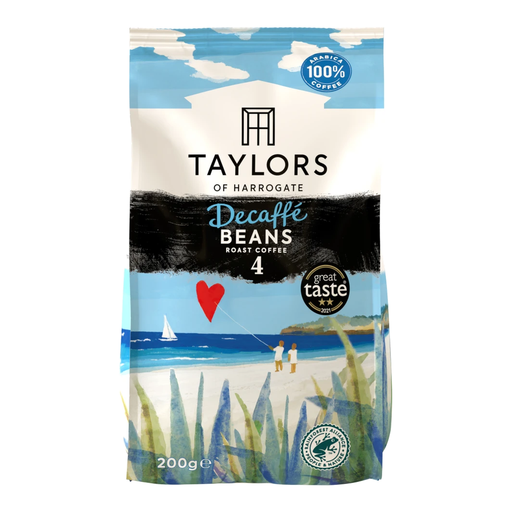 No image available
The 200 g whole-bean decaf pack is worth considering for a smaller meeting or occasional use. Confirm that its preparation guidance fits the venue's equipment, and check the pack's caffeine information if an attendee needs a particularly strict limit.
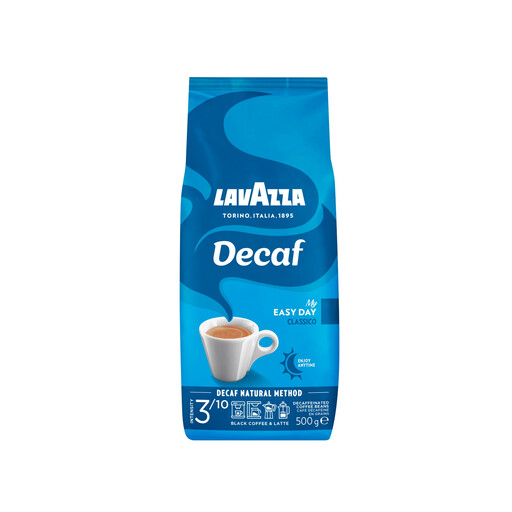 No image available
The 500 g whole-bean decaf pack may fit recurring meetings if the office expects to use it promptly. Check preparation guidance for this exact product, along with storage and caffeine information on the current pack; do not assume it is Lavazza's Decaf Intenso variant.
Not necessarily. Choose a product labelled decaffeinated, but check its specific caffeine statement if that distinction matters to an attendee. illy states that its decaf whole beans contain no more than 0.1% caffeine.
Check the chosen product's preparation guidance and make sure the venue can grind the beans appropriately. Lavazza Decaf Intenso lists espresso, moka and filter preparation; the Taylors of Harrogate listing gives separate grind guidance for espresso, filter and cafetière.
Choose a pack size based on expected decaf use both at the meeting and after opening. A 200–250 g pack may fit occasional demand, while a larger pack is more practical when meetings regularly use decaf. Follow the chosen product's storage instructions; the Taylors of Harrogate listing advises use within two weeks of opening.
Ask about relevant needs and check current labels for the coffee and anything served with it, rather than relying on an older online listing. For food businesses supplying food or drink, the Food Standards Agency sets out requirements for providing allergen information; the applicable arrangements depend on how an item is supplied.
Do not use roast intensity to judge a bean's caffeine content. Use the decaf designation and any caffeine statement for the exact product; treat roast and flavour notes as information for choosing the taste of the coffee.