Sellers making several brewed cups
Decaf grounds are worth considering if you can bring a filter brewer, prepare batches and clean the equipment. Check the pack for filter-brewing guidance rather than choosing by roast name alone.


Choose decaf ground coffee labelled for filter brewing if you have a filter setup and expect to make several cups; Taylors of Harrogate Decaffé Roast has explicit filter or cafetière guidance in its Sainsbury's listing. Coffee bags suit individual preparation, while instant decaf avoids filter brewing altogether. If you plan to sell drinks, check your food-business position with the local authority and prepare allergen information for additions such as milk where required.
Decaf grounds are worth considering if you can bring a filter brewer, prepare batches and clean the equipment. Check the pack for filter-brewing guidance rather than choosing by roast name alone.
Individual coffee bags may suit a small or uncertain number of orders when measuring loose grounds is impractical. They are prepared cup by cup, not as a batch of filter coffee.
If you operate as a registered food business, serving non-prepacked drinks with allergen ingredients calls for accurate allergen information. Check the ingredients of additions as well as the coffee.
Decide whether customers will be served batch-brewed filter coffee or individual cups, then check the product and setup against that choice.
| Priority | What to check | Your needs |
|---|---|---|
| Brewer compatibility | Look for preparation guidance that names filter brewing; check the grind against your own brewer. Sainsbury's says Taylors of Harrogate Decaffé Roast is suited to a filter or cafetière. | I want to make several decaf cups with my filter brewer, without relying on the roast name to tell me how to prepare the coffee. |
| Serving format | Ground coffee needs a filter-brewing setup and batch preparation. Coffee bags are prepared individually; instant decaf does not use a filter brewer. | If orders are occasional, preparing one cup at a time may be simpler. If I am offering filter coffee, bags and instant are different drinks to plan for. |
| Pack and storage | Check pack weight, the quantity your brewer uses per batch and the pack's storage directions after opening. Test the intended coffee before the event. | I need enough coffee for the cups I expect to serve, without opening more than I am likely to use. |
| Service arrangements | Confirm the organiser's setup rules and access to potable water. Ask the relevant local authority whether your activity requires food-business registration; registered businesses serving non-prepacked drinks must provide information about mandated allergens present, according to GOV.UK and Food Standards Agency guidance. | I need a workable water and cleaning setup and accurate ingredient information if I serve milk or other additions. |
Being sold as ground coffee does not, by itself, tell you whether the grind is appropriate for your brewer.
Choose a pack with filter preparation guidance where possible, and try the exact coffee in your brewer before the sale.
GOV.UK and Food Standards Agency guidance says food-business registration can apply wherever food or drink is sold. A local authority may decide that very limited and infrequent community activity does not need registration.
Describe your planned activity to the relevant local authority before trading, and check the organiser's requirements. If you are a registered food business, prepare allergen information for non-prepacked drinks and any additions containing mandated allergens.
These examples help distinguish coffee formats and preparation guidance; a retailer listing does not establish compatibility with every filter brewer.
Sainsbury's describes Taylors of Harrogate Decaffé Roast ground coffee as suited to a filter or cafetière.
Sainsbury's lists Lavazza Decaf Classico 250g as ground coffee and describes it as medium roast with a full body.
Tesco Groceries lists Tesco Finest Decaffeinated Colombian Ground Coffee in a 227g pack.
Marks & Spencer says its decaf ground coffee can be brewed using a filter or cafetière.
These two ground-coffee options are relevant if you plan to serve decaf from a filter brewer. Check the preparation directions on the pack, particularly for Lavazza Decaf Classico.
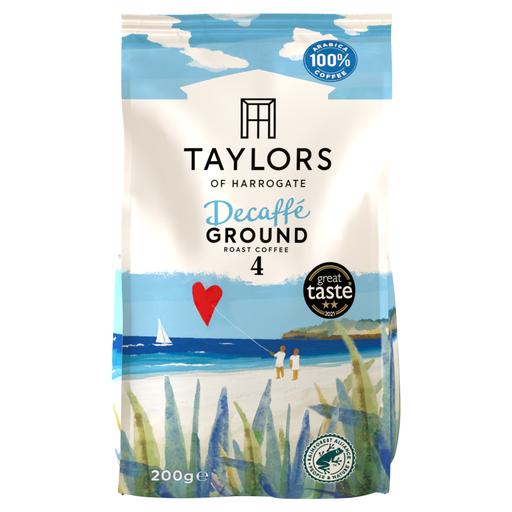 No image available
For a filter-coffee setup: Sainsbury's preparation guidance for Taylors of Harrogate Decaffé Roast says it is suited to a filter or cafetière. Check the pack directions and test it in your brewer before preparing batches for the sale.
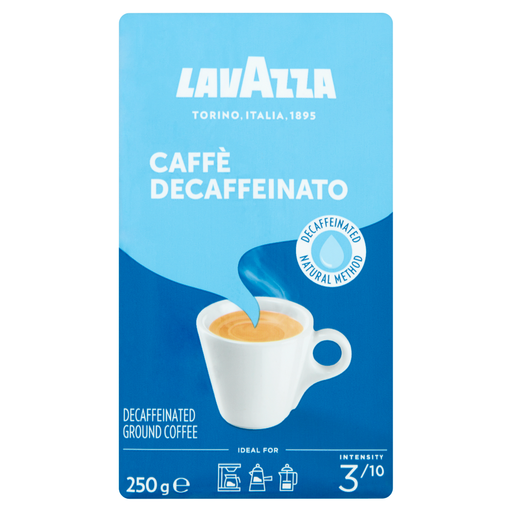 No image available
A decaf ground option to assess for your filter setup. Sainsbury's describes this Decaf Classico product as medium roast with a full body; confirm the ground-coffee format and filter-brewing directions on the pack before buying.
You may need food-business registration. GOV.UK and Food Standards Agency guidance says registration can apply to businesses selling food or drink wherever they operate; for very limited and infrequent community activity, the local authority may decide it is unnecessary. Ask the relevant local authority about your planned sale rather than assuming a temporary stall is exempt.
If you are a registered food business serving non-prepacked drinks, GOV.UK and Food Standards Agency guidance requires information about any of the 14 mandated allergens present. Keep ingredient and allergen details for milk and any other additions you offer, so you can answer customers accurately.
Do not assume so from the words “ground coffee” alone. Check the pack's preparation directions against your brewer; Sainsbury's explicitly describes Taylors of Harrogate Decaffé Roast as suited to a filter or cafetière.
Coffee bags are worth considering when you expect only occasional orders and want to prepare cups individually without measuring loose grounds. For several cups of brewed filter coffee, use suitable grounds with a filter setup; bags do not produce a batch in that brewer.
Ask whether your coffee setup is permitted and what arrangements are available for potable water and cleaning. Check the rules for that event rather than assuming another venue's facilities or requirements will be the same.