Filter-machine and cafetière users
Look for roast-and-ground decaf with preparation guidance for your equipment. Instant coffee and capsules are different formats, even when they are labelled decaf.


When buying several packs of decaf for a filter machine or cafetière, choose ground coffee with preparation guidance for your brewing method. Consider how quickly you will use each opened pack and keep the others sealed; a stated decaffeination method or bean type can guide a preference, but does not establish how the coffee will taste to you.
The right quantity depends on how you brew coffee and how many packs you expect to open at once.
Look for roast-and-ground decaf with preparation guidance for your equipment. Instant coffee and capsules are different formats, even when they are labelled decaf.
Several small packs can be kept sealed until needed. Compare pack weights with your usual rate of use, then follow each product's instructions once a pack is opened.
Product information may state a decaffeination method, bean composition or Fairtrade labelling. Check the claim on the particular pack rather than assuming it applies across a brand's range.
Start with the coffee format and brewing instructions. Then choose a quantity you can store as directed and check any product claims that matter to you.
| Priority | What to check | Your needs |
|---|---|---|
| Brewing suitability | Check that the pack says ground coffee and gives guidance for a filter machine or cafetière. Do not substitute an instant product. | I use a filter machine or cafetière and want every pack in the order to suit that method. |
| Pack quantity | Check the weight of each pack and how many you plan to open at once. The ground-decaf products described here include 200g, 227g and 250g packs. | Several sealed packs suit me better than opening my entire supply together. |
| Decaf wording | Read the current pack's caffeine declaration where one is given; decaf does not itself mean zero caffeine. Sainsbury's states less than 0.1% caffeine by weight for its Decaff House Blend and Colombian Decaff. | I want to know what the particular coffee says about its caffeine content, not rely on the word “decaf” alone. |
| Coffee profile | Distinguish bean composition, sourcing labels and decaffeination methods. Lavazza describes a carbon-dioxide method, while Taylors of Harrogate describes its Pure Water Process. | A stated process or 100% Arabica composition matters to me, but I would not treat either as a guarantee of flavour. |
| Storage after opening | Follow the instructions for the exact product. Marks & Spencer advises keeping its single-origin Colombian decaf in an airtight container after opening, for up to two weeks in the fridge or four weeks in the freezer. | I can keep reserve packs sealed and open another only when I need it. |
Douwe Egberts Pure Decaff is a freeze-dried instant coffee, not roast-and-ground coffee for filter brewing.
Before ordering several packs, check both the coffee format and the preparation instructions.
Decaf labelling alone does not establish zero caffeine. Sainsbury's states less than 0.1% caffeine by weight for its Decaff House Blend and Colombian Decaff.
Read the current pack's caffeine wording if that distinction matters to your choice.
Post-opening storage instructions apply to each opened pack. Marks & Spencer gives specific refrigerated and frozen storage periods for its single-origin Colombian decaf.
Keep reserve packs sealed and follow the instructions on the pack you open.
These references describe particular coffees or retail ranges; check the exact pack before treating a characteristic as a brand-wide feature.
Its 227g Fairtrade Decaff House Blend and Colombian Decaff are ground-coffee options with filter-machine guidance.
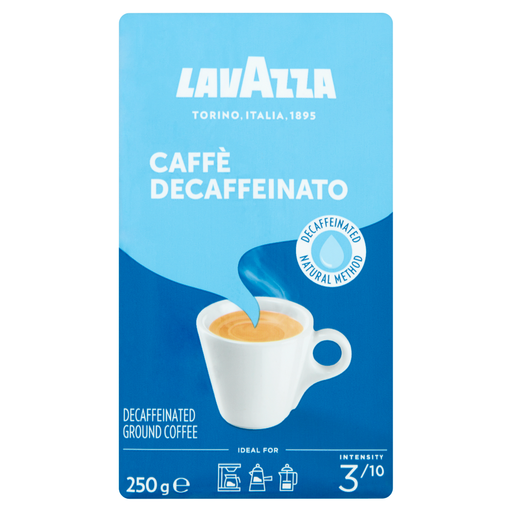
Lavazza describes its 250g Decaf roast-and-ground coffee as suitable for filter and French press preparation.
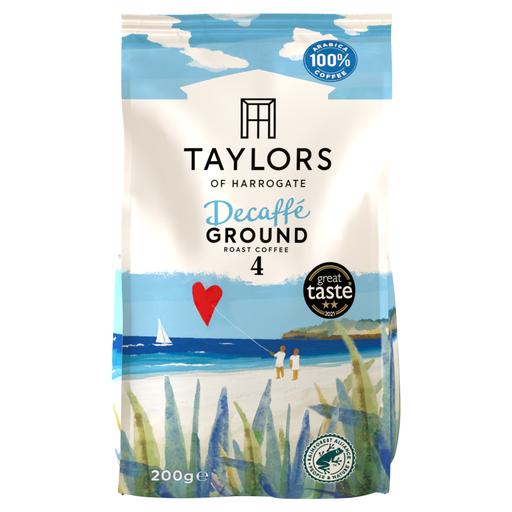
Its 200g Decaffé ground coffee is described as 100% Arabica and suitable for a cafetière or filter.
Its 227g single-origin Colombian decaf is described as ground coffee made from 100% Arabica beans.
Pure Decaff is a decaffeinated instant coffee, rather than a ground-coffee option for this filter-brewing decision.
Tesco lists branded ground-decaf products, including Lavazza Decaf Classico and Taylors Decaffé.
These Taylors and Lavazza packs are decaf ground-coffee options to consider when buying several packs. Check the exact variant and its filter-brewing guidance before ordering.
 No image available
This ground-decaf option is described for filter or cafetière brewing. Its product description states 100% Arabica and a water-based decaffeination method; follow the pack's instructions for storing it after opening.
 No image available
The title identifies this as a 250g decaf ground-coffee pack. Before buying it for a filter machine, confirm that the displayed pack is the ground-coffee variant and gives preparation guidance for your equipment.
Not necessarily. Sainsbury's states less than 0.1% caffeine by weight for its Decaff House Blend and Colombian Decaff; check the current pack for the declaration that applies to the coffee you choose.
No. Choose ground coffee with filter-machine preparation guidance. The Sainsbury's ground-decaf products give filter instructions, whereas Douwe Egberts Pure Decaff is freeze-dried instant coffee.
Keep reserve packs sealed and follow the instructions on each pack after opening. For its single-origin Colombian decaf, Marks & Spencer advises an airtight container for up to two weeks in the fridge or four weeks in the freezer.
No. Fairtrade is a sourcing label, 100% Arabica describes bean composition, and a water-process statement describes a decaffeination method. Check which claim applies to the particular pack; none of these statements alone establishes its flavour.