Base-camp coffee drinkers
If you have a way to heat water, instant coffee lets you make a cup without packing a coffee maker or filters. A jar can stay with the food kit for repeated use.


A decaf instant coffee jar makes sense for a base camp where you have hot water, somewhere dry to store it and plans to make several cups. Choose a size that fits the trip, then use the brands’ roast and flavour descriptions to narrow your choice rather than treating them as a taste ranking. For a trip with only a few cups or frequent moves, pre-portioned sachets may be easier to pack, though they are a different format from a jar.
A jar is most useful when the same camp will make several cups and can keep the coffee dry between uses.
If you have a way to heat water, instant coffee lets you make a cup without packing a coffee maker or filters. A jar can stay with the food kit for repeated use.
Decaf offers a coffee option for someone looking to reduce caffeine, but it is not necessarily caffeine-free. Check the exact product if your caffeine intake needs particular attention.
A multi-serve jar lets several people measure their own cups. Plan how much the group will use and make room for the jar somewhere dry.
Start with how you will make and store the coffee, then choose a pack size and flavour description that fit the trip.
| Priority | What to check | Your needs |
|---|---|---|
| Preparation | Check that the pack is instant coffee and read its directions. Plan for a mug, a spoon and a reliable way to heat water. | I want to make coffee at camp without bringing a separate brewer or filters. |
| Pack size | Use the pack’s serving guidance to plan your cups. Consider a smaller jar for fewer drinks and a larger one for repeated use. | We will make several cups over the trip, so I want enough coffee without carrying much more than we expect to use. |
| Flavour direction | Compare the stated roast and coffee type. Treat words such as bold, smooth and balanced as brand descriptions, not comparable taste scores. | I have a preference for the way my coffee tastes, but I do not need a brand’s intensity number to decide for me. |
| Caffeine | Read the exact pack label. Decaf is not necessarily caffeine-free; a label alone cannot establish whether it meets an individual medical restriction. | I am choosing decaf to limit caffeine, and need to check whether the particular coffee suits my circumstances. |
| Camp storage | Follow the pack’s storage instructions, check its best-before date and keep the closed jar away from leaks. | My food kit has a dry place for an opened jar throughout the trip. |
Decaffeinated coffee can still contain residual caffeine, which matters if you need to avoid it.
Read the exact label. If you have a medical restriction, seek advice appropriate to your circumstances rather than assuming any decaf jar will suit you.
A multi-serve jar needs a dry place between cups. The date on the pack also needs to suit your planned trip.
Work out roughly how many cups you expect to make, check the best-before date before departure and pack the closed jar away from liquids.
Kenco’s stated intensity of 7 uses its own scale. It does not establish how another brand’s coffee will taste by comparison.
Use each maker’s roast and flavour description to narrow your options, then choose the pack size that suits your camp.
These product-line details can help you compare jar formats; a brand’s flavour description is not an independent taste result.
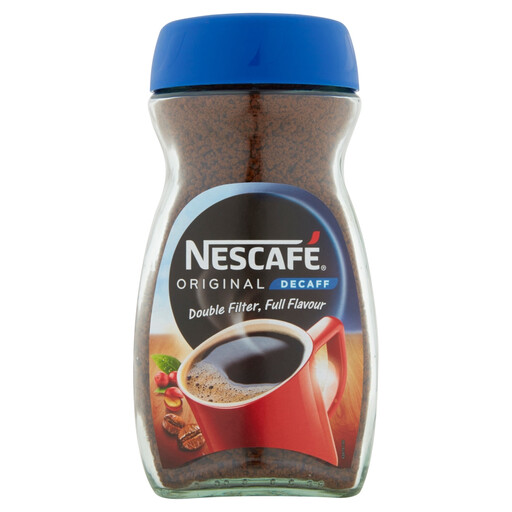
NESCAFÉ lists Original Decaf in 100 g, 190 g and 300 g formats, and Gold Blend Decaf in 95 g and 190 g formats.
Kenco lists its Decaf instant coffee in 95 g and 190 g jar sizes.
M&S lists a 200 g Gold Decaf Instant Coffee jar described as medium-roasted Arabica, Fairtrade and freeze-dried.
Tesco lists 200 g Decaff Gold and Decaffeinated Classic instant coffee jars alongside branded decaf options.
These instant decaf coffee packs suit a camping plan with hot water and dry storage. Their different sizes matter most when deciding how many cups you expect to make; check the exact pack’s date and directions before you leave.
 No image available
The 100 g pack is an option for a camp expecting fewer cups than a larger group might make. The product directions specify 1–2 teaspoons and hot water; keep the coffee in a cool, dry place. Kenco describes its Decaf coffee as a balanced medium roast.
 No image available
The 300 g pack may suit repeated cups at a base camp where you can keep a larger jar dry. It is decaffeinated soluble coffee, with cool, dry storage specified for this product. For a short trip with few planned cups, consider whether you need this pack size.
 No image available
This 190 g decaffeinated soluble coffee pack is an option for repeated camp cups. NESCAFÉ describes Gold Blend Decaf as a freeze-dried Arabica and Robusta blend with a smooth, rounded profile; that flavour description is the brand’s own. Store the pack in a cool, dry place.
 No image available
This 200 g decaffeinated soluble coffee pack can be considered for repeated cups where hot water and dry storage are available. Keep it in a cool, dry place, and check the exact pack’s preparation directions and best-before date when planning your trip.
No. Decaf can contain residual caffeine. If you need to avoid caffeine for a medical reason, check the specific product and seek personalised clinical advice rather than relying on the word decaf alone.
Start with the serving directions on the jar and the number of cups your group expects to make. NESCAFÉ gives one teaspoon, about 1.8 g, with 200 ml water as a typical mug basis for Original Decaf; follow the directions for whichever product you take.
A jar suits several cups made at a camp where you can store it dry and measure each serving. For a trip with only a few cups or frequent moves, pre-portioned sachets may be simpler to pack; they are a different format, so check the coffee and serving size on the sachets you choose.
Follow the instructions on your pack and keep its lid closed. M&S and the relevant Joybuy product information specify cool, dry storage; M&S also directs customers to the lid for the best-before end. Pack the jar away from wet food and possible liquid leaks.
Yes, check the label on the exact pack, particularly if you have an allergy or dietary requirement. Product descriptions can help you compare options before buying, but the pack is the place to confirm its ingredients and other relevant labelling.