What matters when choosing?
Start with how and when coffee will be served, then compare blends with residents before settling on an everyday option.
| Priority | What to check | Your needs |
|---|
| Routine preparation |
Check the current cup instructions, serving method and equipment required. Tesco specifies 1–2 teaspoons per cup for its Decaff Gold instant coffee; Taylors of Harrogate specifies a 4–5 minute cafetière brew for Decaffé. |
I need staff to make individual cups throughout the day, or I can allow time and equipment for a planned brewed service. |
| Caffeine status |
Read the current product label where a defined caffeine limit matters. Nescafé explains that decaffeination removes most caffeine, not necessarily all of it. |
A resident may want to reduce caffeine while keeping a coffee choice. Any individual restriction needs to be checked against their care plan. |
| Blend and flavour |
Compare the maker’s roast, bean and flavour descriptions, then offer a small tasting where practical. A description cannot establish which blend residents will prefer. |
I want an everyday cup residents will accept, with another style available if one blend does not suit everyone. |
| Single-cup or brewed service |
Check whether coffee bags suit the intended cup size and preparation routine, or whether a cafetière can be brewed and cleaned between services. Sainsbury’s lists decaf coffee bags among its coffee formats. |
For occasional brewed coffee, I may prefer individual cups rather than making a whole cafetière. |
| Current product details |
Check the pack label, ingredients, pack size and supplier terms before ordering or changing a menu. Marks & Spencer notes that product information can change. |
Staff need dependable instructions and current product information for the coffee they will actually serve. |
Which brands offer relevant options?
These brand and retailer references illustrate formats to compare; they do not establish which blend residents will prefer or what a supplier can provide.
Nescafé
Nescafé offers instant decaf varieties, including Gold Blend Decaf.
- Nescafé describes Gold Blend Decaf as a medium-roasted Arabica-and-Robusta coffee decaffeinated using water.
- Nescafé also explains that decaf coffee is not necessarily caffeine-free.
Kenco
Kenco Decaf is an instant, medium-roast option for cup-by-cup service.
- Kenco gives its Decaf an intensity rating of 7; this is the brand’s product description, not a measure of resident preference.
- Offer a tasting before assuming its described profile suits an entire home.
Taylors of Harrogate
Taylors Decaffé provides a ground-coffee option for a cafetière service.
- Taylors describes a water-decaffeinated blend and gives a 4–5 minute cafetière brewing time.
- Allow for brewing equipment and cleaning rather than treating it as an instant-cup substitute.
Tesco
Tesco Decaff Gold is an own-label instant option with stated cup-preparation directions.
- Tesco describes its 200 g product as a freeze-dried Robusta-and-Arabica coffee and specifies 1–2 teaspoons per cup.
- Check the current pack and supplier arrangements before adopting it for routine service.
Sainsbury's
Sainsbury's decaf category offers formats to compare rather than a single blend profile.
- Its UK category lists instant coffee, ground coffee, beans, coffee bags and pods.
- Check the particular product’s preparation method and current details; a category listing does not describe every blend.
M&S
M&S Decaf Ground Coffee is a ground-coffee option for homes planning brewed service.
- M&S describes its 227 g ground coffee as 100% Arabica, with honeycomb and malt flavour notes.
- M&S advises checking the pack because product information can change.
Joybuy instant decaf options
These instant and soluble decaf coffees are options to compare for individual-cup care-home service. Check each pack’s directions and let resident preference and individual care plans guide any routine choice.
 No image available
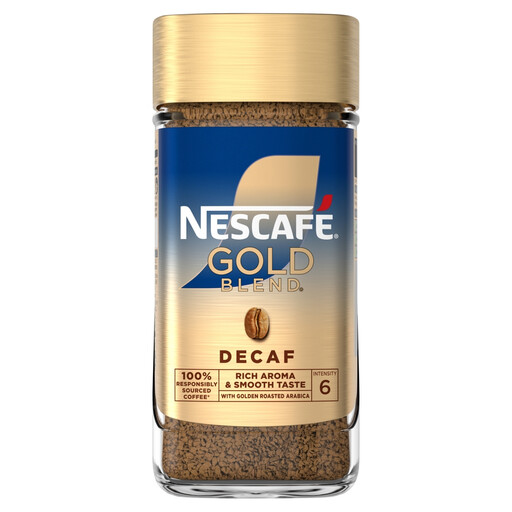
NESCAFÉ Gold Blend Decaf Coffee 190g
A 190 g Gold Blend Decaf option to compare for routine individual cups. Nescafé describes this blend as instant coffee made with Arabica and Robusta beans. Check the current label if an individual caffeine limit applies, and ask residents whether they like the blend before making it a default.
View on Joybuy
 No image available
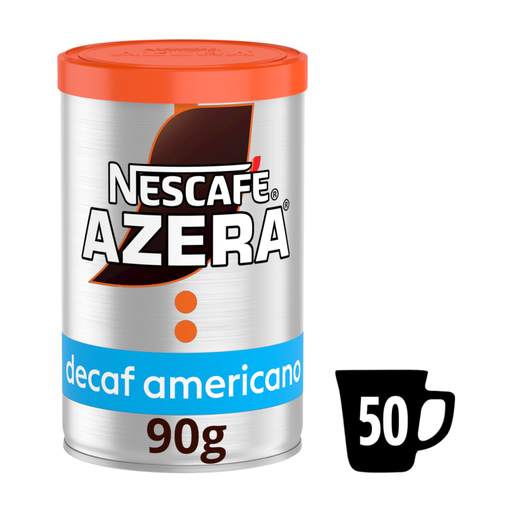
NESCAFÉ Azera Decaf Americano 90g
This 90 g decaf Americano offers another blend for residents to compare during a tasting. Check the pack’s preparation directions and caffeine information against the intended service and any individual requirements.
View on Joybuy
 No image available
Kenco Decaff Instant Coffee 100g
This 100 g instant coffee is an individual-cup option for routine service. Kenco describes its Decaf range as a medium roast with an intensity rating of 7; confirm the current pack directions and resident acceptance before standardising it.
View on Joybuy
 No image available
NESCAFÉ Original Decaff Coffee 300g
The 300 g pack offers another decaf choice to assess for regular coffee service. Check its current cup directions and ask residents to try it rather than treating the larger pack as evidence of suitability.
View on Joybuy
 No image available
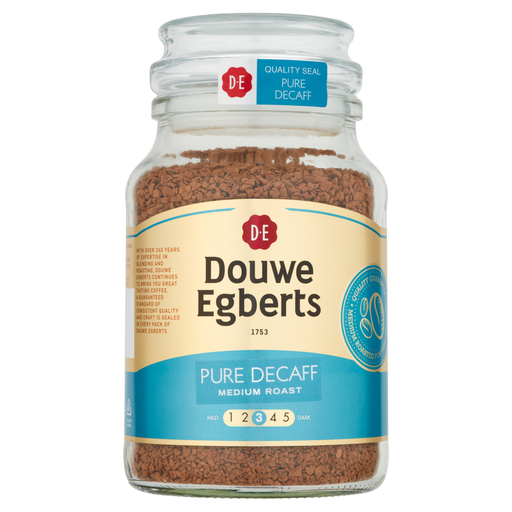
Douwe Egberts Pure Decaffeinated Instant Coffee 190g
This 190 g instant coffee is another option for individual cups. Before using it for routine hot service, check the current pack directions; follow individual advice where a defined caffeine limit applies.
View on Joybuy
Common questions
Can a care home serve decaf as its routine coffee option?
Yes, as a routine option, provided the service still accounts for individual drinking needs and preferences. The Care Quality Commission says providers must ensure people have enough to drink to meet their hydration needs; a standard coffee choice does not replace an individual care plan.
Is decaf coffee completely caffeine-free?
Not necessarily. Nescafé explains that decaffeination removes most caffeine, but decaf coffee can still contain some. Check the current label and follow individual clinical advice if a resident has a defined caffeine limit.
Which decaf format suits frequent individual cups?
Instant decaf is a practical choice when staff need to prepare cups without a brewing step. For comparison, Tesco gives teaspoon-per-cup directions for its Decaff Gold instant coffee, while Taylors of Harrogate specifies a 4–5 minute cafetière brew for Decaffé ground coffee.
Should staff check the label again when reordering?
Yes. Product information can change, and Marks & Spencer advises checking the information on the pack. Review the current ingredients and directions for the coffee and any accompaniments the home serves with it.


