Hosts who want to control the additions
If you are serving scones with jam and clotted cream, an unsweetened concentrate lets you choose how much milk or plant drink to add, if any.


Choose an unsweetened decaf concentrate if you want to control the milk and sweetness served alongside scones, jam and clotted cream. A ready-to-drink oat latte is quicker but brings its own caramel flavour and oat ingredients; decaf ground coffee lets you make cold brew ahead, provided you have time to steep and strain it.
If you are serving scones with jam and clotted cream, an unsweetened concentrate lets you choose how much milk or plant drink to add, if any.
A decaf drink offers an alternative to standard caffeinated coffee at an afternoon gathering. Do not assume that a decaf label means zero caffeine in every serving.
Nolo’s ready-to-drink cold-brew latte is an oat-based option when its caramel flavour suits the cream tea and the guest can consume oat ingredients.
Decide how much control you want over the finished drink, then check preparation time and ingredients before planning the serving.
| Priority | What to check | Your needs |
|---|---|---|
| Flavour and additions | Tesco describes Nescafé Espresso Concentrated Decaf as unsweetened and mixable with a chosen liquid. Sainsbury’s lists Nolo as a caramel-flavoured oat latte. | I want to decide how much milk and sweetness accompanies the scones, jam and clotted cream, rather than serve a pre-mixed flavour. |
| Serving time | A ready-to-drink latte needs no brewing; concentrate needs mixing. Decaffeinate.co.uk describes making cold brew from decaf grounds by steeping for 12 to 18 hours, then straining. | If guests are arriving soon, I need a drink I can serve without preparing a batch the day before. |
| Ingredients | Check the current ingredient and allergen label, not just a dairy-free description. Sainsbury’s lists Nolo as containing oat. | An oat latte works for me only if everyone drinking it can consume its ingredients. |
| Caffeine expectations | Check information for the exact product and serving. Waitrose lists caffeine content of no more than 0.10% for Lavazza Decaf Classico beans; that figure does not describe every decaf coffee. | If I need to avoid caffeine entirely, a general decaf label is not enough to establish a zero-caffeine serving. |
| Storage | Check the pack before and after opening. Tesco says to refrigerate its Nescafé concentrate after opening and use it within 14 days. | I may serve coffee over several gatherings, so the opened-product instructions matter. |
A caramel-flavoured oat latte brings a different taste to a cream tea from an unsweetened concentrate.
Read the flavour and ingredient description. Choose a pre-mixed latte when you want that flavour, or a concentrate when you want to choose the additions yourself.
Sainsbury’s lists Nolo as dairy-free but containing oat.
Check the current pack’s ingredient and allergen information for anyone who needs to avoid oat.
Waitrose states a caffeine content of no more than 0.10% for Lavazza Decaf Classico beans. That product-specific figure is not a zero-caffeine guarantee or a per-serving figure.
If complete caffeine avoidance matters, check the exact product’s current information rather than relying on the word ‘decaf’.
Decaffeinate.co.uk describes a 12-to-18-hour steep for decaf grounds, followed by straining.
Prepare ground coffee ahead, or choose a drink that only needs mixing or serving if time is short.
These examples illustrate different drink formats; each description applies to the named product rather than everything the brand makes.
Espresso Concentrated Decaf is a mix-it-yourself route to iced decaf coffee, not a pre-mixed latte.
Decaf Classic Cold Brew Oat Latte is a single-serve, ready-to-drink option.
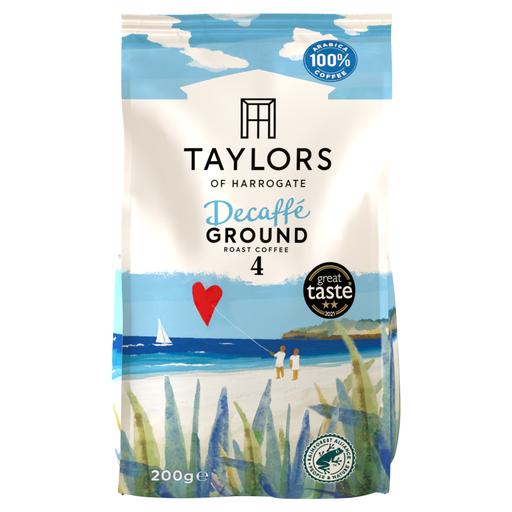
Decaffé Ground Coffee is an option for preparing coffee separately from the milk and sweetening served at the table.
Decaf Classico beans are a separate make-ahead option for someone with a grinder.
These ground coffees are options for preparing a decaf drink ahead of a cream tea while choosing milk and sweetening separately. They are not ready-to-drink lattes or iced-coffee concentrates.
 No image available
Ground decaf coffee for a batch prepared before guests arrive, with milk and sweetening added separately. The listing identifies it as 100% Arabica and water-decaffeinated. Check that its grind suits your cold-brew method; the manufacturer’s guidance is for cafetière or filter preparation.
 No image available
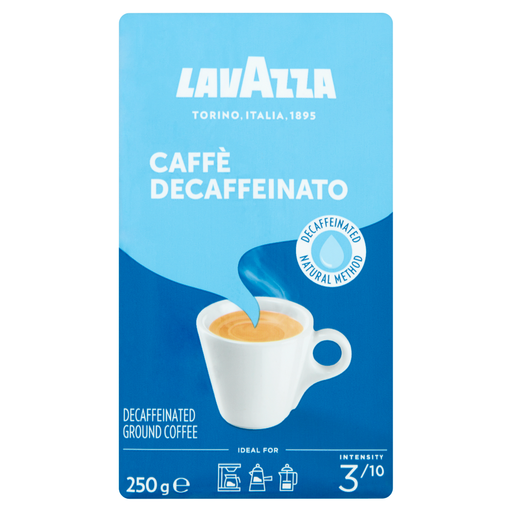
A ground decaf option for making coffee ahead and deciding on additions when serving. Check its grind against your intended cold-brew method before planning the batch. The caffeine statement for Lavazza’s Decaf Classico beans should not be assumed to apply to this ground 250g product.
An unsweetened concentrate gives you control over what you add to the drink. Tesco describes Nescafé Espresso Concentrated Decaf as mixable with a liquid of your choice, unlike a pre-mixed flavoured latte.
Yes, if you want its ready-to-drink convenience and caramel flavour. Sainsbury’s lists it as dairy-free but containing oat, so check the current label if oat ingredients matter to a guest.
Yes. Decaffeinate.co.uk describes steeping decaffeinated grounds in cold or room-temperature water for 12 to 18 hours before straining. Check the grind and preparation guidance for the coffee you buy rather than treating that general method as a product-specific recipe.
No: a decaf label alone does not establish zero caffeine. Waitrose states caffeine content of no more than 0.10% for Lavazza Decaf Classico beans, but that is not a per-serving figure or a specification for a different Lavazza product.
Follow the instructions for the exact drink. Tesco says to refrigerate Nescafé Espresso Concentrated Decaf after opening and use it within 14 days. Sainsbury’s says to refrigerate Nolo after opening and consume it within 24 hours.