People with diabetes reducing caffeine
If you grind beans at home and are switching to decaf, look for a caffeine statement on the exact product when a stated limit matters to you. Decaf beans can still contain caffeine.


If you have diabetes and want to reduce caffeine, choose decaf whole beans for that purpose, not for an assumed diabetes-specific benefit. Diabetes UK includes unsweetened coffee among suitable drinks and notes that milk provides carbohydrate, so consider the finished cup as well as the beans. Compare the exact product’s caffeine declaration, brewing guidance and pack size; decaf does not mean caffeine-free.
If you grind beans at home and are switching to decaf, look for a caffeine statement on the exact product when a stated limit matters to you. Decaf beans can still contain caffeine.
If you drink coffee black or without added sugar, you can compare beans by roast, flavour and brewing method. Diabetes UK includes unsweetened coffee among suitable drinks and advises cutting back on sugar in coffee.
If your usual cup includes milk or sweetened additions, consider those ingredients separately from the decaf beans. Diabetes UK notes that milk provides carbohydrate.
Start with why you want decaf, then check what goes into your cup and whether the beans suit your equipment.
| Priority | What to check | Your needs |
|---|---|---|
| Remaining caffeine | Check the caffeine declaration on the exact pack. The cited illy 250 g whole-bean product states no higher than 0.1% caffeine; Tesco states no higher than 0.10% for Lavazza Decaf Classico Coffee Beans 500 g. Neither figure applies to all decaf beans. | I’m switching to decaf to reduce caffeine and want a stated limit for the product I buy. |
| The finished drink | Decide whether you will add sugar, syrup or milk. Diabetes UK advises cutting back on sugar in coffee and notes that milk provides carbohydrate. | My usual coffee includes milk or something sweet, so I need to consider more than the beans. |
| Brewing fit | Check that the beans are whole and that the maker’s preparation guidance covers your brewer. Lavazza UK lists espresso, moka and filter for its cited decaf beans; Union positions its Decaf Blend for espresso or bean-to-cup use. | I want beans I can grind for the coffee maker I use at home. |
| Pack size and storage | Compare the pack size with how quickly you use beans, then follow its storage instructions after opening. The cited Taylors Decaffé listing recommends use within two weeks of opening. | A smaller pack may suit me if I make decaf only occasionally. |
Decaf can contain residual caffeine. The limits stated for the cited illy and Lavazza products apply to those products, not to every bean labelled decaf.
If a stated limit matters to you, check the caffeine declaration on the current pack.
Milk and sweetened additions change what is in the finished cup. Diabetes UK notes that milk provides carbohydrate and advises cutting back on sugar in coffee.
Choose beans for your caffeine and flavour preferences, then consider milk, sugar and syrups as separate parts of your usual drink.
Waitrose describes a natural-water method for Taylors Decaffé, while Union says its Decaf Blend uses water and carbon dioxide. Those descriptions identify processes, not a diabetes-specific advantage.
Use method information to compare products if the process matters to you, without treating it as a measure of the drink’s suitability for diabetes.
Whole beans need to be ground for the brewer you use, and post-opening guidance differs between products.
Check preparation guidance before buying and choose a pack size you can use within its stated storage period.
These references describe specific decaf bean products and ranges; they do not establish a benefit for diabetes or indicate which products Joybuy sells.
Lavazza UK describes a 500 g medium-roast decaf blend of Arabica and Robusta for espresso, moka and filter.
illy’s cited 250 g decaf whole-bean product is described as a classic roast with caramel, orange blossom and jasmine notes.
Waitrose describes Taylors Decaffé Beans as 100% Arabica coffee decaffeinated using a natural water method.
Union positions its Decaf Blend as a dark-roast whole-bean option for espresso or bean-to-cup preparation.
M&S describes its Roast & Ritual decaf coffee beans as made with 100% decaffeinated Arabica beans.
Waitrose No.1 Organic Fairtrade Peru Decaf Coffee Beans are presented as a 227 g, single-origin whole-bean option.
These Joybuy options are decaf whole beans in 500 g and 200 g packs. Compare the current pack details if you need a stated caffeine limit, a particular decaffeination method or guidance for your brewer.
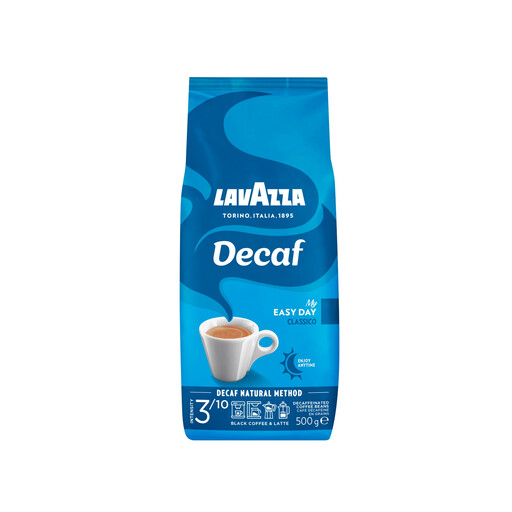 Image unavailable
The 500 g whole-bean pack may suit a household that makes decaf regularly. If you need a specific remaining caffeine limit or use a particular brewer, check the current pack’s declarations and preparation guidance.
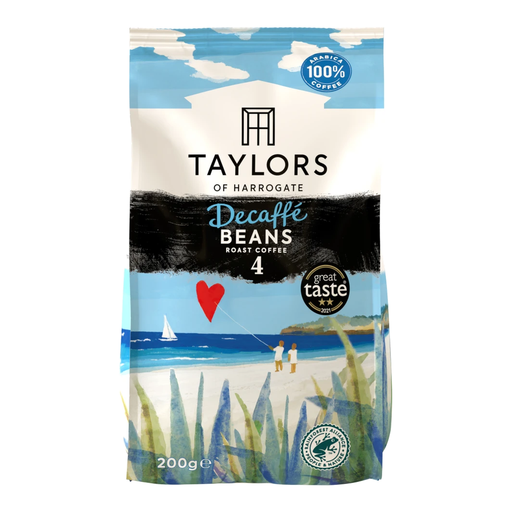 Image unavailable
The 200 g whole-bean pack is worth considering if you make decaf less often. Check the current pack for its remaining caffeine declaration, brewing guidance and instructions for use after opening.
Decaf describes a reduction in caffeine, not a diabetes-specific benefit. Diabetes UK includes unsweetened coffee among suitable drinks; consider any sugar, syrup or milk in the finished cup when following your own dietary plan.
No: do not assume decaf means caffeine-free. illy states no higher than 0.1% caffeine for its cited 250 g whole-bean decaf, and Tesco states no higher than 0.10% for Lavazza Decaf Classico Coffee Beans 500 g. Check the exact product rather than applying either limit to all decaf beans.
Decaf does not remove the carbohydrate supplied by additions. Diabetes UK notes that milk provides carbohydrate, so consider the milk and any sweetened ingredients in the finished drink.
Follow the instructions on the exact pack. The cited Taylors Decaffé listing advises sealing the beans and using them within two weeks of opening; other products may give different storage directions.