Choose decaf beans for the cup you want at elevenses: a smooth blend for an everyday mug, a darker profile for espresso, or a brighter medium roast if you enjoy some acidity. If reducing caffeine is your main reason for switching, look for a stated residual-caffeine figure; decaf does not necessarily mean caffeine-free. Check that the beans and your grinder suit your brewing method.
Who is choosing these beans?
Mid-morning coffee drinkers reducing caffeine
If you want to keep grinding beans for elevenses while changing your caffeine intake, compare product-specific caffeine statements where available. A decaf label alone does not tell you that the coffee contains no caffeine.
Home espresso and bean-to-cup users
Look for a whole-bean decaf whose stated brewing recommendation fits your machine. Roast and flavour descriptions can then help you choose between a darker espresso-style cup and a different profile.
Filter and cafetière drinkers
For a longer elevenses coffee, check the brewing guidance and choose the flavour you prefer. The product examples here range from caramel-and-malt notes to a medium roast described with lemon acidity.
What should you check?
Start with caffeine information if that drives the purchase, then narrow the choice by cup style, brewing equipment and how quickly you will use the beans.
| Priority |
What to check |
Your needs |
| Residual caffeine |
Look for a product-specific caffeine statement rather than relying on the word decaf. illy states that its Whole Bean Decaffeinated Coffee contains no more than 0.1% caffeine; consider caffeine from other food and drink too. |
I want a stated figure if reducing caffeine is the main reason I am changing beans. |
| Roast and flavour |
Compare descriptions for the exact coffee: Union describes a dark roast with chocolate and caramel, while Waitrose describes its No.1 Peru decaf as a medium roast with lemon acidity and caramel. |
A darker espresso-style cup appeals to me, or I may prefer a brighter mug for elevenses. |
| Brewing method |
Check the product’s recommended brewer and whether you can grind whole beans appropriately. Lavazza lists Decaf Intenso for espresso, moka, filter and French press; Union particularly recommends espresso or bean-to-cup for its Decaf Blend. |
My beans need to work with the equipment and grinder I use at home. |
| Pack and storage |
Choose a pack size you expect to finish within the product’s storage guidance. Waitrose & Partners advises using its No.1 Peru decaf within two weeks of opening; follow the instructions on the pack you buy. |
If elevenses is my only coffee of the day, I would rather buy an amount I can use while the pack is open. |
What can make the choice disappointing?
-
Assuming every decaf has the same caffeine content
A decaf label does not give a product-specific residual-caffeine figure. illy states a limit of no more than 0.1% for its Whole Bean Decaffeinated Coffee, which is more useful for this comparison than the label alone.
If the figure matters to you, check the exact product’s current pack or listing and account for caffeine from other food and drink.
-
Buying a dark roast when you want a brighter cup
Union describes its Decaf Blend as dark with chocolate-and-caramel character; Waitrose describes its No.1 Peru decaf as a medium roast with lemon acidity. Those are different flavour directions, even though both are decaf beans.
Choose from the roast and flavour description that matches the coffee you enjoy, rather than decaf status alone.
-
Choosing a pack without considering how you will store it
Waitrose & Partners advises using its No.1 Peru decaf within two weeks of opening. A pack that lasts much longer than the product’s guidance may not fit an occasional elevenses routine.
Compare pack size with your usual consumption and follow the storage instructions on the current pack.
-
Overlooking the grinder
Whole beans need grinding before brewing, and a product’s recommended method may favour a particular type of coffee. Union, for example, particularly recommends espresso or bean-to-cup for its Decaf Blend.
Check that you have a grinder suitable for your brewer, then follow your brewer’s grind guidance.
Which brands offer relevant examples?
These named coffees illustrate different decaf styles; the descriptions apply to those products, not to every coffee made by each brand.
Lavazza
Lavazza’s Decaf Intenso is a medium-dark whole-bean option for drinkers considering espresso, moka, filter or French press.
- Lavazza describes a 500 g Arabica-Robusta blend with intensity 6/10 and tobacco and woody notes.
- That described profile is a different choice from a lighter, fruit-led cup.
illy
illy’s Whole Bean Decaffeinated Coffee is worth considering when a stated residual-caffeine limit matters to the choice.
- illy states that this 250 g coffee contains no more than 0.1% caffeine and describes caramel, orange blossom and jasmine notes.
- Its stated flavour direction differs from a dark, chocolate-led roast.
Taylors of Harrogate
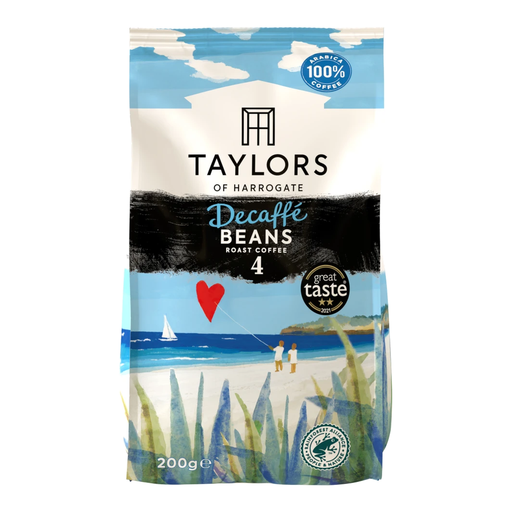
Taylors of Harrogate Decaffé Beans offer a smooth caramel-and-malt flavour direction, according to the Waitrose & Partners listing.
- The listing describes 100% Arabica beans decaffeinated using a water method.
- Waitrose & Partners advises using this coffee within two weeks of opening.
Union
Union describes its Decaf Blend as a dark coffee particularly suited to espresso or bean-to-cup brewing.
- Union describes chocolate-and-caramel character in this blend.
- A dark profile may be less appealing if you want a lighter cup with more acidity.
M&S
M&S describes its Roast & Ritual Decaf Coffee Beans as a 227 g pack of decaffeinated Arabica beans.
- The product description characterises the flavour as deep and rich.
- Its pack guidance calls for airtight refrigerated or frozen storage after opening; check the current instructions before choosing it.
Waitrose
Waitrose No.1 Organic Fairtrade Peru Decaf offers a medium-roast alternative for people interested in a brighter flavour description.
- Waitrose describes 100% Arabica beans with lemon acidity and caramel notes, and lists Organic and Fairtrade claims for this product.
- Waitrose advises airtight storage and use within two weeks of opening.
Decaf beans on Joybuy
These whole-bean decaf options cover a smooth Taylors coffee and a Lavazza coffee described with roasted caramel and chocolate notes. Choose between them using the pack size and flavour description, and check the current listing for any caffeine or brewing details important to you.
 No image available
Taylors Decaf Coffee Beans 200 g
Consider these whole beans if you prefer the listing’s smooth caramel-and-malt description for an elevenses cup. The 200 g pack contains decaffeinated Arabica beans; check the current pack for brewing guidance and caffeine information if either is decisive for you.
View on Joybuy
 No image available
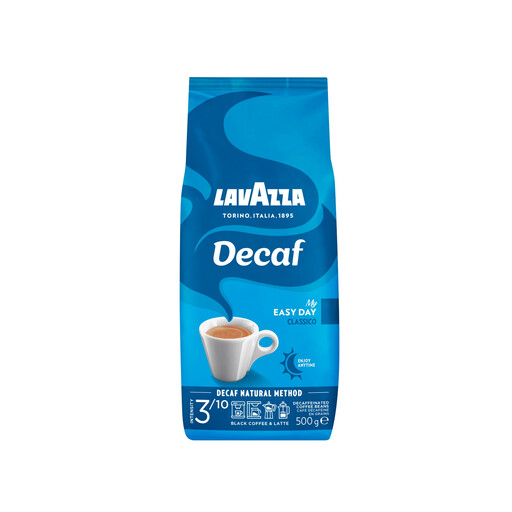
Lavazza Decaffeinated Coffee Beans 500 g
This 500 g whole-bean decaf is described with roasted caramel and chocolate notes. Check the current pack for bean composition, residual-caffeine information and brewing guidance if those details affect your choice.
View on Joybuy
Questions about decaf beans
Does decaf mean caffeine-free?
No: do not assume a decaf coffee contains zero caffeine. For example, illy states that its Whole Bean Decaffeinated Coffee contains no more than 0.1% caffeine. If the amount matters to your decision, check the statement for the exact beans you intend to buy.
Which decaf beans work for espresso, filter coffee or a cafetière?
Check the recommendation for the specific beans as well as your brewer’s grind guidance. Lavazza lists Decaf Intenso for espresso, moka, filter and French press, while Union particularly recommends its Decaf Blend for espresso or bean-to-cup.
How should I store decaf beans after opening?
Follow the instructions for the exact coffee you buy. Waitrose & Partners advises using Taylors Decaffé Beans and its No.1 Peru decaf within two weeks of opening; M&S gives refrigerated and frozen storage instructions for its Roast & Ritual beans.


