Hosts making cups to order
Instant decaf lets you prepare separate drinks without a cafetière or coffee machine, leaving guests free to add milk or sugar to their own cups.


For brunch with friends, choose instant decaf if you want to make separate cups without a brewer. Ground coffee suits a shared pot when you have a suitable cafetière or filter setup; whole beans add a need for a grinder, while coffee bags and pods suit individual servings only if their preparation method works for you. Decaf does not necessarily mean caffeine-free.
Instant decaf lets you prepare separate drinks without a cafetière or coffee machine, leaving guests free to add milk or sugar to their own cups.
Ground decaf is an option for a shared cafetière or filter brew. Whole beans also require a grinder suited to your brewing method.
Decaf may suit someone seeking less caffeine than regular coffee, but the label alone does not establish a zero-caffeine drink. Check the particular product if its caffeine amount matters.
Start with how you plan to serve the coffee, then match its format to the equipment you have.
| Priority | What to check | Your needs |
|---|---|---|
| Serving several guests | Instant coffee makes separate cups; ground coffee needs a suitable brewer for a shared batch. Coffee bags are steeped individually. | I want to offer decaf without making everyone wait for the same pot, and let guests add milk or sugar to their own cups. |
| Brewing equipment | Match ground coffee to your cafetière or filter setup. For beans, check that you also have a grinder; for pods, confirm the exact machine system. | A shared brewed pot appeals to me, but I only want a format I can prepare with the equipment already at home. |
| Individual servings | Check whether a coffee bag can be steeped in a mug or whether a pod matches your machine. Neither requires making a shared pot. | Separate servings make sense when friends want coffee at different times. |
| Caffeine information | Read the current pack for product-specific caffeine information if you need a quantified amount. Do not interpret “decaf” as “caffeine-free”. | I want a decaf choice, but an exact caffeine amount matters more to me than the format. |
Beans need grinding, ground coffee needs a suitable brewer, and pods need a compatible machine.
Check your grinder, cafetière, filter setup or pod system before choosing the coffee format. Instant decaf avoids those brewing-equipment requirements.
A decaf label is not a promise of zero caffeine, which matters when a guest needs to know the amount in a drink.
Check the current product information for a quantified caffeine amount if one is needed; do not substitute the word “decaf” for that figure.
These brand ranges illustrate different ways to serve decaf; check the format and pack of the particular product you choose.
An instant-decaf option for making cups separately.
An instant-decaf option for hot-water preparation.
A ground-decaf option for hosts with brewing equipment.
An own-label range that includes instant decaf.
A decaf category spanning several preparation formats.
A coffee-bag option for making individually steeped cups.
These options cover instant decaf for separate brunch cups and one ground coffee for a brewed serving. Choose between them according to your serving plans and equipment.
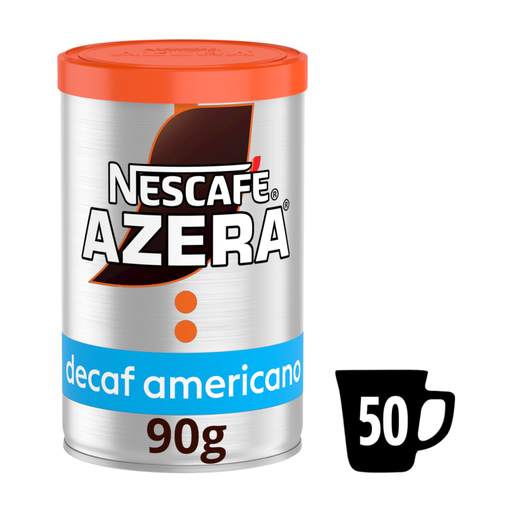 No image available
An option in the instant-decaf selection for making individual brunch drinks. The pack is 90g; check its directions and caffeine information if either matters to your guests.
 No image available
This 190g instant decaf suits separate cups rather than a shared brewed pot. Nescafé describes Gold Blend Decaf as prepared with hot water and decaffeinated using water; the decaf name does not establish a zero-caffeine amount.
 No image available
A 300g decaf option in the instant-coffee selection for individual brunch cups. Follow the pack directions for preparation and check the product information if a quantified caffeine amount matters.
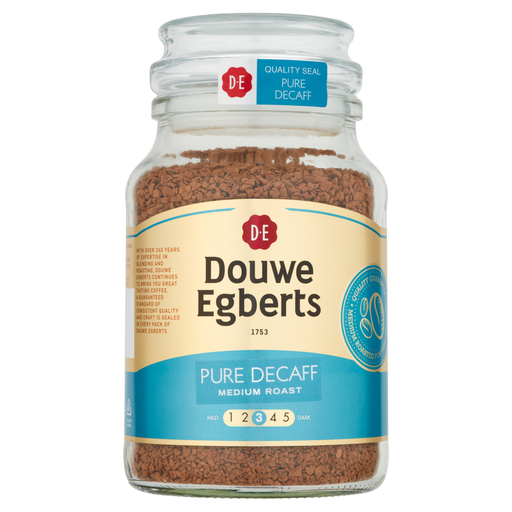 No image available
This 190g instant coffee is an option for separate decaf servings. Follow the current pack directions and check its caffeine information if an exact amount is important; do not assume decaf means zero caffeine.
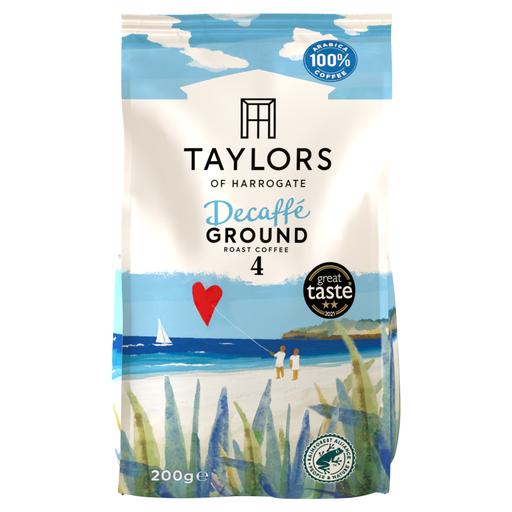 No image available
This 200g ground decaf is a brewed-coffee option if you have a suitable cafetière or filter setup. Check that the grind works with your brewer; Taylors describes its decaffeination method as the Pure Water Process.
No: “decaf” should not be taken as a zero-caffeine claim. If a particular amount matters, look for caffeine information for the specific product rather than relying on its format or name.
Instant decaf lets you make cups individually without a cafetière or coffee machine. Coffee bags also make separate steeped servings; choose ground coffee instead when you want to brew with equipment you already have.
M&S says to store its opened Decaf Ground Coffee in an airtight container for up to 2 weeks in the refrigerator or up to 4 weeks in the freezer. Check the label on the pack you buy for its current instructions.