Canteen managers serving a short lunch rush
An instant format can fit a service point that already has a kettle or urn. Managers should also consider how staff will measure each cup and keep the drinks area ready for the next customer.


For a short lunch service with a kettle or urn, plain instant decaf is a practical starting point: staff can prepare it with hot water and offer milk separately. Choose ground coffee or beans if the canteen already has a suitable brewing routine, or individually wrapped coffee bags when single portions matter more than serving a continuous queue. Label each option accurately: decaf can contain traces of caffeine, and milk-containing drinks need clear allergen information.
An instant format can fit a service point that already has a kettle or urn. Managers should also consider how staff will measure each cup and keep the drinks area ready for the next customer.
A clearly labelled decaf choice lets employees distinguish it from regular coffee. NESCAFÉ UK notes that decaffeinated coffee can still contain small traces of caffeine, so decaf should not be labelled caffeine-free without evidence for the specific product.
Staff need access to the exact drink’s ingredient and allergen information when serving milk-containing sachets or adding milk. Keep plain coffee and prepared milky drinks clearly distinguishable.
Start with the lunch-service setup, then choose the decaf format and drink style that staff can prepare and describe consistently.
| Priority | What to check | Your needs |
|---|---|---|
| Caffeine description | Check the exact product’s decaf designation and any caffeine statement. NESCAFÉ UK says its decaf coffee can retain small traces of caffeine. | I want a decaf choice that is easy to identify, without being told it contains no caffeine. |
| Lunch-service pace | Match preparation to the queue and available hot water. Check the pack’s cup measure so staff can prepare drinks consistently. | When the queue is short on time, I need a drink staff can prepare within the existing service routine. |
| Brewing equipment | For ground coffee or beans, confirm a compatible brewer, staff procedures and cleaning capacity. Instant coffee and coffee bags do not require a coffee machine. | A brewed decaf appeals to me if the canteen already runs a brewed-coffee station; otherwise, a simpler hot-water format fits the setup. |
| Portions and drink style | Compare jars with individually wrapped coffee bags or sachets. M&S describes its decaf coffee bags as individually wrapped and single-serve; a bag also needs steeping and disposal. | For occasional orders or meetings, I may prefer a separate portion. For regular service, I would consider how staff measure drinks from a jar. |
| Milk and allergens | Check the ingredients of the exact drink and how customers can obtain allergen information. NESCAFÉ lists milk in its decaf cappuccino; Food Standards Agency guidance covers allergen information for prepacked and non-prepacked drinks in catering. | If I need to avoid milk, I need to know whether it is already in the drink rather than assuming every decaf option is plain coffee. |
NESCAFÉ UK says decaffeinated coffee can retain small traces of caffeine. Someone relying on a caffeine-free claim could therefore misunderstand what is being served.
Label the drink decaf and check the exact product before making a more specific caffeine claim.
Ground coffee and beans need compatible brewing equipment and a preparation and cleaning routine, which can complicate a short lunch service.
Check the equipment and expected order pattern before adding a brewed option; use an instant format if the service point is set up only for hot-water drinks.
NESCAFÉ’s decaf cappuccino contains milk. Its ingredients matter to customers checking allergens, even though the drink is prepared with hot water.
Keep the exact pack information accessible at service and make sure staff know how to direct customers to it. The Food Standards Agency’s catering guidance addresses allergen information for drinks.
These examples show formats to assess for a canteen; a brand’s range does not establish which individual product suits your equipment or purchasing arrangements.
Its UK range includes plain instant decaf and a milk-containing decaf cappuccino sachet.
Kenco describes its Decaf as an instant coffee and offers a 150 g refill.
Tesco lists Taylors decaf coffee bags, ground coffee and beans.
Tesco lists own-brand instant decaf alongside ground-coffee and bean options.
Sainsbury’s lists a 200 g Gold Roast decaffeinated instant coffee for hot-water preparation.
M&S lists decaf coffee bags, instant coffee and ground coffee.
These options include plain instant decaf and a milk-containing cappuccino sachet. Match each pack to the intended service routine, particularly where portion instructions or hot-water preparation need checking.
 Image unavailable
Consider this sachet format when a ready-made milky decaf drink is wanted. It contains milk: keep the exact pack’s ingredient and allergen information accessible at service.
 Image unavailable
A plain instant decaf option for a canteen using hot water. Agree a cup measure with staff so drinks are prepared consistently, and check the exact pack for ingredients and allergens.
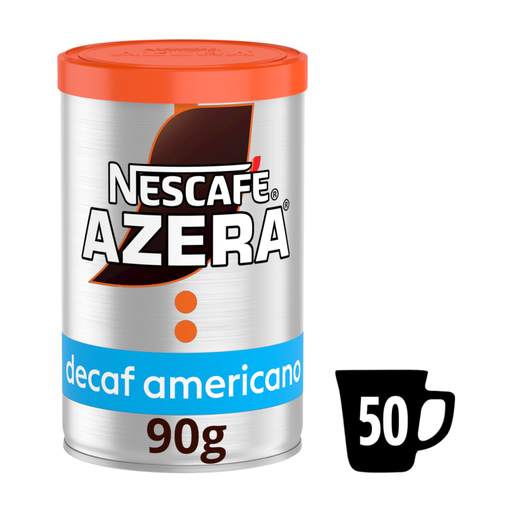 Image unavailable
An instant Americano-style decaf option to consider for a hot-water station. Check the exact pack’s cup measure when planning portions and staff instructions.
 Image unavailable
A decaf coffee option for a hot-water service point. Confirm the cup measure on the exact pack before setting a preparation routine for the 190 g jar.
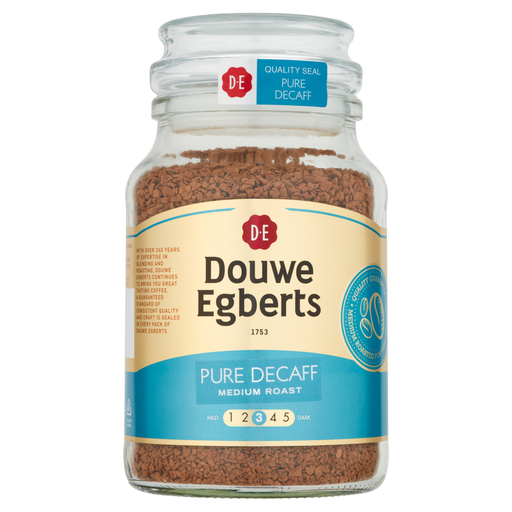 Image unavailable
This instant decaf may fit a simple canteen station, but check the exact pack’s preparation and cup-measure instructions before assigning it to hot-drink service. Do not describe decaf as caffeine-free.
Not necessarily. NESCAFÉ UK says decaffeinated coffee can still contain small traces of caffeine. In a canteen, label a drink decaf rather than caffeine-free unless that stronger description is substantiated for the exact product.
Plain instant decaf is a practical choice when hot water is already available and staff have a consistent cup measure. Coffee bags provide separate portions but need steeping and disposal; ground coffee and beans call for a compatible brewing and cleaning routine.
Check the exact sachet’s ingredients and make its allergen information accessible to customers. NESCAFÉ’s decaf cappuccino contains milk. The Food Standards Agency’s UK catering guidance addresses allergen information for both prepacked and non-prepacked food and drink.
Confirm that the format works with the available equipment and lunch-service routine. Then check the exact pack’s preparation directions, ingredients and allergens, and follow the workplace’s procedures for storage, cleaning and service.