What matters when choosing?
Decide how often you will change beans, then check whether the grinder fits your kitchen and covers the coffee methods you actually use.
| Concern |
What to check |
Who this matters to |
| Regular-coffee carry-over |
Check whether you can grind one portion at a time and reach the burrs and exit area for cleaning. Treat low-retention claims as model-specific. |
When I change from regular beans to decaf, I want less of the previous coffee entering my next dose; around 31% of consumers put carry-over control first. |
| Small-kitchen fit |
Compare the exact model’s width, depth and height with your available space, allowing room to load beans, remove parts and route a cord if needed. |
My grinder needs to fit beneath a cupboard and still be usable there; compact fit is the primary need for roughly 31% of consumers. |
| Brew-method range |
Confirm explicit espresso support if you make espresso; otherwise, check the documented settings for your brewed-coffee methods. |
I make more than one style of decaf and want settings for each without changing grinders; approximately 23% of consumers prioritise brew-method flexibility. |
| Cleaning and repeat dosing |
Check access for cleaning and whether the controls suit your routine. A timer can repeat a grinding interval, but use a scale when dose weight matters. |
I want daily grinding and residue removal to stay manageable; for around 15% of consumers, that routine is the main concern. |
Joybuy grinders for this use
These electric and manual grinders offer different approaches to decaf preparation in a small kitchen. Compare the stated grind settings and storage features with your routine, then check cleaning access if you regularly change between regular and decaf beans.
 No image available
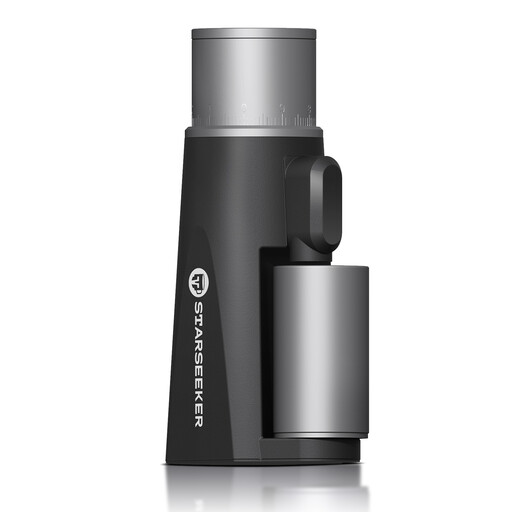
STARSEEKER EDGEmini Portable Wireless Electric Coffee Grinder
Consider this portable burr grinder if you want to change beans between doses and make espresso or pour-over coffee. Check the cleaning procedure and how much coffee remains after grinding before relying on it to limit carry-over.
View on Joybuy
 No image available
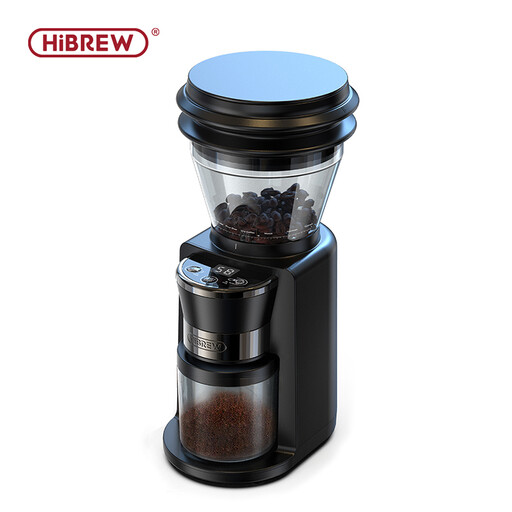
HiBREW G3 Electric Coffee Grinder, 34-Gear, 48 mm Burr
Consider the G3 if you want an electric grinder with adjustable settings and space for its bean container. Its name specifies a 210 g bean container and 100 g grounds container; check how you would empty and clean the bean path when switching to decaf.
View on Joybuy
 No image available
TIMEMORE Portable Electric Burr Grinder, 30 Settings, Black
Its stated 30 settings cover espresso through French press, making it relevant if you alternate brew methods. Check whether brush cleaning gives you enough access to remove grounds when you change beans, and follow the model’s instructions on consecutive grinding batches.
View on Joybuy
 No image available
STARESSO D6E PLUS Portable Electric Coffee Grinder
Consider this rechargeable grinder if you want an electric option for espresso, pour-over or French press. The product name specifies a 1000 mAh battery and Type-C charging; check the space needed to use and clean it, and use the stated dry-brush cleaning method rather than rinsing the burr.
View on Joybuy
 No image available
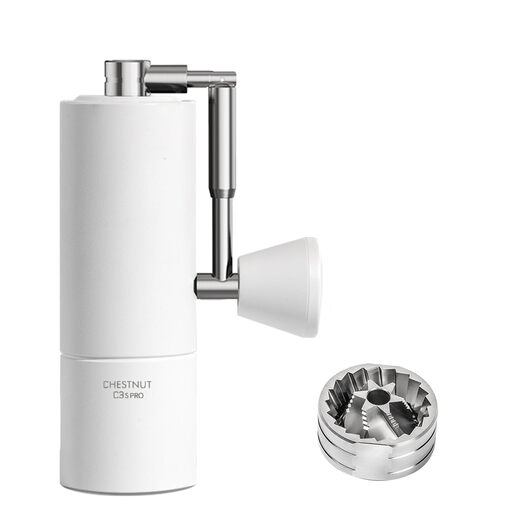
TIMEMORE Chestnut C3S PRO Manual Grinder, White
Consider a manual grinder if a foldable handle helps with storage and you are comfortable grinding by hand. This model has an S2C conical burr and is described for espresso through French press; check its dimensions and cleaning access for your kitchen.
View on Joybuy
Common questions
Do I need a separate grinder for decaf?
Not necessarily: one grinder can serve decaf if it suits your brew method and you manage grounds left behind when changing beans. Clive Coffee identifies residual grounds and oils as a source of carry-over, so check how to empty and clean the burr chamber and exit area if you also grind regular coffee.
What should I measure before putting a grinder in a small kitchen?
Measure width, depth and height, then allow room to load beans, remove parts for cleaning and route a power cord where applicable. For a model-specific reference, Fellow lists the Opus 2 at 206 × 130 × 267 mm; use the dimensions of the grinder you intend to buy for your final check.
Can a filter-focused grinder make decaf espresso?
Do not assume it can: choose a grinder whose stated settings explicitly cover espresso if you use an espresso machine. Baratza, for instance, assigns settings 1–20 of the Encore ESP to espresso and 21–40 to brewed-coffee methods.
What can I do with an old electric grinder?
Check an electrical-waste collection option rather than putting the grinder straight into general waste. Ask the retailer about equivalent-item take-back and consult your local authority for a suitable collection or recycling route.


