Decaf beans do not require a specialist grinder: choose a burr grinder with a grind range suited to the coffee you make. If you alternate between regular and decaf beans, cleaning access and a practical bean-switching workflow matter because retained grounds can enter the next dose; espresso also calls for fine, repeatable adjustment.
Who is choosing a decaf grinder?
Regular-and-decaf switchers
If you use one grinder for both coffees, grounds left in its burr chamber or chute can affect the next dose. Clive Coffee identifies retained grounds and oils as sources of flavour crossover; access for cleaning is therefore particularly relevant to your choice.
Decaf espresso makers
If you make decaf espresso, look for fine grind adjustment and a dosing method you can repeat. Baratza, for example, identifies a separate espresso adjustment range on its Encore ESP.
Filter and cafetière decaf drinkers
If you mainly make filter coffee, pour-over, cafetière or cold brew, concentrate on the settings for those methods rather than buying for espresso features you will not use. Sage Appliances explains that coarser grounds suit longer brewing methods.
What matters when choosing?
Start with your usual brewing method, then consider how often you need to change between regular and decaf beans.
| Concern |
What to check |
Who this matters to |
| Regular-coffee carryover |
Check the bean-switching workflow and whether you can clean the burr chamber and chute as directed by the manufacturer. |
If I grind regular coffee before decaf, I want to limit grounds entering my next dose. Around 40% of consumers put carryover control first. |
| Decaf espresso adjustment |
Confirm an espresso grind range, how finely the settings can be adjusted and how doses are measured or controlled. |
When making decaf espresso, I need to adjust the grind without losing track of my usual dose; around 30% of consumers prioritise this precision. |
| Range across brewing methods |
Match the stated settings to your main brewer, particularly if you move between filter, cafetière and finer-grind methods. |
I change brewing methods and want usable settings for each one, rather than features for a brewer I never use. Broad grind-range flexibility comes first for around 30% of consumers. |
Mistakes to avoid
-
Assuming every burr grinder prevents carryover
Grounds can remain in the burr chamber and chute, so regular coffee may enter a subsequent decaf dose.
If you switch beans often, check the model’s single-dose workflow and the manufacturer’s instructions for accessing and cleaning those areas.
-
Assuming any fine setting will be convenient for espresso
A grinder may reach a fine grind yet offer an adjustment or dosing workflow that does not suit your espresso setup.
Confirm that the maker specifies espresso use, then check the adjustment method and how you will dose into your machine.
-
Using water inside a grinder without checking the instructions
Moisture can make grounds stick to burrs and may cause problems in grinders not designed for wet cleaning.
Follow the exact model’s cleaning instructions. Brush the burr chamber and chute where directed, and wash only parts the manufacturer says are washable.
Relevant grinder brands for reference
Baratza
Baratza has models relevant to espresso grinding and to households that change coffee beans regularly.
- Baratza states that the Encore ESP uses settings 1–20 for espresso and 21–40 for filter, French press and cold brew; its upper burr releases for cleaning.
- Features vary by model: the Encore ESP Pro adds stated single-dose and timer modes. Check the exact model’s cleaning workflow and suitability for your brewing method.
Wilfa
Wilfa’s Uniform Evo is relevant if you use several brewing methods and want an integrated way to weigh coffee.
- Wilfa lists 64 mm flat burrs, 41 settings with micro-adjustments and an integrated scale with 0.1 g accuracy for the Uniform Evo.
- Those specifications do not establish how much coffee remains when you change beans; check its cleaning and switching workflow if carryover is your priority.
Sage
Sage is relevant to shoppers considering adjustable burr grinding for home espresso and other brewing methods.
- Sage Appliances’ brewing guidance explains how grind size affects water flow across different methods.
- That general guidance is not a specification for every Sage grinder. Check the exact model’s settings, dosing method and cleaning instructions.
Joybuy grinders to consider
These grinders offer different approaches to decaf for espresso and longer brewing methods. If you also grind regular coffee, assess the cleaning workflow of the individual model before choosing.
 No image available
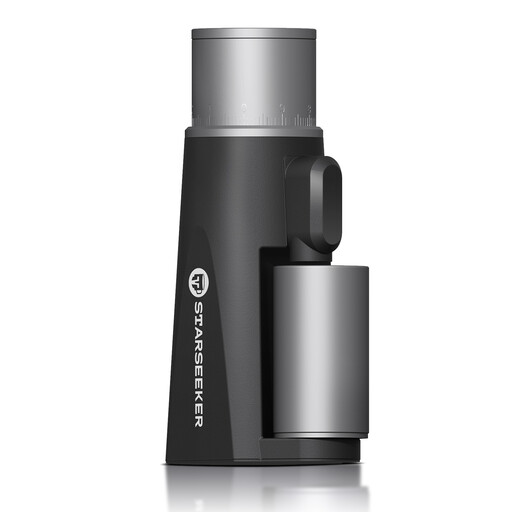
STARSEEKER EDGEmini Portable Wireless Conical Burr Coffee Grinder
Consider this portable electric model if you make decaf as espresso or pour-over and want to check a compact grinder’s cleaning access before switching beans.
Its product name specifies conical burrs and use for espresso and pour-over. The product instructions caution that very light roasts may jam when ground finely for espresso.
View on Joybuy
 No image available
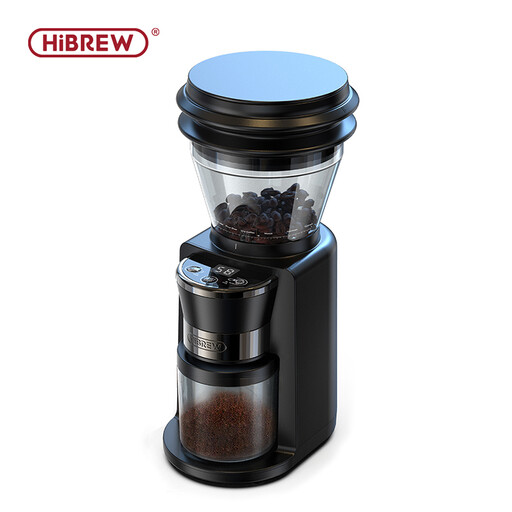
HiBREW G3 Electric Coffee Grinder
Consider the G3 if you want stated adjustment and dosing options for decaf, while checking how you would clear retained grounds when changing beans.
The product name specifies 34 grind settings, a 48 mm conical burr, a 210 g bean container and a 100 g grounds container, with manual and automatic modes.
Its instructions say to use the integrated air blower only after the motor has stopped; do not put fingers or brushes into the grinder while it is connected to power.
View on Joybuy
 No image available
STARESSO D6E PLUS Portable Electric Burr Coffee Grinder
Consider this rechargeable grinder if you make decaf in different places and need adjustable settings; check that its adjustment suits your main brewing method.
The product name lists espresso, pour-over and French press use, one-touch operation, Type-C charging and a 1000 mAh battery.
Follow the product’s dry-brush cleaning instructions and do not rinse the burr with water.
View on Joybuy
 No image available
TIMEMORE Portable Electric Burr Coffee Grinder, Black
Consider this portable model for decaf across different brewing methods, but take its brush-only cleaning approach into account if you regularly switch from caffeinated beans.
The product name specifies 30 settings spanning espresso to French press, alongside automatic stop and clog protection.
The product instructions recommend no more than 13 consecutive batches, or six consecutive espresso batches, to avoid overheating.
View on Joybuy
 No image available
Sage the Smart Grinder™ Pro BCG820BSSUK, Brushed Stainless Steel
Consider this model if you make decaf by more than one brewing method and want to compare its stated settings with the brewer you use most.
The product name specifies 60 grind settings, a conical burr and Dosing iQ™ technology. If you alternate with regular coffee, check the model’s cleaning procedure before purchase.
View on Joybuy
Frequently asked questions
Do decaf beans need a special coffee grinder?
No: choose a grinder for your brewing method rather than one marketed specifically for decaf. Espresso calls for fine, adjustable grinding; filter and cafetière require settings suited to their coarser grinds. If you share the grinder with regular coffee, also consider retained grounds and cleaning access.
Is a separate grinder for decaf worth considering?
It can be worth considering if you switch frequently and want to keep the two coffees separate. If you prefer one grinder, check whether its dosing and cleaning workflow makes changing beans practical; a burr grinder alone does not prevent carryover.
How should I clean a grinder shared by regular and decaf coffee?
Follow the instructions for your exact model. Baratza advises brushing loose grounds from the burr chamber and chute where those parts are accessible; wash removable parts only if their manufacturer permits it, and dry them fully before reassembly.
Can a grinder make decaf coffee caffeine-free?
No. Grinding changes the size of the coffee particles; it does not remove caffeine from the beans. If you need to avoid caffeine, check the coffee product itself and seek relevant professional advice where necessary.


