Home workers with short lunch breaks
Individual instant sachets offer a measured portion when you have hot water but do not want to weigh coffee. Nestlé Professional UK specifies one 1.8g sachet for a 200ml cup of its NESCAFÉ Original Decaf.


Buy a large case of decaf only if its stated serving count fits your rate of use and you have somewhere suitable to store it; “bulk” does not mean 240 servings. Instant sachets make portioning straightforward for a short lunch break, while coffee bags suit a brewed drink made with a mug and hot water but need time to steep. A jar or beans may suit an existing routine, though neither pack weight nor case size tells you the number of prepared cups without a stated yield.
The useful pack size depends on how you make lunch-time coffee and how often you will use it.
Individual instant sachets offer a measured portion when you have hot water but do not want to weigh coffee. Nestlé Professional UK specifies one 1.8g sachet for a 200ml cup of its NESCAFÉ Original Decaf.
A case may fit repeated use, but check its actual unit count, the pack date and storage instructions against how quickly the household will get through it.
Decaf coffee bags offer a mug-and-hot-water method without a coffee machine. Raw Bean Coffee advises allowing three to four minutes for its bags to brew, which may matter during a short break.
Choose the preparation method first, then compare counts and serving information within that format. A 240-serving target is useful only when the pack declares how many drinks it makes.
| Priority | What to check | Your needs |
|---|---|---|
| Quick portions | Check whether each sachet makes one cup and how much water the maker specifies. Nestlé Professional UK states one 1.8g Original Decaf sachet per 200ml cup. | I want to make lunch-time coffee with hot water and no measuring. An individually portioned instant sachet fits that routine. |
| Coffee format | Check whether the product is instant, a coffee bag, ground coffee or beans, and what equipment it needs. Raw Bean Coffee advises a three-to-four-minute infusion for its coffee bags. | I prefer a brewed mug but do not have a machine at lunchtime. A coffee bag lets me use a mug and hot water if I can allow time for it to steep. |
| Case count | Read the number of units and the stated drinks per unit; do not calculate cup yield from pack weight alone. Nestlé Professional UK lists 200 Original Decaf sachets per case, while Out of Eden lists a 300-pack of Wheatleys decaf coffee bags. | If I am buying ahead, I need the actual serving count—not just a large-looking box—to match how often the coffee will be used. |
| Storage | Check the chosen pack’s date, seal and storage instructions, and plan where a case will go. | I want enough coffee for repeated lunches without buying more than I can store and use as intended. |
| Caffeine | Check the product label if caffeine intake matters to you. NESCAFÉ explains that decaf is not necessarily caffeine-free. | I need to account for caffeine from decaf coffee as well as other foods and drinks, rather than treating “decaf” as zero caffeine. |
Case sizes differ. Nestlé Professional UK lists 200 sachets of Original Decaf, while Out of Eden lists Wheatleys decaf coffee bags in a 300-pack; neither is a 240-count case.
Check the declared number of sachets or bags and the drinks each unit is intended to make before ordering.
Instant sachets dissolve in hot water, coffee bags need time to brew, and beans need a suitable preparation setup. A pack count or weight alone does not tell you how convenient a drink will be at lunch.
Compare serving information within the format you will actually prepare, and check any equipment requirements before choosing ground coffee or beans.
NESCAFÉ states that decaf coffee can still contain caffeine. That distinction matters if you are keeping track of caffeine from several foods and drinks.
Read the chosen pack’s information; seek individual professional advice if a caffeine limit is medically relevant to you.
A large quantity needs suitable storage and a realistic rate of use. Do not apply one manufacturer’s shelf-life or storage statement to another product.
Check the date and storage directions on the case you receive, then consider how many portions you are likely to prepare each week.
These examples illustrate the formats worth distinguishing; a brand’s wider range does not establish the count or preparation method of a particular pack.
Nestlé Professional UK lists Original Decaf as a case of 200 individual 1.8g instant-coffee sachets, each specified for a 200ml cup. NESCAFÉ also offers decaf in jars.
Kenco lists decaf instant coffee, and Tesco Groceries lists a Kenco decaf refill. These suit a comparison with jars rather than a direct comparison of individual sachet counts.
Tesco Groceries lists Taylors decaf coffee bags, while the researched range also includes ground coffee and beans. The brewing method depends on the product.
Tesco Groceries lists own-brand decaf instant coffees in 200g packs alongside other decaf formats.
These options cover an individual-sachet bundle, instant-coffee jars and coffee beans for different home-lunch routines. Compare their stated quantities with your intended use; the sachet bundle is not a 240-serving box.
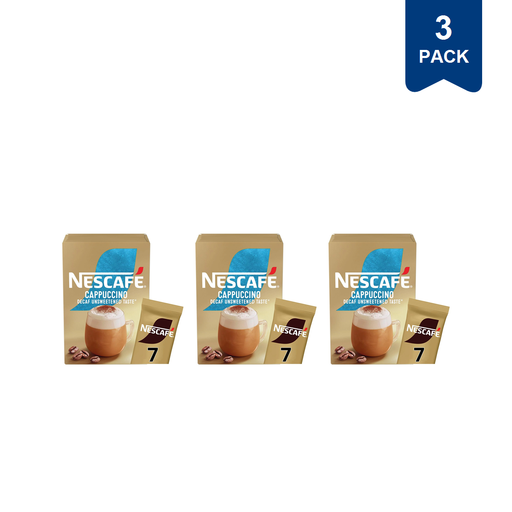 No image available
The 21 individually portioned instant-cappuccino sachets may suit a short lunch break with hot water available. This is a smaller bundle, not a 240-serving case; check the pack’s preparation directions. Product information identifies milk as an allergen and lists glucose syrup among the ingredients, so read the ingredient and nutrition information alongside the “Unsweetened” name.
 No image available
This jar is a soluble decaf option if measuring each lunch-time drink suits your routine better than opening a sachet. The 300g weight is not a stated serving count; check the pack’s preparation directions before comparing it with a counted case.
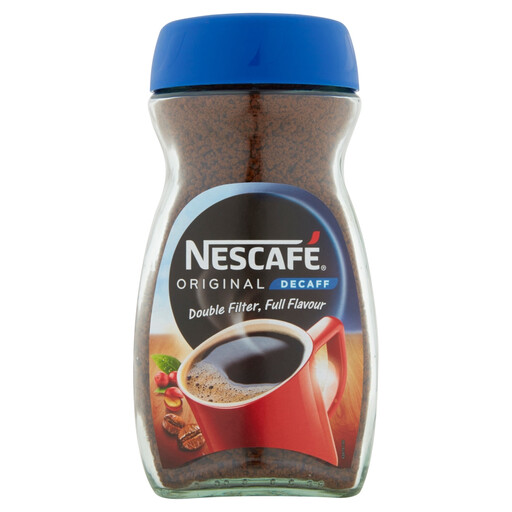 No image available
This 200g soluble-coffee jar is another measure-your-own option for repeated home lunches. It is not a counted sachet case; use the chosen pack’s serving directions if you need to estimate how long it will last.
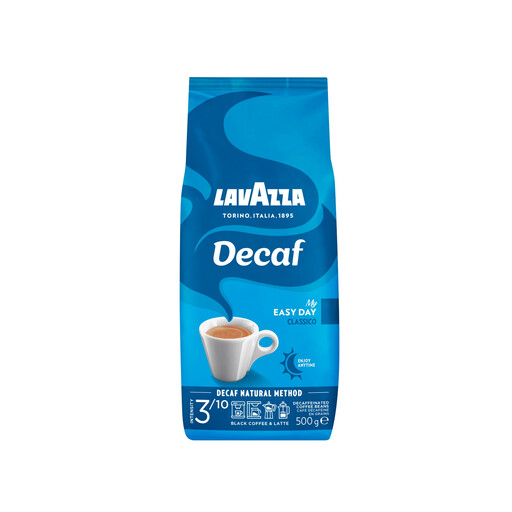 No image available
These beans are an option if you already have a suitable grinder and brewing setup and can allow for that preparation at lunch. Check equipment compatibility and your intended recipe; a 500g pack does not establish a 240-cup yield.
It can, if the box actually declares 240 servings and you have room to store and use them as directed. Do not assume the count from a “bulk” description: Nestlé Professional UK lists a 200-sachet decaf case, and Out of Eden lists a 300-pack of decaf coffee bags. Check the chosen product’s count, format, date and storage instructions.
Instant sachets and coffee bags can both be prepared with hot water, but they make different styles of drink. Nestlé Professional UK specifies one Original Decaf sachet for a 200ml cup; Raw Bean Coffee advises brewing its coffee bags in a mug for three to four minutes.
No machine is needed for the mug-and-hot-water method described by Raw Bean Coffee. Follow the directions on the particular bags you buy, as the stated preparation method belongs to that product.
No. NESCAFÉ explains that decaf coffee can still contain caffeine. If the amount matters to you, check the chosen product’s information rather than assuming that “decaf” means zero caffeine.