Home workers with short lunch breaks
Instant decaf needs a mug and hot water. Coffee bags are another option without a machine, while ground coffee needs suitable brewing equipment.


Choose instant decaf if lunch is short and you have only a kettle and mug. Ground decaf suits a cafetière or filter-machine routine when you have time to brew; coffee bags offer another mug-based option. Decaf does not guarantee zero caffeine, so check the individual product if a specific limit matters.
Instant decaf needs a mug and hot water. Coffee bags are another option without a machine, while ground coffee needs suitable brewing equipment.
A labelled decaf lets you keep a coffee routine while choosing a decaffeinated product. If you need a specific caffeine amount, check the individual pack rather than assuming decaf means none.
Ground decaf fits an existing brewing routine. Check the pack’s preparation instructions and flavour description, and allow time to make it during lunch.
Start with the equipment and time you have at lunch, then compare caffeine information and the coffee styles you would enjoy drinking.
| Priority | What to check | Your needs |
|---|---|---|
| Caffeine information | Look for decaf labelling and any product-specific residual-caffeine statement. Sainsbury’s states less than 0.1% caffeine by weight for its Colombian ground decaf; that figure does not describe every decaf coffee. | I want a decaffeinated lunch coffee, but I need to check the individual product if a specific caffeine limit matters. |
| Preparation | Instant decaf is prepared with hot water. Ground coffee needs compatible equipment; Sainsbury’s Colombian ground decaf instructs cafetière users to wait three to five minutes before plunging. | With only a kettle and mug, I would choose a format I can prepare during a short break. |
| Coffee bags | Check the pack format and brewing instructions. Taylors of Harrogate lists its Decaffé coffee bags in packs of 10. | I want a mug-based alternative to instant without setting up a cafetière. |
| Coffee character | Compare stated bean blends, roast and flavour descriptions within the format you can make. Nescafé describes AZERA Americano Decaf as an Arabica-and-Robusta blend; Taylors describes caramel and malt notes for its ground Decaffé. | Once the brewing method fits my lunch break, I can choose a flavour description that appeals to me. |
Decaffeinated coffee can retain caffeine, so its label alone cannot establish an exact amount per serving.
If an exact limit matters, check the individual pack or ask the manufacturer for product-specific information.
Ground coffee needs a suitable brewing method; it cannot be prepared by stirring it into water like instant coffee.
Choose instant decaf for a kettle-and-mug lunch, or check that you have the equipment and time required by the ground coffee’s instructions.
The M&S listing titled Decaf Ground Coffee also uses the term “freeze-dried”. Those descriptions point to different preparation methods.
Check the physical pack and its preparation instructions before choosing it for a particular brewing method.
These brand and retailer references show formats to compare; they are separate from the Joybuy products below.
Its UK range includes Original Decaf and AZERA Americano Decaf for instant-coffee routines.
Kenco describes its Decaf as a medium-roast instant coffee.
Taylors offers Decaffé ground coffee and coffee bags for different brewing setups.
Tesco’s decaf category includes own-label instant coffee alongside other coffee formats.
Its own-label choices include freeze-dried instant decaf and Colombian ground decaf.
M&S describes a 227g decaf coffee product as 100% Arabica and Fairtrade.
These Joybuy listings are instant decaf options for a working-from-home lunch with a kettle and mug. If you prefer a ground-coffee routine, use the brewing and equipment checks above when choosing a different format.
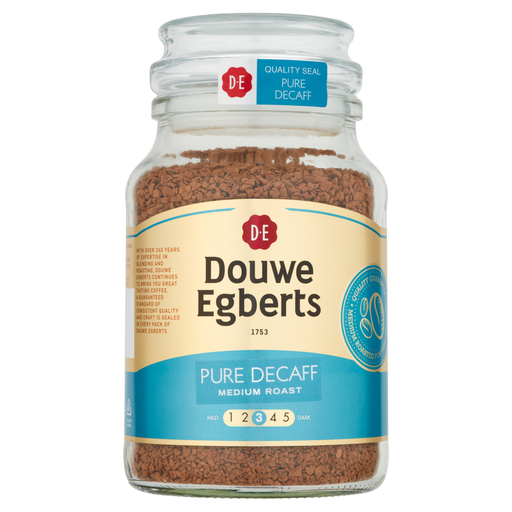 No image available
A freeze-dried instant coffee in a 190g jar for a short lunch break. If you need to track caffeine per serving, check the pack for the information needed to do so.
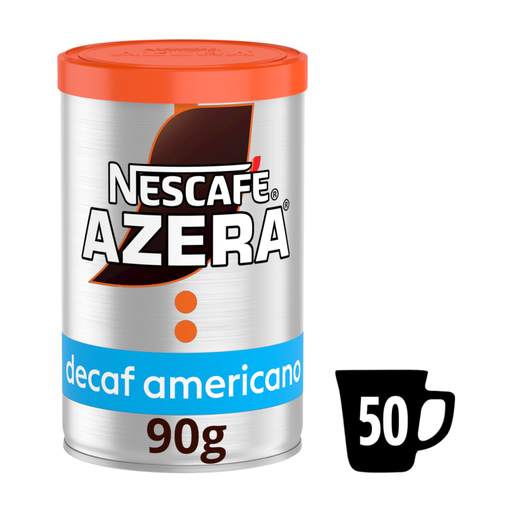 No image available
An instant decaf Americano prepared with hot water, without a machine. The 90g product contains decaffeinated soluble coffee and 5% decaffeinated roast and ground coffee.
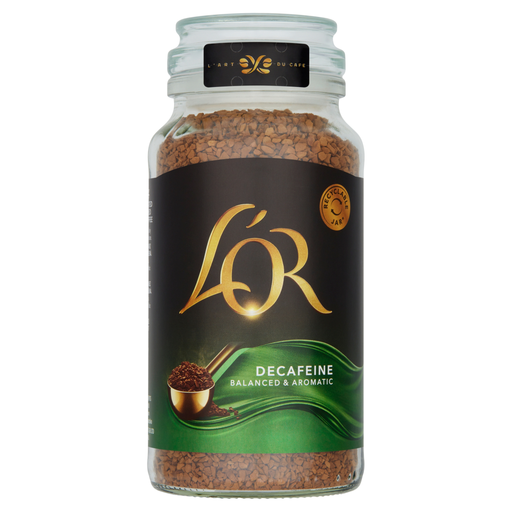 No image available
This 150g freeze-dried instant decaf offers a low-setup way to make coffee at lunch. Check the pack if you need a product-specific caffeine amount.
 No image available
A 300g jar of decaffeinated soluble coffee for a kettle-and-mug lunch. Add hot water according to the pack instructions; do not assume decaf means zero caffeine.
 No image available
This 190g jar contains decaffeinated soluble coffee prepared with hot water. For a strict caffeine limit, check the individual pack rather than relying on the decaf name alone.
Not necessarily. Nescafé says its Original Decaf has most of its caffeine removed, while Sainsbury’s states less than 0.1% caffeine by weight for its Colombian ground decaf. Check the individual product if you need a specific amount.
Choose a labelled decaf if you want a decaffeinated coffee rather than a blend containing regular coffee. Sainsbury’s describes its Taste the Difference Half Caff ground coffee as a blend of regular and decaffeinated Arabica, so it is a different choice.
Yes. Nescafé says to add hot water to AZERA Americano Decaf, while Sainsbury’s Gold Roast instant decaf instructions call for a teaspoon of coffee and hot, not boiling, water. Follow the instructions on the product you choose.
Ground decaf makes sense when you have a compatible cafetière or filter machine and time to brew during lunch. Sainsbury’s Colombian ground decaf, for example, instructs cafetière users to wait three to five minutes before plunging.