Everyday instant-coffee drinkers
If you make mugs at home or work without a brewer, compare instant jars by pack size and the blend description on the label. A smaller pack can also let you try an unfamiliar blend before committing to a larger one.


For an everyday decaf mug without brewing equipment, start with instant coffee and choose between blends by their stated roast and flavour descriptions. Ground coffee and beans make more sense if you already brew coffee; pods need to match your machine. Check the pack size and current label before choosing, rather than assuming that all decaf blends taste or prepare alike.
The useful starting point is how you make coffee now: a jar, a brewer and a pod machine call for different products.
If you make mugs at home or work without a brewer, compare instant jars by pack size and the blend description on the label. A smaller pack can also let you try an unfamiliar blend before committing to a larger one.
Look for a stated roast, bean blend or intensity that appeals to you. Nescafé, Kenco and M&S describe their decaf coffees in different ways, but those descriptions are not a like-for-like taste test.
Ground coffee and beans fit a brewing routine rather than an instant-coffee routine. Check that ground coffee suits your brewer, or that you have a grinder for whole beans; pod users need the correct machine system.
Settle the preparation method first, then compare the blend descriptions and pack details within a format you will use.
| Priority | What to check | Your needs |
|---|---|---|
| Preparation | Distinguish soluble instant coffee from ground coffee, whole beans and pods. Check the brewer, grinder or pod system required. | I want a quick mug without using a machine, so an instant jar fits my routine. If I already brew coffee, ground coffee or beans may fit instead. |
| Blend profile | Read the stated roast, bean mix and intensity where given. Treat flavour descriptions as a guide to what the brand intends, not a guarantee of taste. | A bold instant blend appeals to me more than a smoother description—or I may prefer a stated Arabica blend. The word “decaf” alone does not settle that choice. |
| Pack format | Check the pack weight and whether it is a jar, refill or bag. For beans, consider when you will grind and use an opened pack. | If I am trying a new blend, I would rather choose a pack size I expect to finish. A refill only suits me if I have a suitable container. |
| Current label | Read the pack for ingredients, allergen information and storage instructions when they matter to you. Decaf means most caffeine has been removed, not necessarily all of it, according to Nespresso UK. | When I need to keep track of caffeine or check an ingredient, I want the information on the pack I am actually using. |
Nespresso UK separates its decaf pods into Original and Vertuo ranges. A pod labelled for one system should not be chosen solely because you own a machine from the same brand.
Check your machine’s system against the designation on the pod pack before choosing.
Pods require a compatible machine for preparation.
Nespresso UK describes decaf as coffee made from beans with most of their caffeine removed. The category name alone does not tell you the caffeine content of a particular serving.
Read the current product label if caffeine intake matters to your choice.
These examples show how particular decaf product lines differ in format and stated profile; a brand name alone does not identify the blend.
Tesco lists Decaffeinated Classic Coffee and Decaff Gold Instant Coffee as separate 200g own-label instant options.
Nescafé describes Original Decaf as bold and intense, while Gold Blend Decaf is a medium-roasted Arabica-and-Robusta blend described as smooth and balanced.
Kenco Decaff refill is described as freeze-dried, balanced and rounded; Kenco Millicano Decaf is a separate barista-style instant product described as smooth and fruity.
Tesco lists Taylors decaf ground coffee and whole beans as alternatives to soluble instant coffee.
M&S describes its Gold Decaf Instant Coffee as freeze-dried coffee made with medium-roasted Arabica beans from Fairtrade farms.
These options include instant decaf for a mug without brewing equipment, plus ground coffee and beans for an existing brewing routine. Check the pack and preparation format of each product before choosing.
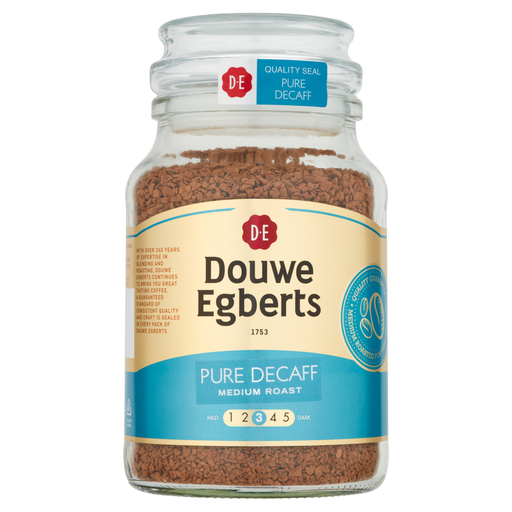 No image available
A 190g instant decaf option for making a mug without a coffee brewer. Check the pack description if a particular roast or flavour profile is important to you.
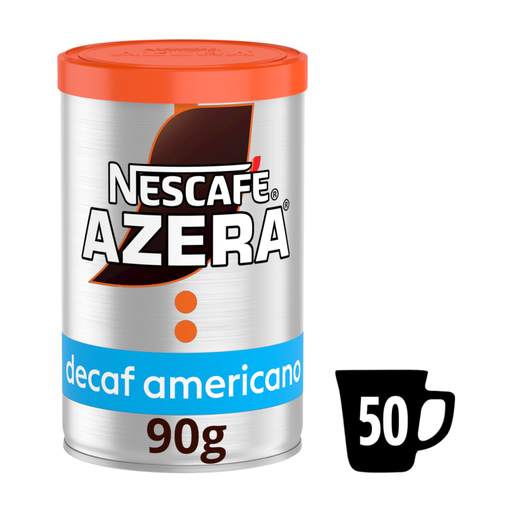 No image available
A 90g decaf Americano option to consider if that style appeals to you. Confirm the preparation instructions on the pack before buying.
 No image available
A 200g ground decaf option for shoppers who already brew coffee. Check that the grind suits your brewing equipment before choosing it instead of instant coffee.
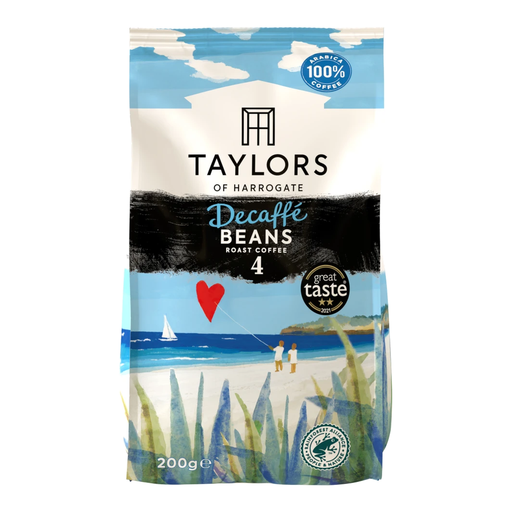 No image available
These 200 g decaf beans suit a routine that includes grinding and brewing. They are a different preparation choice from ground or instant coffee, so check that you have the equipment you intend to use.
 No image available
A 300g jar of decaffeinated soluble coffee for an instant-coffee routine. Joybuy identifies this pack as soluble coffee; check its own label for any blend details you want to compare.
No. Nespresso UK explains that decaf coffee is made from beans with most of their caffeine removed. Read the current pack information if the caffeine content matters to your choice.
Yes, particularly if an ingredient or allergen matters to you. Sainsbury’s advises reading the product label because ingredients can change; use the information on the pack rather than relying only on an online description.
Follow the instructions on your pack. The Kenco Decaff refill listing specifies a dark, dry place, while M&S specifies a cool, dry place for its Gold Decaf Instant Coffee.