Quick breakfast coffee drinkers
Standard instant decaf needs no coffee machine. Compare the brands’ bold and balanced descriptions if you want a starting point for choosing a cup to serve with a savoury breakfast.


Choose instant decaf if you want to serve coffee alongside a full Scottish breakfast with just hot water and a mug: Nescafé describes Original Decaf as bold, while Kenco describes its Decaf as balanced. If you prefer a format containing ground coffee, consider micro-ground instant; choose ground decaf when you have time and a brewer suited to the pack’s recommended method. Flavour descriptions are the brands’ own, not a guarantee of how the coffee will taste with your meal.
The useful distinction at breakfast is how you want to prepare the coffee, followed by the flavour description you prefer.
Standard instant decaf needs no coffee machine. Compare the brands’ bold and balanced descriptions if you want a starting point for choosing a cup to serve with a savoury breakfast.
Micro-ground instant combines soluble coffee with a ground-coffee component while retaining instant preparation. Check the exact pack to see what the blend contains.
Ground decaf gives you a choice of brewing methods, provided the grind suits your equipment. Check the pack’s recommended method before buying for a cafetière, filter brewer or another device.
Start with the preparation method available at breakfast, then compare the stated flavour profile and the instructions on the exact pack.
| Priority | What to check | Your needs |
|---|---|---|
| Flavour profile | Compare the maker’s bold, balanced or roast descriptions. Kenco’s intensity rating applies to its own Decaf range; it is not a cross-brand taste scale. | I’d like the coffee to remain noticeable alongside eggs, sausages and other savoury foods, but I can choose between a pronounced and a more balanced description according to taste. |
| Preparation | Standard and micro-ground instant are prepared without a brewer. For ground coffee, check the pack’s recommended equipment and grind. | If breakfast is ready and I only have a kettle and mug, instant is the simpler format. With time and suitable equipment, I can brew ground decaf. |
| Blend format | Read the ingredients rather than assuming all instant decaf is alike. Marks & Spencer lists its Decaf Americano Micro-Ground Instant Coffee as 95% decaffeinated instant coffee and 5% decaffeinated finely ground roast coffee. | I want to know whether my instant coffee includes ground coffee, not assume that the format guarantees a particular flavour. |
| Caffeine information | Check the exact product label if the amount of caffeine matters to you. Nescafé says most caffeine is removed from Original Decaf using water; that description does not specify a residual amount. | I’m choosing decaf without assuming that the word means zero caffeine. If I have individual restrictions, I need product-specific information and appropriate clinical guidance. |
| Pack instructions | Check ingredients, allergen information, brewing directions and storage advice on the current pack. Follow any after-opening instructions for ground coffee. | Before serving guests, I want the coffee to suit my equipment and any relevant ingredient requirements. |
Kenco gives its Decaf an intensity rating of 7, while Nescafé describes Original Decaf as bold. Those different descriptions do not establish which coffee will taste stronger to you.
Use a rating as a cue within its brand, then consider the format and flavour description rather than ranking different brands by their labels.
Grind matters to preparation: Marks & Spencer’s coffee guide distinguishes the fine grind used for espresso from the coarser grind suited to a French press.
Check the ground decaf pack’s recommended brewing method against your equipment. If you only plan to use a kettle and mug, consider instant coffee or coffee bags instead.
Nescafé says most caffeine is removed from Original Decaf; that is not the same as a stated zero-caffeine amount. Caffeine from other foods and drinks may also matter when intake is restricted.
Check product-specific information and follow any individual clinical advice rather than relying on the word ‘decaf’ alone.
Marks & Spencer advises that product information can change, including ingredients and allergen details.
Read the current label for ingredients, allergens, preparation and storage before buying or serving the coffee.
These examples illustrate the formats and product descriptions to compare; a brand’s flavour wording is not an independent taste test.
Nescafé describes Original Decaf instant coffee as full and bold, a profile to consider if you prefer a pronounced cup with breakfast.
Kenco describes its standard Decaf as a balanced medium instant-roast blend. Its Millicano Decaff combines decaffeinated instant coffee with finely milled whole beans.
Tesco Groceries lists Taylors decaf coffee in beans and coffee bags; its researched range listing also includes ground coffee.
Tesco Groceries lists own-brand decaf options including Classic Coffee and Gold instant coffee.
Marks & Spencer describes a micro-ground instant decaf containing 5% finely ground roast coffee and a separate medium-roast Colombian ground decaf.
These options include decaf for quick preparation alongside breakfast and ground decaf for use with suitable brewing equipment. Check each pack’s directions before choosing.
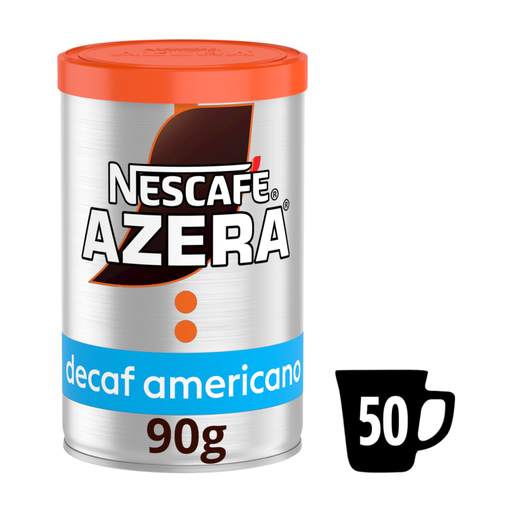 No image available
An Americano-style decaf option to consider for a quick breakfast cup. Check the pack for its ingredients and preparation directions.
 No image available
An instant decaf for serving with a kettle and mug. Nescafé describes Original Decaf as full and bold; its statement that most caffeine is removed does not establish that the coffee contains none.
 No image available
An instant decaf for a breakfast cup without brewing equipment. Joybuy’s product description identifies the ingredients as 100% decaffeinated instant coffee; check the current pack if you need product-specific caffeine information.
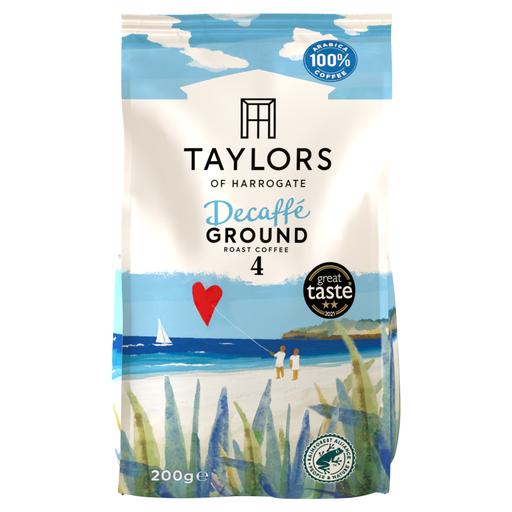 No image available
A ground decaf option for a breakfast when you have brewing equipment. Check the pack’s recommended method and grind against your brewer before buying.
Standard instant decaf needs only hot water and a mug. Micro-ground instant also offers quick preparation but contains a ground-coffee component; ground decaf calls for a brewer suited to the pack’s instructions.
Choose by the profile you prefer rather than treating either as a requirement for the meal. Nescafé calls Original Decaf full and bold, while Kenco describes its Decaf as balanced; these are manufacturer descriptions, and taste will vary by person and preparation.
Do not assume so from the word ‘decaf’ alone. Nescafé says most caffeine is removed from Original Decaf, without giving a residual amount in that description; check product-specific information if you need to manage your intake.
The NHS advises people who are pregnant not to have more than 200mg of caffeine a day. Its guidance notes that caffeine also occurs in drinks and foods besides coffee, including tea, cola and chocolate; seek individual clinical advice where needed.
Follow the instructions on the exact pack, including any container, temperature and after-opening guidance. Check these when choosing ground coffee if you expect to use the pack over several breakfasts.