Drinkers who find some decaf too mild
Look for a stated dark roast, a rich or full-flavoured description, or a clearly described bold profile. These are clues to the cup a product aims to make, not a common strength scale across brands.


For a fuller-flavoured decaf with tea and biscuits, look for an explicit dark-roast or rich-flavour description, then choose a format you can prepare. Union Rich Decaf is labelled dark roast strength 5 for ground-coffee drinkers; for an instant cup, NESCAFÉ describes Original Decaf as bold and intense. Those descriptions use different measures, so they do not establish which coffee tastes stronger.
The useful starting point is how you make coffee during a tea-and-biscuits break, followed by the flavour description on the exact pack.
Look for a stated dark roast, a rich or full-flavoured description, or a clearly described bold profile. These are clues to the cup a product aims to make, not a common strength scale across brands.
Instant decaf avoids the need for a cafetière or filter. For example, Sainsbury's directions for its Rich Roast decaf instant specify a teaspoon per cup and hot, not boiling, water.
Ground decaf gives you another set of roast and flavour descriptions to consider. Taylors describes its Decaffé ground coffee as suitable for a cafetière or filter; unlike instant coffee, it needs brewing.
Choose a preparation method you will use, then compare the flavour wording on products in that format. Treat roast and strength numbers as product-range indicators rather than a single scale shared by every brand.
| Priority | What to check | Your needs |
|---|---|---|
| Flavour profile | Read the exact pack's roast, strength and tasting descriptions. Sainsbury's lists Union Rich Decaf as dark roast strength 5; NESCAFÉ describes Original Decaf as bold and intense. The labels do not provide a shared cross-brand measure. | I want a noticeable coffee flavour alongside biscuits, rather than choosing decaf on caffeine wording alone. |
| Preparation | Check whether the coffee is instant, ground or in capsules. Taylors recommends a cafetière or filter for Decaffé ground coffee; capsules require a compatible system. | A mug-and-kettle cup fits a short break; if I have time to brew, ground coffee is also an option. |
| Caffeine information | Check caffeine-related information for the exact product if the amount matters to you. Sainsbury's declares less than 0.1% caffeine by weight for its Decaff House Blend ground coffee; that figure belongs to that product, not every decaf. | If I have a strict caffeine restriction, I need information relevant to the coffee I will actually drink. |
| Ingredients and allergens | Read the current ingredients and allergy statement for the exact variant. M&S states that its Decaf Americano Micro-Ground Instant Coffee is not suitable for people with a milk allergy. | For an allergy or ingredient requirement, I need to check the individual pack rather than assume all decaf coffees have the same labelling. |
Decaffeination and flavour description are separate considerations. The cited products include medium-strength instant coffee, dark-roast ground coffee and an instant coffee described by its maker as bold.
Shortlist the flavour profiles that appeal to you, then check that each product comes in a format you can prepare.
Union's strength 5, Taylors' roast 4 and Sainsbury's medium strength 3 are labels from different products and ranges. The numbers alone cannot tell you how those coffees compare in the cup.
Read the roast and flavour descriptions alongside the number, and use each brand's scale in its own context.
Taylors recommends a cafetière or filter for its ground Decaffé. Ground coffee needs a brewing step; instant coffee dissolves in hot water.
Check your equipment and the pack's preparation directions before choosing the format.
If you do not already have a suitable brewer, ground coffee also means obtaining and using one.
Sainsbury's gives a residual-caffeine declaration for its Decaff House Blend, while M&S marks its Decaf Americano Micro-Ground Instant Coffee as unsuitable for people with a milk allergy. Neither statement describes all decaf coffee.
Check the current pack for the exact product. If you have a medically required caffeine restriction, confirm what is suitable with the relevant clinician.
These examples show how particular decaf products are described; a brand name on its own does not establish the roast, format or flavour of every product it sells.
An instant-decaf range with different stated flavour profiles.
An instant-decaf option described in Tesco's Kenco listing as smooth and well-balanced.
Its Decaffé ground coffee is a cafetière-or-filter option with a stated roast level.
Its cited own-label decafs include both instant granules and ground coffee.
A retailer whose cited decaf-instant listing includes own-label and branded products.
The cited products offer ground and micro-ground instant decaf formats.
These options cover instant coffee for a quick cup, capsules for a Dolce Gusto setup and ground coffee for cafetière or filter brewing. Compare their stated formats and flavour descriptions against the way you make coffee.
 Image unavailable
An instant decaf to consider when a quick cup and a pronounced flavour description matter. NESCAFÉ describes Original Decaf as bold and intense; follow the directions on this 300g pack when preparing it.
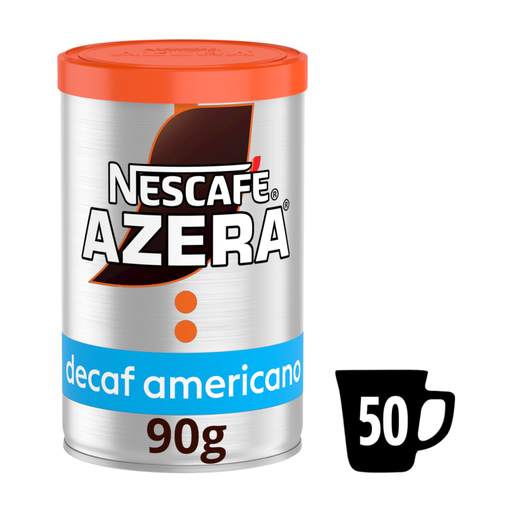 Image unavailable
For a quick Americano-style decaf break, this is a 90g Azera option. Check its preparation directions and flavour description on the pack if a particularly bold cup is your priority.
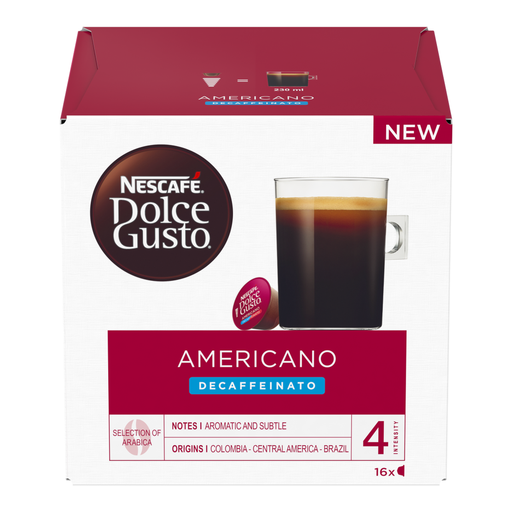 Image unavailable
A portioned decaf option for a tea-and-biscuits break if you use a compatible Dolce Gusto machine. The pack contains 16 capsules and is labelled 128g; confirm compatibility with your machine before buying.
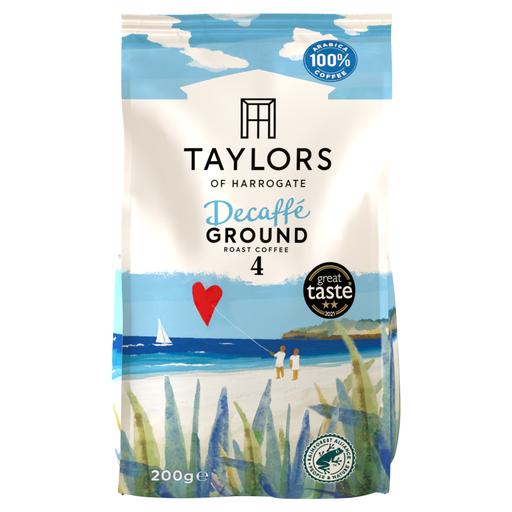 Image unavailable
A ground decaf for a break when you can brew with a cafetière or filter. This 200g coffee is described as roast 4, 100% Arabica, with caramel-and-malt notes; Taylors calls its flavour smooth and balanced rather than bold.
It may refer to a product's roast, its flavour description or a number on that brand's scale. Sainsbury's lists Union Rich Decaf as dark roast strength 5, Tesco lists Taylors Decaffé as roast 4, and NESCAFÉ describes Original Decaf as bold and intense. None of those labels is a universal cross-brand measure of taste.
Choose instant if you want to make a cup with hot water and no separate brewer. Choose ground coffee if you can use the required brewing method: Taylors recommends a cafetière or filter for Decaffé, so it will not prepare like instant coffee.
Do not assume that it is. Sainsbury's declares less than 0.1% caffeine by weight for its Decaff House Blend ground coffee, a statement specific to that product. If you have a clinical instruction to avoid caffeine, check the exact coffee's information with your clinician rather than relying on the word “decaf”.
Yes, check the exact product's current label. M&S states that its Decaf Americano Micro-Ground Instant Coffee is not suitable for people with a milk allergy. That warning should not be assumed to apply to every decaf, just as another product's allergy statement should not be applied to this one.