Hosts stocking a shared cottage kitchen
An instant decaf jar lets guests make coffee with hot water, while a securely closed pack can be kept for the next booking according to its storage instructions.


Choose a decaf instant-coffee jar if guests need to make a cup with a kettle, mug and spoon rather than a coffee machine. Match the pack size to likely use between cottage changeovers, and check that product’s serving directions: jars of the same weight need not make the same number of cups.
An instant decaf jar lets guests make coffee with hot water, while a securely closed pack can be kept for the next booking according to its storage instructions.
Pack weight, the product’s stated servings and expected occupancy help determine whether a smaller jar or a larger cupboard supply is more practical.
Roast descriptions, stated intensity, sourcing and the choice between an instant jar and coffee bags offer different ways to stock the kitchen.
Start with how guests will make the coffee, then choose a pack size and format that fit the property’s likely use.
| Priority | What to check | Your needs |
|---|---|---|
| Preparation | Check that the pack is instant coffee and read its spoon measure and water directions. Coffee bags are a different format. | I want guests to make a cup using the kettle, without working out how to use a coffee machine. |
| Pack size | Compare net weights and each product’s serving guidance. Nescafé UK & IE gives a standard measure of 1.8g for its coffee; Sainsbury’s states 55 servings for its 200g Gold Roast jar. | A smaller pack may suit occasional bookings; with frequent arrivals, I need enough coffee between changeovers. |
| Format and description | Distinguish jars, tins and coffee bags. Treat a maker’s roast or intensity description as a guide to its intended flavour profile, not a taste guarantee. | If the cottage provisions follow a particular sourcing policy, I want to check the claim on the specific pack. |
| Storage and labelling | Follow the pack’s storage instructions, close it after use and check its best-before date. Keep the original product information accessible. | I need to inspect an opened pack during changeover and leave guests able to read its ingredients. |
Nescafé UK & IE estimates about 111 mugs from 200g using its standard 1.8g measure, while Sainsbury’s states 55 servings for its 200g Gold Roast jar. Those are product-specific serving bases, not a shared measure.
Use the directions on the jar you intend to provide when planning for occupancy and length of stay.
Taylors Decaffé coffee bags contain ground coffee rather than instant granules, so they are not a like-for-like jar replacement.
Choose an instant pack for kettle-and-spoon preparation; consider coffee bags separately if that format suits the cottage.
A shared pack may remain in the kitchen across several stays, making its condition, date and storage directions relevant each time the property is prepared.
Check the best-before date and container, secure the lid, and keep the label with the coffee.
Statements about decaffeination methods, roast character or sourcing describe particular products; they do not establish which coffee every guest will prefer.
Use those details to narrow the choice, then check the current pack for the attributes that matter to your property.
Original Decaf and Gold Blend Decaf are instant-coffee options; Nescafé UK & IE describes Gold Blend Decaf as freeze-dried Arabica and Robusta coffee.
Kenco describes its Decaf instant coffee as balanced and gives it an intensity rating of 7.
Taylors Decaffé is roast-and-ground coffee; its coffee bags provide an alternative to an instant jar.
Tesco Decaff Gold is listed as a 200g freeze-dried instant-coffee jar.
Sainsbury’s Gold Roast Decaffeinated Instant Coffee Granules come in a 200g pack.
M&S Gold Decaf Instant Coffee is a 100g freeze-dried product that Marks & Spencer says is sourced from Fairtrade farms.
These instant decaf options include jars for shared cottage provision and two smaller tins. Check the container format if a jar is essential.
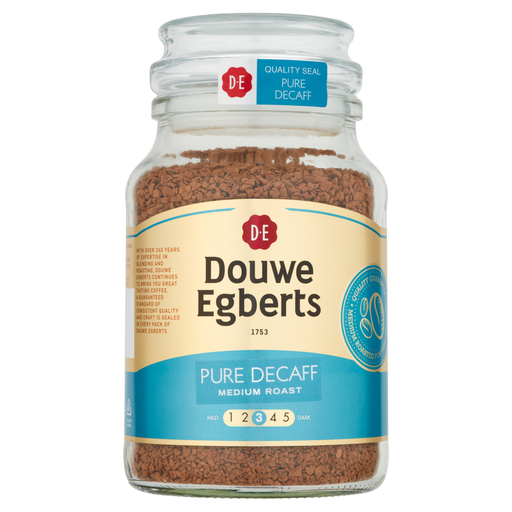 No image available
A 190g instant decaf option for the cottage cupboard. Check the pack’s hot-cup directions before choosing it for kettle-only guest preparation.
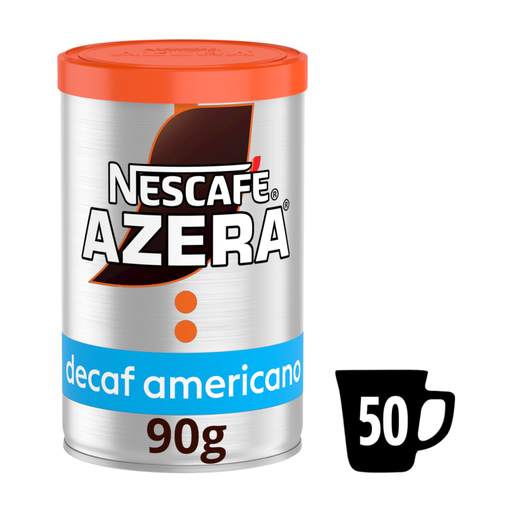 No image available
A smaller instant-decaf provision option. This 90g product is a tin, not a jar; check that its format suits the shared kitchen.
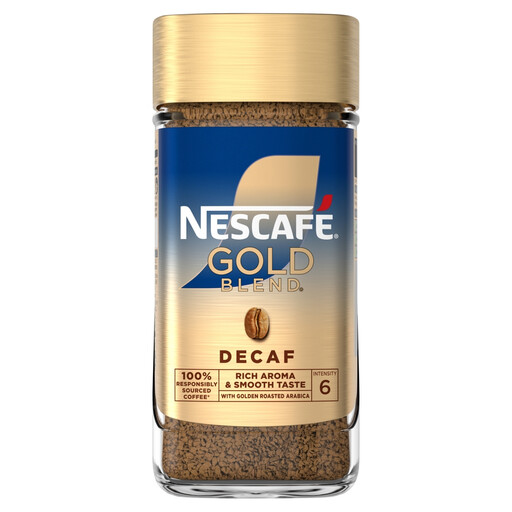 No image available
A 190g instant decaf jar for guests making coffee with hot water. Nescafé UK & IE describes Gold Blend Decaf as freeze-dried coffee made from Arabica and Robusta beans; use the pack’s serving directions to plan how much to leave.
 No image available
A 100g instant decaf pack to consider where a smaller cupboard supply makes sense. Its product description identifies a tin rather than the jar specified in this buying question.
 No image available
A 300g instant decaf jar to weigh against the number of guests and frequency of bookings. In a cottage where little coffee is used, consider whether a smaller pack would be easier to finish.
Use the chosen product’s serving guidance alongside expected occupancy and length of stay. Nescafé UK & IE estimates about 111 mugs from 200g at its standard 1.8g measure, whereas Sainsbury’s states 55 servings for its 200g Gold Roast jar; neither figure is a universal cup count for 200g of coffee.
No. Instant coffee is prepared with hot water rather than a coffee machine; leave a kettle, mug and spoon available, and follow the directions on the specific pack.
Follow its storage label, close the lid after use and inspect the jar at changeover. Check the best-before date and retain the original label while the coffee is in the cottage.
Keep the original jar or label available so guests can check the ingredients, any listed allergens, storage directions and best-before date for the coffee you have provided.
No. Nescafé UK & IE says its Original Decaf has most of the caffeine removed using only water; “most” does not mean none. Check information for the particular product if its caffeine content matters to your selection.