Who is this for?
How often you make coffee, what equipment is available on your break and how particular you are about flavour all affect which jar is worth considering.
Regular night-shift coffee drinkers
If you make a hot drink on most shifts, look for a soluble decaf coffee you can prepare with the equipment available and a jar size you can store as directed. If you are choosing decaf to limit caffeine around rest, check the current pack information for any requirements specific to you.
People stocking a shared break room
A larger jar may suit repeated use by several people. Check its weight, preparation directions and storage instructions so the format works for the shared kitchen.
Flavour-led decaf shoppers
Use a brand’s stated roast, blend or flavour description to narrow your options, not as proof of how a coffee will taste to you. A smaller available jar lets you try an unfamiliar style before choosing a larger one.
What should you check?
Start with the preparation method and jar size, then compare the flavour descriptions and pack instructions that matter to your break routine.
| Priority | What to check | Your needs |
|---|
| Decaf designation |
Check that the exact jar is labelled decaf. If you need to control caffeine closely, check its current pack information rather than assuming every decaf drink is caffeine-free. |
I want coffee during a night shift while limiting caffeine around planned rest. NHS TIMS advises minimising caffeine in the evening as part of its night-shift guidance; the timing of my own breaks and rest still matters. |
| Preparation |
Confirm that it is instant or soluble coffee, rather than ground coffee. Read the jar’s directions for the amount of coffee and water temperature. |
With only a kettle, spoon and mug on my break, I need a drink that does not require brewing equipment or a clean-up afterwards. |
| Jar size |
Check the pack weight and whether you can store the jar as directed after opening. Choose a size that fits how often the coffee will be used. |
A smaller jar appeals if I am testing a flavour; a larger one is more practical when decaf is made regularly in a shared kitchen. |
| Flavour style |
Compare the exact product’s stated roast and blend where available. Treat flavour descriptions and intensity ratings as the brand’s guidance, not independent tasting results. |
I would rather choose a flavour style that sounds appealing than commit to a large jar based on its size alone. |
| Storage |
Follow the specific pack’s instructions and keep the lid secure. Tesco specifies a cool, dark place for its Decaff Gold jar; M&S specifies a cool, dry place for Gold Decaf. |
If a jar will stay in the break room between shifts, I need somewhere suitable to keep it. |
Brand and format references
These examples show how jar size, coffee format and brand descriptions differ; they are not a list of products available on Joybuy.
Tesco
Tesco Decaff Gold is a 200g freeze-dried instant coffee made with Robusta and Arabica beans, according to Tesco.
- Tesco directs shoppers to use 1–2 teaspoons per cup with hot, not boiling, water.
- Tesco’s ‘rich and smooth’ description is a flavour cue, not an independent tasting result. Do not carry its glass jar by the lid.
Sainsbury's
Sainsbury's lists 200g Gold Roast and Rich Roast decaffeinated instant-coffee granules.
- The two named variants offer a choice of stated roast style in the same listed pack weight.
- Check the individual jar listing or label for its preparation, ingredients and storage directions.
Nescafé
Nescafé describes Gold Blend Decaf as an Arabica and Robusta instant coffee decaffeinated using water; it lists 95g and 190g sizes.
- The two listed sizes allow a choice between a smaller trial jar and a larger jar for repeat use.
- Its ‘smooth’ and ‘balanced’ flavour description is the manufacturer’s account, not an independent comparison.
Kenco
Kenco describes its Decaf instant coffee as a medium roast with an intensity rating of 7 and lists 95g and 190g jars.
- The stated roast and intensity give shoppers a way to identify this particular Kenco style.
- Kenco’s ‘smooth’ and ‘balanced’ description is its own flavour guidance, not a guarantee of personal preference.
M&S
M&S describes its 200g Gold Decaf Instant Coffee as made from medium-roasted arabica beans from Fairtrade farms, then ground and freeze-dried.
- The product description identifies the bean type, processing format and Fairtrade positioning.
- Check the exact product listing or pack if those details are decisive for your purchase.
Taylors of Harrogate
Taylors Decaffé is a ground-coffee alternative rather than an instant jar. Taylors describes its decaffeination method as the Pure Water Process.
- Taylors provides cafetière brewing guidance with a 4–5 minute brew.
- It requires a different preparation routine from an instant coffee made with a spoon and hot water.
Decaf jars on Joybuy
These instant decaf jars offer different pack sizes for a kettle-and-mug break. Check the exact product details when choosing between a smaller jar to try and a larger one for repeated use.
 Image unavailable
Kenco Decaff Instant Coffee 100g
This 100g instant decaf jar is an option if you want to try a smaller pack for short breaks. Its listing specifies 1–2 teaspoons with hot water and cool, dry storage; follow the directions for this jar rather than those for a different Kenco size.
View on Joybuy
 Image unavailable
NESCAFÉ Original Decaff Coffee 300g
This 300g jar contains decaffeinated soluble coffee for repeated use where a brewing machine is not part of the break setup. The product description directs cool, dry storage; check that this pack size fits how often it will be used.
View on Joybuy
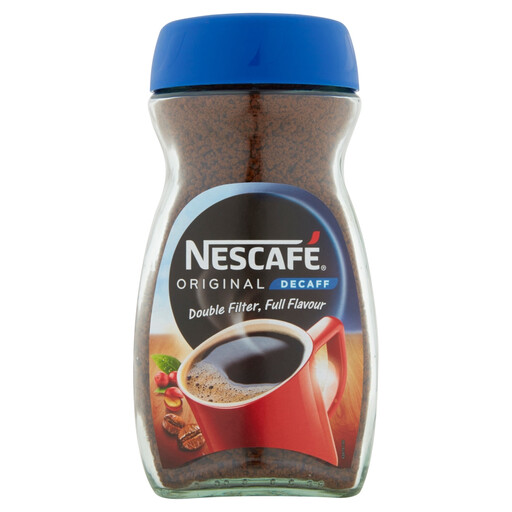 Image unavailable
NESCAFÉ Decaf (New Shape) 200g
This 200g decaffeinated soluble-coffee jar suits a break setup without brewing equipment. Its description specifies cool, dry storage; check the pack’s preparation directions for this variant.
View on Joybuy
 Image unavailable
NESCAFÉ Gold Blend Decaf Coffee 190g
This 190g soluble decaf jar can be prepared by adding hot water and stirring during a break. Nescafé describes Gold Blend Decaf as an Arabica and Robusta coffee decaffeinated using water; its flavour description remains a brand account, not a tasting comparison.
View on Joybuy
Common questions
Does choosing decaf address tiredness on a night shift?
No. Decaf may fit a choice to limit caffeine around planned rest, but it does not replace rest or fatigue planning. NHS TIMS advises minimising caffeine in the evening and discusses sleep routines and planned naps in its night-shift guidance.
Which jar size makes sense for shift breaks?
Choose according to how often the coffee will be used and whether you already know you like it. A smaller available jar is a way to try an unfamiliar flavour; a larger jar can suit regular use if you can store it as directed. The examples here range from 100g to 300g, while the exact sizes offered vary by product.
Should I use boiling water for instant decaf?
Follow the directions on your particular jar rather than assuming it needs boiling water. Tesco specifies 1–2 teaspoons per cup with hot, not boiling, water for Decaff Gold; Nescafé advises one teaspoon and 200ml of hot water that need not be fully boiled for Gold Blend Decaf.
Where should I keep an instant-coffee jar?
Keep it sealed and follow the instructions for that product. Tesco specifies a cool, dark place for Decaff Gold, while M&S specifies a cool, dry place for Gold Decaf. Tesco also cautions against carrying its glass jar by the lid.
Can I prepare Taylors Decaffé like an instant jar?
No. Taylors gives cafetière brewing guidance for Decaffé, including a 4–5 minute brew. If your break setup is just a kettle, spoon and mug, check for a coffee labelled instant or soluble instead.


