Afternoon tea hosts wanting a quick decaf option
A jar lets you make a cup for yourself or a guest without setting up brewing equipment. Compare the exact product’s stated flavour style before choosing a larger size.


For a quick afternoon cup, start with an instant decaf jar and choose its stated flavour style: NESCAFÉ describes Original Decaf as bold and Gold Blend Decaf as smooth, while Kenco describes its Decaf as a balanced medium roast. Consider a micro-ground instant product if you want finely ground coffee in the mix, or ground decaf if you are happy to use a cafetière; check the current pack for ingredients and allergens, particularly when serving guests.
An instant jar makes sense when preparing a cup with hot water matters more than making brewed coffee; flavour style and pack size then help narrow the choice.
A jar lets you make a cup for yourself or a guest without setting up brewing equipment. Compare the exact product’s stated flavour style before choosing a larger size.
Decaf is an alternative to a regular-caffeine coffee, but the category name does not mean every cup contains zero caffeine. If a precise limit matters, check information for the exact product.
A micro-ground product includes finely ground roast coffee as well as instant coffee. Check the ingredients and pack format rather than assuming it is the same as a standard freeze-dried jar.
Choose the preparation format first, then compare flavour descriptions, ingredients and pack size for the way you make afternoon tea.
| Priority | What to check | Your needs |
|---|---|---|
| Flavour style | Read the exact product’s roast and flavour description. NESCAFÉ calls Original Decaf bold and Gold Blend Decaf smooth and rounded; Kenco describes its Decaf as a balanced medium roast with its own intensity rating of 7. Those brand descriptions are not a shared taste scale. | I’d choose a jar whose stated style sounds closer to the cup I enjoy, rather than assuming all decaf instant coffees taste alike. |
| Preparation | Confirm that the pack says instant or freeze-dried if you want a hot-water cup. NESCAFÉ directs one teaspoon of Gold Blend Decaf into 200 ml of hot water; Taylors’ ground Decaffé instead calls for a cafetière brew of 4–5 minutes. | When I’m making tea and coffee for guests, I want to know whether the coffee dissolves in the cup or needs separate brewing. |
| Ingredients | Compare the stated coffee format and bean information for the exact product. M&S lists its Decaf Americano Micro-Ground as 95% decaffeinated instant coffee and 5% decaffeinated finely ground roast coffee; its Gold Decaf is a freeze-dried Arabica product. | If I’m curious about micro-ground coffee, I want to know what is in it before switching from a regular instant jar. |
| Pack size | Check the weight and container type rather than relying on the product family name. Kenco lists 95 g and 190 g Decaf jars; Tesco lists a 200 g Decaff Gold jar. Kenco also describes a paper refill for an existing jar. | A smaller jar may suit me when trying a different style; for a refill, I need a suitable container to put it in. |
| Allergens and caffeine | Read the current pack when buying for someone with an allergy or a specific caffeine restriction. M&S states that its Decaf Americano Micro-Ground is not suitable for people with a milk allergy. Do not treat “decaf” as a universal zero-caffeine figure. | Before serving a guest, I’d check the exact product’s label rather than assume its ingredients or allergen information match another decaf coffee. |
Decaf instant products have different stated flavour styles and formats, from classic instant coffee to products containing finely ground roast coffee.
Compare the exact product’s description. If you are trying an unfamiliar style, consider a smaller pack where one is offered.
NESCAFÉ describes caffeine being removed from its decaf coffee, but that does not establish zero caffeine in every decaf jar.
If caffeine intake is medically restricted or you are particularly sensitive to it, check information for the exact product and seek individual clinical advice where appropriate.
Ground decaf needs a different preparation method. Taylors’ Decaffé directions describe a 4–5 minute cafetière brew, not a coffee that dissolves in the cup.
Choose a pack labelled instant or freeze-dried for hot-water preparation; choose ground coffee when you want to brew it.
The Taylors route also requires a cafetière and time for brewing.
M&S states that its Decaf Americano Micro-Ground is not suitable for people with a milk allergy.
Check the physical pack’s current ingredients and allergen information, especially when buying for a guest.
These ranges illustrate differences in instant-coffee style and preparation; a brand name alone does not establish how every product in its range tastes or is made.
Its Original Decaf and Gold Blend Decaf offer two stated flavour directions within instant coffee.
Kenco lists medium-roast Decaf instant coffee in 95 g and 190 g jars, alongside a refill option.
Tesco lists a 200 g Decaff Gold freeze-dried instant jar made with Robusta and Arabica coffee.
M&S lists a 200 g Gold Decaf instant jar and a distinct 100 g Decaf Americano Micro-Ground product.
Taylors’ Decaffé is an option for brewing ground decaf rather than making an instant jar coffee.
These options include instant decaf coffee in jars and Americano-style or other instant coffees listed in tins. If a jar is important for your cupboard or refill plans, check the container type as well as the coffee style.
 No image available
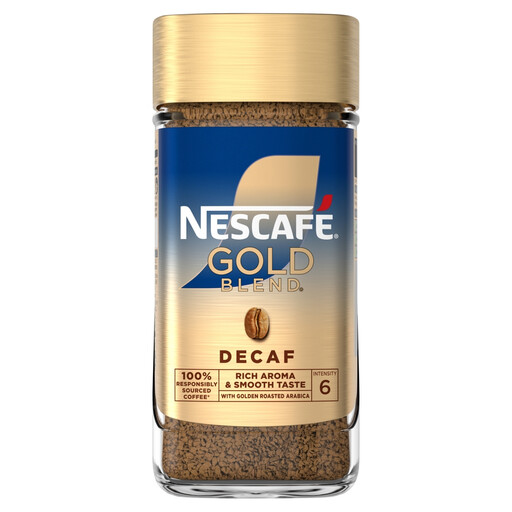
For a quick afternoon cup, this 190 g decaf instant coffee fits the jar format. NESCAFÉ describes Gold Blend Decaf as smooth and rounded and directs one teaspoon into 200 ml of hot water; flavour remains a matter of preference. Check the current pack if you need product-specific caffeine information.
 No image available
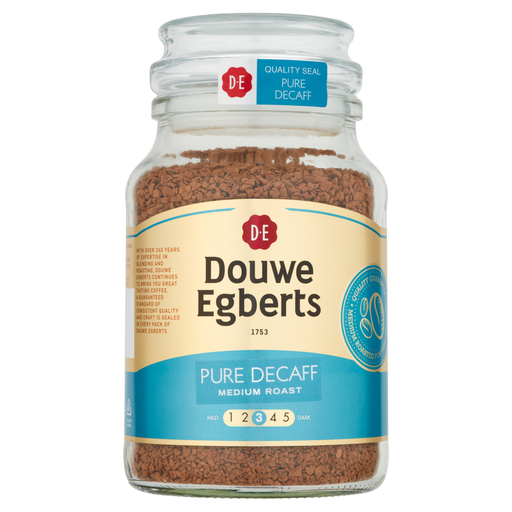
This 190 g decaf instant coffee is an option if you want the convenience of a jar. Its product descriptions emphasise chilled serving, so check the pack’s directions before choosing it specifically for hot afternoon tea. Check its current caffeine information if a precise limit matters to you.
 No image available
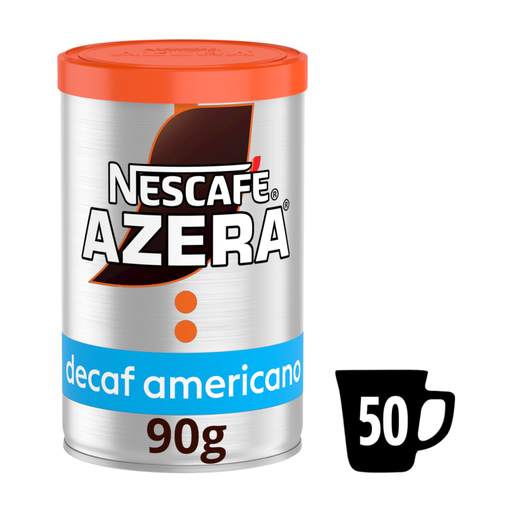
Consider this 90 g decaf instant coffee if you want an Americano-labelled alternative for an afternoon cup. It is listed in a tin rather than a jar, so check that the pack format suits how you store your coffee. Do not assume its caffeine content from the word “decaf” alone.
 No image available
This 100 g decaf instant coffee is another hot-water option for an afternoon cup. It is listed as a tin, not a jar; do not assume its pack size or characteristics match Kenco’s other Decaf jars. Check the current pack if caffeine information is important to your choice.
No: do not use “decaf” as a promise of zero caffeine. NESCAFÉ describes caffeine being removed from its decaf coffee, but that does not give a caffeine amount applicable to every jar. If your intake is medically restricted, check information for the exact product and seek individual clinical advice where appropriate.
Follow the directions on the pack you buy. NESCAFÉ directs one teaspoon of Gold Blend Decaf into 200 ml of hot water and says the water need not be fully boiled; Tesco’s Decaff Gold directions give 1–2 teaspoons per cup with hot, not boiling water.
Choose micro-ground decaf if you specifically want an instant product that also contains finely ground roast coffee. M&S lists its Decaf Americano Micro-Ground as 95% decaffeinated instant coffee and 5% decaffeinated finely ground roast coffee; its Gold Decaf is a separate freeze-dried Arabica product.
No. M&S states that its Decaf Americano Micro-Ground is not suitable for people with a milk allergy. Check the current physical pack’s allergen information for the exact coffee you intend to serve.
Not if you need the same quick preparation. Taylors’ Decaffé is ground coffee for a cafetière, with a stated brew time of 4–5 minutes, rather than instant coffee that dissolves in hot water.