Adults wanting a drink ready at lunch
A single ready-to-drink option avoids brewing or mixing during a busy school-holiday lunch. Sainsbury's describes Nolo's decaf oat latte as cold brewed.


For an adult who wants a chilled coffee ready at lunch, a ready-to-drink product explicitly labelled decaf cold brew avoids preparation; Sainsbury's lists Nolo's oat latte in that format. A decaf concentrate gives you control over what you mix into several iced drinks, while decaf beans suit coffee prepared ahead. Check the wording on the pack: an iced-coffee concentrate is not necessarily cold brewed, and decaf does not mean caffeine-free.
A single ready-to-drink option avoids brewing or mixing during a busy school-holiday lunch. Sainsbury's describes Nolo's decaf oat latte as cold brewed.
A concentrate lets you add your chosen milk, plant drink or other mixer to each serving. Tesco describes Nescafé Espresso Concentrated Decaf as a product to mix with milk, a plant drink or tonic water.
Decaf keeps coffee on the menu when reducing caffeine is the aim. The British Coffee Association notes that a small amount of caffeine remains after decaffeination.
Choose it when: you want a chilled coffee that needs no mixing at lunch; Sainsbury's describes Nolo's oat latte as decaf cold brew.
Trade-off: the oat-latte recipe is fixed, so you cannot choose the added drink or make it black coffee.
Choose it when: you want to mix drinks individually with milk, a plant drink or another suggested mixer.
Trade-off: Tesco describes Nescafé Espresso Concentrated Decaf as an iced-coffee concentrate, not as cold brew; each drink needs mixing.
Choose it when: you prefer to select decaf beans, ground coffee or another familiar preparation format.
Trade-off: you need to prepare and chill the coffee before lunch; a decaf label alone does not establish that it is suitable for cold brewing.
| Priority | What to check | Your needs |
|---|---|---|
| Caffeine | Look for a decaffeinated designation. The British Coffee Association says decaf still contains a small amount of caffeine. | I want to reduce caffeine, not assume that a decaf drink contains none. |
| Preparation | Check whether the drink is ready to drink, must be mixed, or needs brewing and chilling. Look for an explicit cold-brew description if that method matters. | A drink ready at lunch matters more to me than choosing the mixer; or I would rather prepare several drinks to my own recipe. |
| Ingredients | Read the full ingredient and allergen label. Sainsbury's describes Nolo's oat latte as dairy-free, but it contains oat; a concentrate's finished ingredients depend on what you add. | I need to know what is in the finished drink, especially when choosing between an oat latte and a coffee I mix myself. |
| Opened packs | Check the pack's refrigeration and use-after-opening instructions, then consider how many servings you will make. | A single drink suits this lunch, or I expect to use an opened concentrate for more than one occasion. |
Sainsbury's describes Nolo's decaf oat latte as cold brewed; Tesco describes Nescafé Espresso Concentrated Decaf as a concentrate for mixing iced drinks. Those descriptions do not establish the same brewing method.
If cold brew is your requirement, check that the product page or pack explicitly says so.
The British Coffee Association says a small amount of caffeine remains in decaf coffee. That distinction matters if the drink must meet a strict caffeine requirement.
Check the current label rather than treating the word 'decaf' as a zero-caffeine guarantee.
A ready-to-drink oat latte and a concentrate mixed with another liquid are different servings. The ingredients of the prepared concentrate drink depend on the mixer you choose.
Compare the drinks as you would actually serve them, including the mixer and its label information.
Making a concentrate also requires a separate milk, plant drink or other mixer.
Nolo's decaf oat latte contains oat, while an opened ready-to-drink can and an opened concentrate have different storage needs.
Check the full allergen information and use-after-opening instructions on the pack before choosing how many drinks to prepare.
An option for preparing chilled coffee from decaf coffee bought in another format.
A retailer option for choosing decaf coffee to prepare at home.
A retailer option for making decaf iced coffee from a concentrate.
A retailer listing a ready-to-drink decaf cold-brew oat latte as well as decaf coffee in other formats.
A cold-brew format reference rather than a decaf selection here.
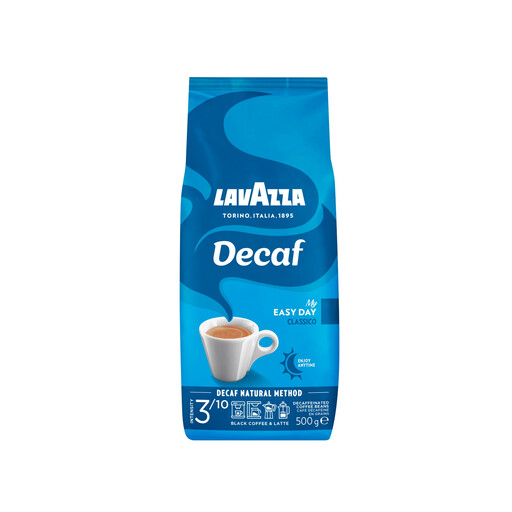
This decaf-bean option is for preparing coffee ahead of lunch, rather than opening a ready-to-drink cold brew or mixing a concentrate. Check your intended brewing method before choosing beans for cold brew.
 No image available
These decaf beans are an option when you can prepare coffee and chill it before lunch. They are not a ready-to-drink coffee or a concentrate; check the grind and preparation guidance if you specifically want to make cold brew.
No. The British Coffee Association says a small amount of caffeine remains after decaffeination, so check the product information if avoiding caffeine entirely matters to you.
Sainsbury's describes Nolo Decaf Classic Cold Brew Oat Latte as a decaffeinated cold-brew drink. Tesco describes Nescafé Espresso Concentrated Decaf as a concentrate for iced coffee, not as cold brew.
Sainsbury's describes it as dairy-free, but the drink contains oat. Check the current pack's full ingredients and allergen information against your requirements.
Yes, a concentrate is mixed into individual drinks rather than consumed as supplied. Tesco describes Nescafé Espresso Concentrated Decaf as suitable for mixing with milk, a plant drink or tonic water; follow the pack's serving and storage instructions.
No such conclusion follows from a decaf label: the British Coffee Association says decaf retains a small amount of caffeine. If a child has a caffeine-related health concern, seek advice appropriate to their circumstances rather than assuming the drink is caffeine-free.