Who is this choice for?
The useful distinction is whether decaf needs to simplify an existing coffee routine, fit an individual drinks plan, or sit alongside wider nutrition needs.
Older adults reducing caffeine
Decaf keeps coffee in a familiar routine while reducing caffeine exposure. Nescafé says decaffeinated coffee can still contain small traces, so someone advised to avoid caffeine entirely needs individual guidance rather than an assumption based on the word “decaf”.
Family carers preparing everyday drinks
Instant coffee may make a repeatable drink easier to prepare, provided the person can safely manage hot water. NHS guidance includes coffee among drinks that count towards fluid intake; any personal fluid restriction still takes precedence.
Shoppers considering nutrition as well as coffee
Decaf can be chosen for flavour and routine without treating it as nutrition support. Check what is added to the cup and how the drink fits the person’s wider diet or any advice from a clinician or dietitian.
What should you check before choosing?
Start with caffeine requirements and the person’s drinks plan, then choose a format they can prepare comfortably. Treat ingredients and nutrition information as product-specific checks, especially for coffee mixes.
| Priority | What to check | Your needs |
|---|
| Residual caffeine |
Confirm that the product is decaffeinated. If traces matter, check the current product information and ask the relevant clinician about the individual restriction; Nescafé says decaf is not necessarily caffeine-free. |
I want to keep a coffee routine while reducing caffeine, but I cannot assume that “decaf” means none at all. |
| Drinks routine |
NHS guidance counts tea and coffee towards fluid intake. Follow an individual fluid plan instead of using general drinking advice where a restriction applies. |
A warm coffee fits the day, provided it also fits any advice about how much the person should drink. |
| Nutrition and additions |
Read nutrition information for the prepared drink and check additions separately. NHS guidance identifies milk and other dairy foods as sources of protein and calcium; the contribution of a particular cup depends on what and how much is added. |
I’m choosing a drink, not replacing foods or drinks needed for the person’s wider nutrition plan. |
| Preparation |
Compare instant granules or sachets with ground coffee and beans. Check the required utensils, brewing equipment, pack instructions and the person’s ability to handle hot water. |
Fewer steps would help at home; alternatively, an existing brewing routine may already work well. |
Brand and format references
These examples show formats worth comparing, not a ranking or a statement that every range suits an individual diet.
Nescafé
Original Decaf and Gold Blend Decaf offer instant-coffee options; Tesco lists Original Decaf in a 190g format.
- Nescafé describes water decaffeination for its UK and Ireland decaf coffees.
- Nescafé also says decaf can contain small traces of caffeine.
Kenco
Kenco Decaf is an instant coffee prepared with hot water.
- It offers an instant format for a straightforward preparation routine.
- Check the current product information if a specific residual caffeine amount matters.
Taylors of Harrogate
Tesco lists Taylors decaf in both 200g bean and 200g ground-coffee formats.
- The choice of beans or ground coffee can fit an existing brewing setup.
- Both formats require suitable equipment and more preparation than instant granules.
Tesco
Tesco Decaff Gold is a 200g freeze-dried instant coffee.
- Tesco’s preparation instructions specify 1 to 2 teaspoons per cup.
- Check the current pack for ingredients and instructions when buying.
Sainsbury’s
Gold Roast Decaffeinated Instant Coffee is a 200g own-label instant option.
- Its listing gives nutrition information per serving for checking a particular drinks routine.
- Its listed protein content is less than 0.5g per serving; it should not be treated as nutrition support.
M&S
The M&S decaf range includes instant and brewed-coffee formats.
- M&S describes Gold Decaf Instant Coffee as made from ground and freeze-dried Arabica coffee.
- M&S advises reading the current label because product information can change.
Decaf coffee options on Joybuy
These products are instant decaf coffees for a routine with fewer brewing steps, including plain coffee and a milk-containing cappuccino mix. They do not represent the ground-coffee or bean route.
 No image available
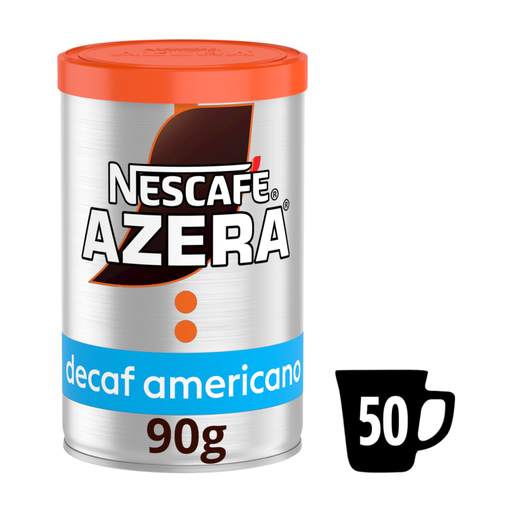
NESCAFÉ Azera Decaf Americano 90g
An instant decaf option described as prepared with hot water. The formulation includes 5% decaffeinated roast and ground coffee. For dietary decisions, check the current label and serving basis: the listed nutrition figures are per 100ml, while residual caffeine per prepared mug needs checking if traces matter.
View on Joybuy
 No image available
NESCAFÉ Cappuccino Decaf Unsweetened, 7 sachets, 105g
Seven sachets offer a portioned decaf drink prepared with hot water. The ingredients include skimmed milk powder, so check the current allergen label if milk must be avoided. Check the prepared-serving basis before using nutrition figures in a dietary plan, and confirm residual caffeine if traces matter.
View on Joybuy
 No image available
NESCAFÉ Original Decaff Coffee 300g
This decaffeinated soluble coffee suits someone looking for a plain instant format rather than a coffee mix. Check the current label for nutrition information and residual caffeine if either affects the person’s individual plan.
View on Joybuy
 No image available
NESCAFÉ Gold Blend Decaf Coffee 190g
Decaffeinated soluble coffee prepared with hot water provides a plain instant option. If nutrition information or trace caffeine affects the choice, check the current pack for the relevant prepared serving.
View on Joybuy
 No image available
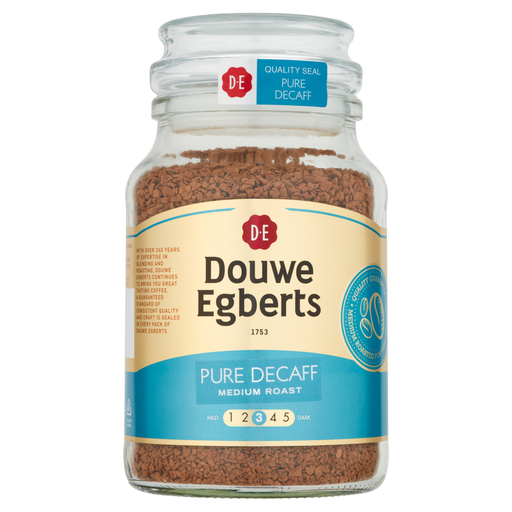
Douwe Egberts Pure Decaffeinated Instant Coffee 190g
A freeze-dried decaf instant coffee that avoids the equipment needed for beans or ground coffee. Check the current pack instructions if it is intended for a hot-drink routine: the product description emphasises chilled serving. Its caffeine wording also needs clarification before choosing it for someone sensitive to traces.
View on Joybuy
Questions about decaf coffee
Is decaf coffee completely caffeine-free?
No. Nescafé says decaffeinated coffee can still contain small traces of caffeine. If someone has been advised to avoid caffeine completely, check the product and seek advice relevant to that restriction.
Can decaf coffee count towards an older person’s fluid intake?
Yes. NHS guidance says tea and coffee count towards fluid intake. NHS Sussex Integrated Care System cautions that its older-adult hydration plan is not suitable for everyone, including people on a fluid-restricted diet, so an individual plan takes priority.
Can black decaf coffee stand in for nutrition support?
No. Sainsbury’s lists less than 0.5g protein per serving for its Gold Roast decaf instant coffee. Choose food and drinks for wider nutrition needs according to the person’s circumstances rather than relying on black coffee.
Is instant decaf simpler to prepare than ground coffee or beans?
Instant decaf generally involves fewer brewing steps: Tesco’s Decaff Gold instructions call for 1 to 2 teaspoons per cup. Ground coffee or beans can suit someone who already uses compatible equipment comfortably; check the actual preparation routine before deciding.
What should I check if ingredients or allergens matter?
Read the current pack’s ingredients, allergen and nutrition information, particularly for coffee mixes and anything added to the cup. A milk-containing decaf cappuccino, for example, calls for a different check from plain soluble coffee.


