Evening coffee drinkers reducing caffeine
If you want coffee near bedtime but are limiting caffeine, decaf is a reduced-caffeine choice, not a caffeine-free one. Nescafé UK & IE says a small amount remains in decaf coffee.


For a planned 240 bedtime drinks, choose counted decaf sachets if consistent portions matter, or jars if someone can measure each drink and check the pack’s serving yield. Nisbets and YPO list 200-sachet cases, which are 40 sachets short of 240, so confirm the count before ordering. Decaf is not caffeine-free, as Nescafé UK & IE explains.
If you want coffee near bedtime but are limiting caffeine, decaf is a reduced-caffeine choice, not a caffeine-free one. Nescafé UK & IE says a small amount remains in decaf coffee.
When drinks are prepared for guests, colleagues or residents, decide whether counted sachets or a spoon-measured jar better fits the way drinks will be served.
If the quantity must cover 240 individual drinks, check the sachet count or the jar’s preparation instructions. The 200-sachet cases listed by Nisbets and YPO fall 40 sachets short.
Set the required drink count first, then choose a format that fits the preparation space and the people making the drinks.
| Priority | What to check | Your needs |
|---|---|---|
| Bedtime caffeine | Check whether the product is decaffeinated. Do not treat the label as a caffeine-free guarantee; Nescafé UK & IE says decaf retains some caffeine. | I want coffee in the evening but still need to consider residual caffeine, especially if I am sensitive to it. |
| Drink count | For sachets, check the number of individual portions. Nisbets and YPO list 200-count decaf cases, leaving a 40-sachet shortfall against 240. For jars, use the exact pack’s dose and stated yield. | My supply needs to cover 240 drinks, not simply come in a large pack. |
| Preparation | Check whether drinks will be made from individual instant sachets, a spoon-measured instant jar, coffee bags or ground coffee. Match the format to the available water, utensils and brewing equipment. | For self-service, I may prefer counted portions; if someone prepares each cup, measuring from a jar may be workable. |
Nescafé UK & IE says decaf contains a small amount of caffeine. That distinction matters when choosing a drink close to bedtime.
Treat decaf as a way to reduce caffeine compared with regular coffee, not as a zero-caffeine option. If you need to avoid caffeine altogether, check a genuinely caffeine-free alternative.
Weight, dimensions and drink count measure different things. Nisbets lists a decaf case with a 240 mm pack dimension but 200 sachets.
Look for an explicit count if you need individual portions. For a jar, calculate the quantity required from the preparation dose and yield on the exact pack.
Sachets and jars call for different ways of portioning coffee, while ground coffee needs a suitable brewing method. A format that works at home may be awkward for self-service.
Decide who will make the drinks and what equipment is available before choosing between sachets, jars, coffee bags and ground coffee.
Pack details and availability can change, affecting a planned bulk supply.
Before ordering, check the current product page and the received pack for the count, ingredients, preparation instructions, storage directions and best-before date.
These examples show formats and pack information to compare; a brand’s inclusion does not establish a 240-portion product.
Instant decaf is available in jars as well as counted sachet cases.
An option for buyers considering a spoon-measured instant decaf jar.
Its own-label Gold Roast Decaffeinated Instant Coffee is a jar option rather than individually portioned sachets.
Its Gold Decaf offers another instant-jar format to consider.
A reference for buyers who want a brewed decaf format instead of instant coffee.
These instant decaf jars and tins suit a plan in which each drink can be measured out. Check the serving instructions on the exact pack before deciding how many to order for 240 drinks; none of these titles identifies a counted 240-portion box.
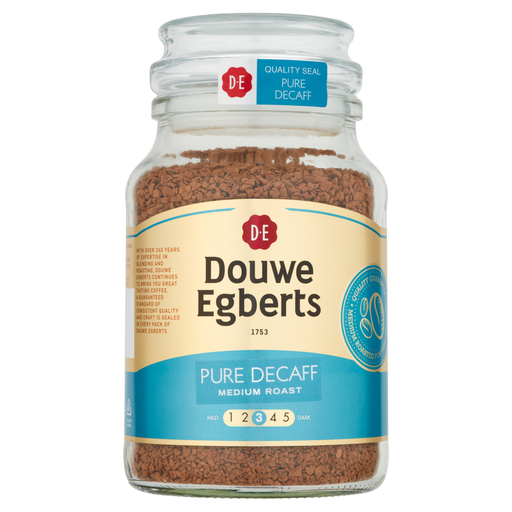 No image available
A 190 g instant decaf jar for drinks measured out individually. Check its serving instructions and calculate the number of jars needed for 240 drinks.
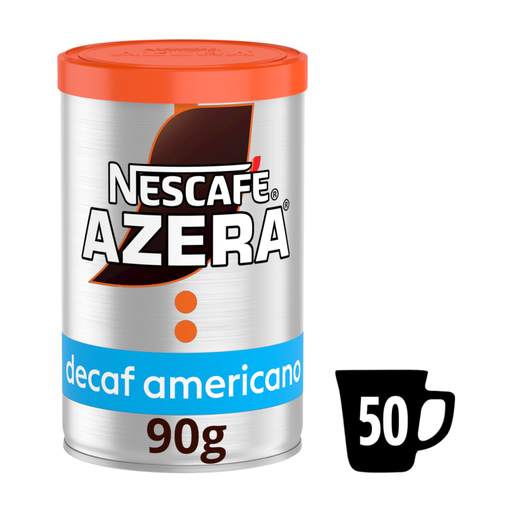 No image available
A 90 g instant decaf tin for a spoon-measured Americano-style drink. Check the pack’s preparation dose before planning a larger supply.
 No image available
A 100 g instant decaf jar for a preparation space where coffee can be measured into each cup. Use the exact pack’s instructions to work out the quantity required.
 No image available
A 190 g instant decaf jar for individually measured drinks. Confirm the serving dose on the exact pack before using it to plan 240 cups.
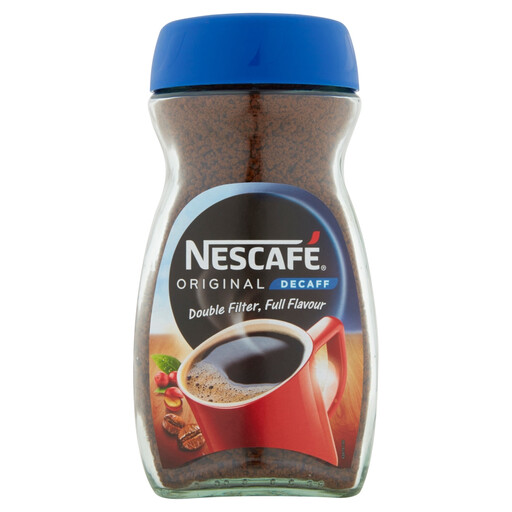 No image available
A 200 g decaf instant-coffee jar for spoon-measured preparation. Check the serving instructions rather than treating the jar weight as a drink count.
No. Nescafé UK & IE says decaf coffee retains a small amount of caffeine. If caffeine matters to your bedtime drink choice, do not assume that a decaf label means none is present.
No, if you use one sachet per drink, a 200-sachet case is 40 sachets short. Nisbets and YPO each list a 200-count decaf case; order enough counted portions or confirm a different pack’s count before buying.
Start with the preparation dose and stated yield for the exact jar you intend to buy. For example, Sainsbury’s lists its Nescafé Original Decaf 100 g jar at 55 mugs when made with 1.8 g coffee and 200 ml hot water per mug. Check the instructions on your chosen pack before calculating how many jars you need.
Confirm the current pack count or serving instructions, ingredients, storage directions, best-before information and availability for the quantity required. Check the details on the product you will receive, rather than relying only on an earlier listing.