For a quick coffee alongside a full Scottish breakfast, start with an instant jar whose stated flavour matches the cup you want: NESCAFÉ describes Original Decaf as bold, while Kenco describes its Decaf as smooth and full-flavoured. NESCAFÉ Gold Blend Decaf offers a manufacturer-described smoother option; Taylors Decaffé is ground coffee, so it requires brewing rather than a spoonful stirred into hot water. Decaf still contains some caffeine, according to the British Heart Foundation.
Who is choosing a breakfast decaf jar?
Drinkers who want a fuller-flavoured cup
If coffee is served with eggs, bacon, sausage or black pudding, a jar described as bold or full-flavoured is a sensible starting point when a mild-tasting cup does not appeal. Those flavour descriptions come from the brands, not a comparative taste test.
Households sharing an instant jar
An instant jar makes it straightforward to prepare cups with hot water for breakfast guests. Check the pack size against how often the household uses decaf, and follow the jar’s storage instructions.
People limiting caffeine
Decaf is an option for someone choosing to reduce caffeine while keeping coffee on the breakfast table. The British Heart Foundation notes that decaf coffee is not completely caffeine-free.
What should you check before choosing?
Decide whether you need instant preparation, then compare the stated flavour and the details on the exact jar.
| Priority | What to check | Your needs |
|---|
| Flavour |
Compare the brand’s flavour description rather than assuming every decaf tastes alike. NESCAFÉ calls Original Decaf bold; Kenco calls its Decaf smooth and full-flavoured. These are not independent taste comparisons. |
I’d prefer a cup described as bold or full-flavoured alongside a substantial savoury breakfast. |
| Preparation |
Check whether the product is instant or ground. Taylors of Harrogate gives cafetière instructions for its ground Decaffé, including a 4–5 minute brew. |
Breakfast is busy, so I want coffee I can make with hot water rather than brewing equipment. |
| Caffeine |
Do not read “decaf” as “caffeine-free”. The British Heart Foundation says decaf coffee retains some caffeine; check serving information if the amount matters to you. |
I’m reducing caffeine and want to account for the coffee as well as other drinks during the day. |
| Jar size |
Check the quantity on the exact variant. NESCAFÉ lists Original Decaf in 100g, 190g and 300g jars; Kenco lists its Decaf in 95g and 190g jars. |
A jar shared regularly at breakfast calls for a different quantity from one opened only for occasional guests. |
| Pack details |
Read the current ingredients and storage instructions on the jar. Tesco advises checking the product label because food information can change. |
I want to confirm what is in the jar and how to store it, particularly if an ingredient matters to my household. |
What is easy to overlook?
-
Assuming decaf means no caffeine
Decaf can still contribute to daily caffeine intake. In a general comparison, the British Heart Foundation gives around 7mg per 200ml cup of decaf coffee, though the amount in a particular prepared cup can differ.
Treat decaf as reduced-caffeine coffee and check the information for the drink you make if residual caffeine is important to your decision.
-
Picking ground coffee when you need an instant jar
Taylors of Harrogate Decaffé is ground coffee. Its cafetière instructions call for a 4–5 minute brew, rather than simply stirring coffee into hot water.
Choose an instant jar for that quick preparation method; consider Taylors only if brewing ground coffee fits your breakfast routine.
Ground coffee also requires suitable brewing equipment.
-
Comparing intensity numbers across brands
Kenco assigns its Decaf an intensity of 7, while Sainsbury’s describes its decaf jars with a medium-strength 3. Those labels do not establish a shared measurement scale.
Use each product’s flavour description and format to narrow the choice. Compare numbers directly only where the same brand or retailer clearly uses the same scale.
Which brands offer relevant options?
These brand references cover both instant jars and one ground-coffee alternative; their flavour descriptions are the brands’ own.
NESCAFÉ
NESCAFÉ offers Original Decaf in 100g, 190g and 300g jars and Gold Blend Decaf in 95g and 190g jars.
- NESCAFÉ describes Original Decaf as bold and Gold Blend Decaf as smooth and balanced; it says both use water in decaffeination.
- These are manufacturer flavour descriptions, not evidence that either jar will taste stronger than another brand’s coffee.
Kenco
Kenco lists its Decaf instant coffee in 95g and 190g jars and describes it as a medium-roast, balanced option.
- Kenco gives this Decaf an intensity rating of 7; Tesco describes the 190g product’s glass jar and lid as recyclable.
- Kenco’s intensity number is a brand descriptor, not a standardised comparison with other brands’ strength labels.
Taylors of Harrogate
Taylors describes its ground Decaffé with caramel and malt notes and says it uses a Pure Water Process.
- Its cafetière instructions give a 4–5 minute brew for someone who wants to prepare ground coffee at breakfast.
- Decaffé is ground coffee, not an instant jar.
Tesco
Tesco’s decaf instant-coffee range includes own-label Decaff Gold and Decaffeinated Classic 200g jars.
- The two named jars give shoppers distinct own-label products to examine alongside branded instant coffee.
- Tesco advises reading the current product label because food information can change.
Sainsbury’s
Sainsbury’s lists 200g Gold Roast and Rich Roast decaffeinated soluble-coffee jars.
- Sainsbury’s describes Gold Roast as smooth and well rounded and Rich Roast as rich and full-flavoured; both listings give one teaspoon per cup.
- Check the current pack for ingredients and preparation instructions, particularly if a label detail affects your choice.
M&S
M&S describes Gold Decaf as instant coffee made from medium-roasted Arabica beans sourced from Fairtrade farms, in 100g and 200g jars.
- The product description identifies the bean type and says the coffee is ground and freeze-dried.
- M&S advises reading the current product label because information can change.
Decaf coffee options on Joybuy
These instant-coffee jars offer different stated flavour profiles for breakfast. Check the exact variant and preparation directions rather than applying one brand’s description to every jar it makes.
 No image available
NESCAFÉ Original Decaff Coffee 300g
For a quick cup with a stated fuller flavour, this 300g jar contains decaffeinated soluble coffee. NESCAFÉ describes Original Decaf as bold and intense; follow the jar’s cool, dry storage guidance.
View on Joybuy
 No image available
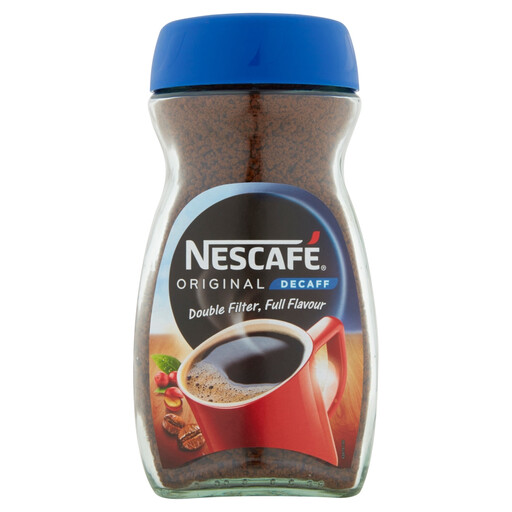
NESCAFÉ Decaf (New Shape) 200g
This 200g jar contains decaffeinated soluble coffee for instant preparation. Its product description calls the taste rich and full-bodied; do not assume the separate NESCAFÉ Original Decaf flavour description applies to this variant.
View on Joybuy
 No image available
Kenco Decaff Instant Coffee 100g
For a hot instant cup, this 100g jar’s directions specify one to two teaspoons with hot water just off the boil. Its description presents a smooth, full-flavoured coffee; check this pack’s own label rather than assuming another Kenco jar’s intensity rating applies.
View on Joybuy
 No image available
NESCAFÉ Gold Blend Decaf Coffee 190g
This 190g decaffeinated instant-coffee jar is prepared with hot water. NESCAFÉ describes Gold Blend Decaf as smooth and balanced, making that stated profile worth considering if you do not want its Original Decaf’s bold description.
View on Joybuy
 No image available
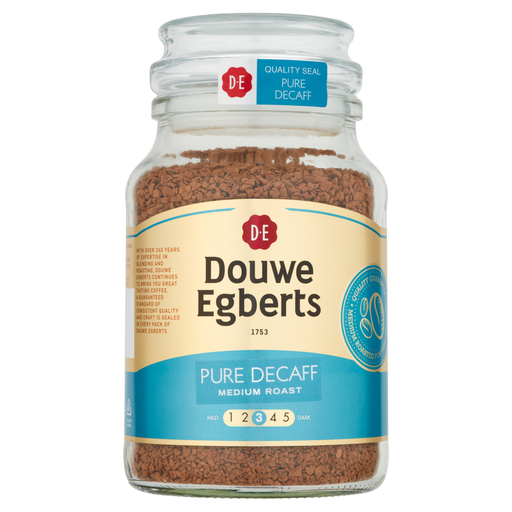
Douwe Egberts Pure Decaffeinated Instant Coffee 190g
This 190g jar contains freeze-dried decaffeinated instant coffee. Its description calls the flavour light and refreshing and focuses on serving it chilled; check the pack directions if you want a hot cup with breakfast. Its stated caffeine percentage is not an amount per prepared cup.
View on Joybuy
Questions about breakfast decaf
Is decaf coffee completely caffeine-free?
No. The British Heart Foundation says decaf coffee still contains caffeine and gives around 7mg per 200ml cup as a general comparison. The amount in your cup can vary, so check the relevant product information if residual caffeine matters.
Which instant jar should I consider for a full Scottish breakfast?
If you want a stated bold profile, NESCAFÉ describes Original Decaf that way; Kenco describes its Decaf as smooth and full-flavoured. For a manufacturer-described smoother cup, consider NESCAFÉ Gold Blend Decaf. These descriptions guide a starting choice, not an independent taste ranking.
Can Taylors of Harrogate Decaffé replace an instant jar?
Not for instant preparation. Taylors Decaffé is ground coffee, and Taylors gives cafetière instructions calling for a 4–5 minute brew.
How should I prepare and store a decaf instant jar?
Follow the directions on the exact jar. Sainsbury’s Gold Roast listing specifies one teaspoon per cup and storage in a cool, dry place with the cap replaced after use; directions for other products may differ.
Does the current jar label matter if I have a dietary requirement?
Yes. Check the ingredients and any relevant allergen information on the exact pack before use. Tesco advises reading the current label because food product information can change.


