Visitors with only a kettle
If a mug, spoon and hot water are the dependable setup, instant decaf avoids relying on a coffee machine or brewer.


If the second home has only a kettle and mugs, instant decaf is the simplest format to leave there. Ground decaf suits visitors who want brewed coffee when a cafetière or filter brewer is reliably available. Match the pack size to how often the property is used, and do not assume decaf is completely caffeine-free.
The equipment left at the property, how often it is visited and guests’ caffeine requirements all affect what is practical to stock.
If a mug, spoon and hot water are the dependable setup, instant decaf avoids relying on a coffee machine or brewer.
Ground decaf is an option when the brewer will be there and visitors want to make brewed coffee. Check that the equipment and any needed filters are ready to use.
Decaf gives guests another coffee choice, but it is not necessarily caffeine-free. Nescafé notes that small traces of caffeine can remain after decaffeination.
Start with the preparation equipment, then consider storage between visits and how much coffee the household is likely to use.
| Priority | What to check | Your needs |
|---|---|---|
| Kettle-only preparation | Check whether the coffee is instant or supplied as bags for steeping. For a specific instant example, Tesco gives one teaspoon and 200ml hot water as the preparation for Nescafé Original Decaf 190g. | I want guests to make coffee even if there is no dedicated brewer at the property. |
| Brewed coffee | Match ground coffee to the brewer you keep there. Waitrose & Partners specifies a cafetière or filter for Taylors Decaffé ground coffee; beans call for suitable grinding and brewing equipment. | A brewed cup matters to us, and the equipment will be available when we visit. |
| Between-visit storage | Read the pack’s storage and best-before information. Waitrose & Partners advises clipping Taylors ground coffee closed after opening and keeping it cool and dry. | The property may stand empty between stays, so I need a pack I can store as directed and expect to use. |
| Residual caffeine | Check the particular product information if the amount of caffeine matters. Nescafé says decaf can still contain small traces of caffeine; a decaffeination method alone does not establish a zero-caffeine drink. | I want to offer decaf without assuming it meets a guest’s requirement to avoid caffeine completely. |
| Pack size | Compare the stated weight and any serving guidance for the exact product. Tesco states that its Nescafé Original Decaf 190g jar makes 105 mugs, using its specified preparation. | For occasional visits, I would rather choose an amount we expect to use than stock a larger pack simply because it is larger. |
Ground coffee needs a suitable brewing setup: Waitrose & Partners specifies a cafetière or filter for Taylors Decaffé ground coffee.
Check what remains at the property between visits. Choose instant decaf for a kettle-only setup, and add ground coffee if a compatible brewer is reliably there.
A missing brewer, filters or other necessary accessories can mean another purchase or an extra trip before the coffee can be made.
Nescafé states that decaffeinated coffee can retain small traces of caffeine, which matters when a guest needs to avoid it completely.
Check the particular product information rather than treating the word “decaf” as a zero-caffeine guarantee. For an individual medical restriction, seek appropriate professional advice.
Coffee left at a second home has to be stored between stays. Taylors ground coffee, for example, should be clipped closed after opening and kept cool and dry, according to Waitrose & Partners.
Consider how many people will use the coffee and how often they visit before choosing a pack size. Follow the storage instructions and check the date on the actual pack.
Instant coffee, ground coffee, bags and beans involve different preparation steps. A cupboard containing coffee beans is not enough if guests have no way to grind and brew them.
Settle on a format that works with the equipment at the property, then compare the particular products within that format.
These examples show formats and pack details to compare; a brand’s wider range does not make every product suitable for the same kitchen.
Nescafé Original Decaf is an instant option for a kitchen with a kettle and mugs.
Kenco’s decaf examples include conventional freeze-dried instant coffee and Millicano Decaf instant coffee.
Taylors Decaffé ground coffee is a 200g option for a second home equipped to brew it.
Tesco’s decaf listings include instant options such as Tesco Decaffeinated Classic Coffee 200g and Tesco Decaff Gold Instant Coffee 200g.
Sainsbury’s decaf category spans instant, ground and wholebean coffee, pods and coffee bags.
M&S lists decaf coffee bags as a steep-and-sip option, alongside instant coffee and formats that use brewing equipment.
These options cover instant decaf for a kettle-based setup, ground decaf for a cafetière or filter, and beans for a home with suitable grinding and brewing equipment.
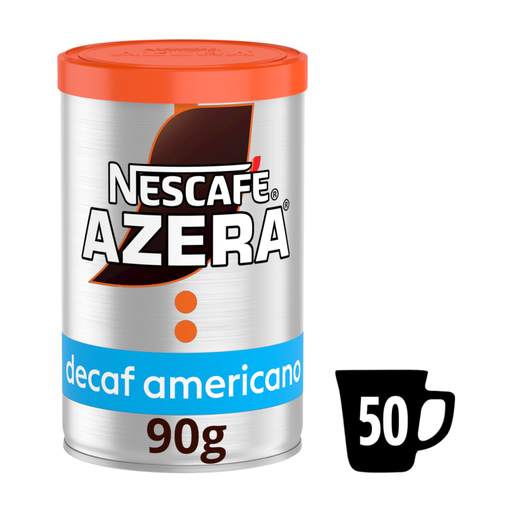 No image available
An instant decaf option to consider where visitors will prepare coffee with hot water rather than a brewer. The 90g product contains decaffeinated soluble coffee and 5% decaffeinated roast and ground coffee. Check the pack’s serving instructions when planning how much to leave at the property.
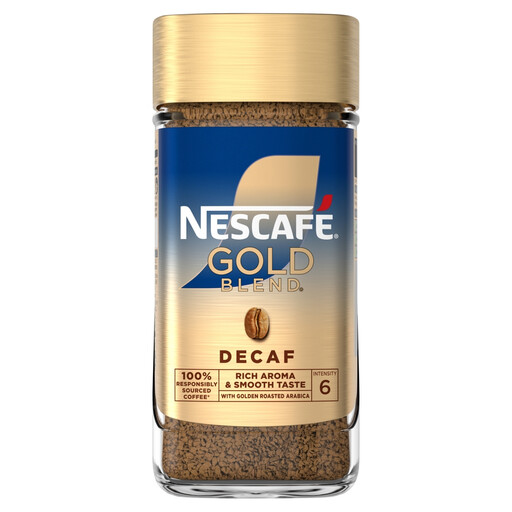 No image available
This 190g decaffeinated soluble coffee is an instant option for a home without a dedicated brewer. Its product guidance describes adding hot water and storing it in a cool, dry place. Use the preparation directions on this pack rather than the serving figures for a different Nescafé coffee.
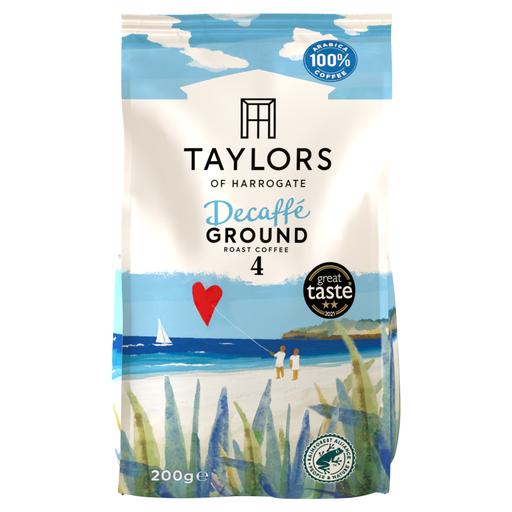 No image available
Consider this 200g ground decaf when the second home has a cafetière or filter brewer; it is not an instant coffee for a kettle-only setup. Waitrose & Partners specifies those brewing methods and advises clipping the opened pack closed and storing it somewhere cool and dry.
 No image available
This 300g decaffeinated soluble coffee offers an instant format for visitors using hot water and mugs. Consider whether that pack size fits the home’s visit frequency, and store it as directed in a cool, dry place. Do not use the serving count for the separate 190g Original Decaf listing to plan this pack’s use.
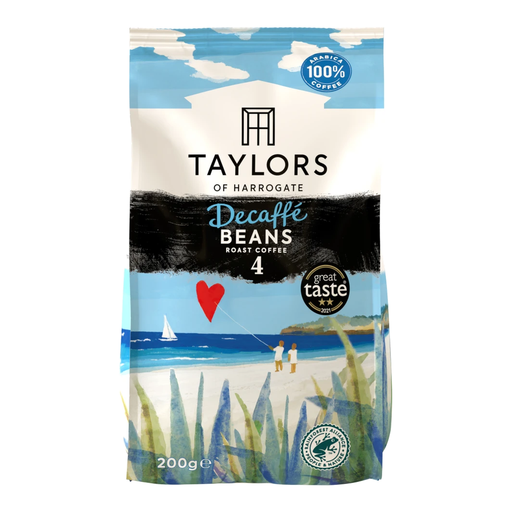 No image available
These 200 g decaf beans are an option only if visitors will have suitable grinding and brewing equipment. The product guidance says to clip the pack closed, store it somewhere cool and dry, and consume it within two weeks of opening; consider that opened-pack guidance if visits are infrequent.
Instant decaf works with hot water, a mug and a spoon, making it the straightforward choice when there is no dedicated brewer. For ground coffee, first confirm that a cafetière or filter brewer will be available.
No: Nescafé states that decaf can still contain small traces of caffeine. If someone must avoid caffeine completely, check the particular product information and seek appropriate professional advice for any medical restriction rather than relying on the decaf label alone.
Follow the instructions on the exact pack and check its best-before date. For Taylors Decaffé ground coffee, Waitrose & Partners advises clipping the pack closed after opening and storing it in a cool, dry place.
No. A water process describes how a named coffee is decaffeinated, not a guarantee that it contains no caffeine. Taylors describes a Pure Water Process for its Decaffé ground coffee, while Nescafé notes that decaf coffee can retain small traces of caffeine.