Shoppers with only a kettle
Instant decaf needs no coffee-making equipment beyond a kettle. Compare the jar size and the blend’s stated roast or flavour description before committing to a larger pack.


If you have only a kettle, instant decaf is a straightforward choice for your first food shop; ground coffee makes more sense if you already have a suitable brewer and want to prepare it that way. Coffee bags offer another kettle-based option, while beans need a grinder and pods must fit your machine. Decaf does not necessarily mean caffeine-free, so check the pack if you need to control caffeine closely.
Instant decaf needs no coffee-making equipment beyond a kettle. Compare the jar size and the blend’s stated roast or flavour description before committing to a larger pack.
Decaf lets you keep coffee in your routine while choosing a decaffeinated product. It is not necessarily caffeine-free; read the specific pack if you need close control over your intake.
If you own a cafetière or filter machine, ground decaf is another option. Beans require a grinder as well as a suitable brewing method; check the preparation requirements before buying.
Choose a preparation format that works in your kitchen, then compare pack size and the product’s stated flavour cues.
| Priority | What to check | Your needs |
|---|---|---|
| Preparation | Instant coffee uses hot water; ground coffee needs a suitable brewer. Beans need a grinder, and pods must match your machine. | With just a kettle, I want a cup I can make without buying brewing equipment. Coffee bags are another format to consider. |
| Caffeine | Look for decaffeinated labelling and read the specific pack. Do not use the word “decaf” to calculate caffeine per cup. | If I need to keep track of caffeine closely, I want product-specific information rather than assuming decaf means none. |
| Flavour cues | Compare the stated roast, intensity, blend and flavour notes for the exact product. These descriptions are preference cues, not independent taste comparisons. | I would rather start with a description that appeals to me than assume every decaf coffee tastes alike. |
| Pack and storage | Check the quantity and the label’s instructions for storage after opening, particularly for ground coffee. | For a first try, a pack I expect to use suits me better than choosing a larger one before I know my routine. |
Decaffeinated coffee can still contain residual caffeine, which matters if you are keeping close track of your intake.
Read the pack for information about the specific product, and account for other caffeine sources when a limit applies to you.
Ground coffee, beans and pods have different equipment requirements; a pod’s shape or coffee name does not establish machine compatibility.
If you only have a kettle, consider instant decaf or coffee bags. Otherwise, check the preparation method and any machine compatibility before choosing.
Ground coffee or beans may also mean getting a suitable brewer or grinder before you can use them.
A first purchase gives you a chance to learn whether you like that product and how quickly you use it. Opened ground coffee also has storage instructions worth following.
Choose a manageable pack where possible, keep it airtight if the label directs you to, and follow that product’s storage guidance.
These ranges illustrate different ways to shop for decaf; choose the individual product and format rather than assuming a brand’s whole range prepares the same way.
An instant-coffee option for a kettle-only routine, with Original Decaf and Azera Decaf as distinct products.
Kenco Decaf is an instant blend offered by the brand in 95g and 190g jars.
Decaffe Ground is a ground-coffee option for shoppers with suitable brewing equipment.
Tesco’s own-label listings span instant decaf and a Finest Colombian ground-decaf option.
Taste the Difference includes ground decaf, instant Americano and coffee-bag options for different preparation routines.
The M&S decaf range covers instant coffee, coffee bags, ground coffee, beans and pods.
These options include instant decaf for a kettle-only first shop and one ground coffee for shoppers who already have a suitable brewer. The ground product is a different preparation choice, not a substitute you can make as instant coffee.
 No image available
Decaffeinated instant coffee for a kettle-only routine, in a 300g jar. Nescafé describes Original Decaf as 100% coffee decaffeinated using water. Check the pack if you need product-specific caffeine information.
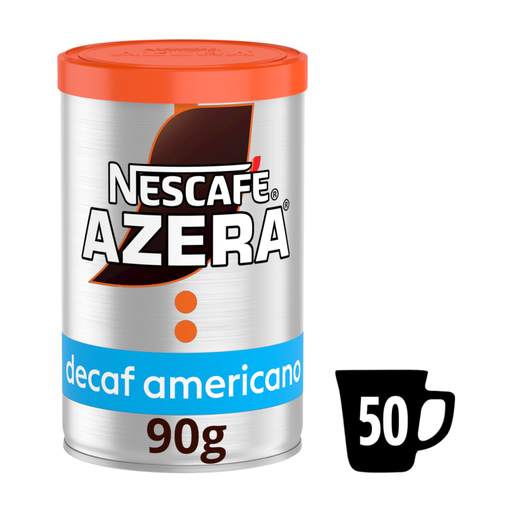 No image available
An instant decaf choice for hot-water preparation, in a 90g tin. The listed blend contains decaffeinated soluble coffee and 5% decaffeinated roast-and-ground coffee. Check the pack if you need product-specific caffeine information.
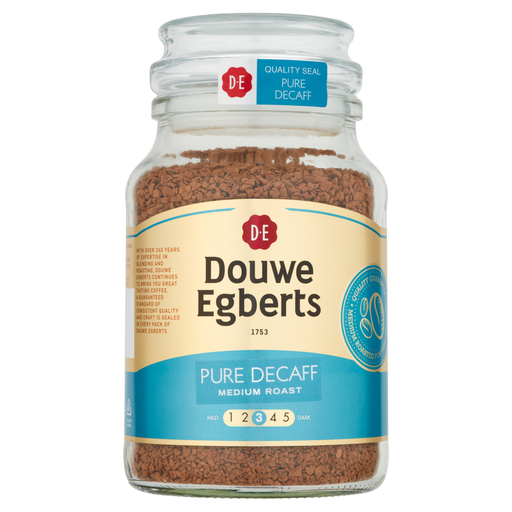 No image available
Freeze-dried instant decaf in a 190g jar for a kettle-only setup. The product listing states less than 0.1% naturally occurring caffeine; that statement is not a caffeine amount per cup. Read the pack if close caffeine control matters to you.
 No image available
Decaffeinated soluble coffee in a 190g jar, suited to preparation with a kettle rather than a coffee brewer. Follow the pack’s storage directions and check it for information relevant to any strict caffeine limit.
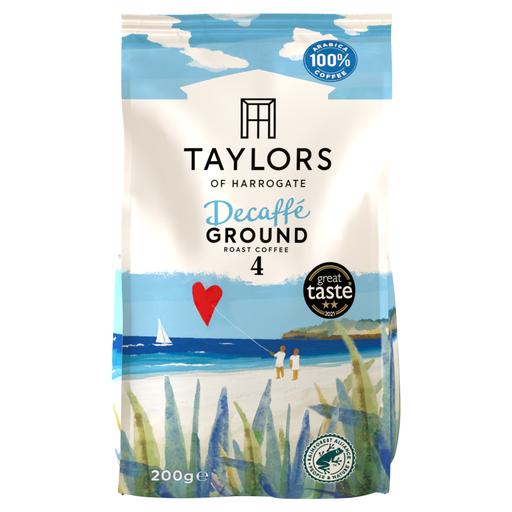 No image available
A ground decaf option if you already have a suitable brewing method. Joybuy’s listing describes it as 100% Arabica, roast level 4, with caramel and malt notes; these are product descriptions rather than independent taste findings. Check the pack’s preparation directions and caffeine information for your needs.
Not necessarily: decaffeinated coffee can retain some caffeine. If you need to track caffeine closely, read the specific product label rather than assuming its format or “decaf” name gives you an amount per cup.
Instant decaf is the straightforward hot-water option; coffee bags offer another way to make a cup without a coffee machine. Ground coffee needs a suitable brewing method, beans also need grinding, and pods must fit a compatible machine.
Follow the instructions on the pack you buy. Sainsbury’s and M&S advise airtight storage for their cited ground-decaf products and give further guidance for keeping those products after opening; do not assume the same directions apply to every coffee.