Everyday instant-coffee shoppers
If you make quick cups at home or work without a brewer, start with a decaf instant jar. Compare the stated flavour profile and choose a size you expect to use.


For a quick decaf top-up, choose a format you can prepare with the equipment you have: instant needs only hot water, while ground coffee and beans call for brewing equipment, and coffee bags steep in a mug. Then compare the product’s stated flavour profile and pack size with how often you drink it. Decaf does not necessarily mean zero caffeine, so check the exact product information if residual caffeine matters to you.
The most useful starting point is whether this purchase needs to make a cup straight away or fit an existing brewing routine.
If you make quick cups at home or work without a brewer, start with a decaf instant jar. Compare the stated flavour profile and choose a size you expect to use.
If you already use a cafetière or filter machine, ground decaf lets you keep that routine. Whole beans are an option when you also have a grinder; check the pack’s preparation guidance before buying.
For an occasional cup or a portable option, coffee bags offer a way to steep ground coffee in a mug. They avoid the need for a cafetière, though you still need to allow time for steeping.
Settle the preparation method first, then compare flavour descriptions and pack sizes within a format you will use.
| Priority | What to check | Your needs |
|---|---|---|
| Preparation | Check whether the pack is instant, ground coffee, beans, coffee bags or pods. Ground coffee needs a suitable brewer; beans also need a grinder, while pods must match your machine system. | I want to make a cup with the equipment and time I have today, rather than leave a top-up unopened. |
| Blend and flavour | Read the product’s own roast, bean and flavour description. NESCAFÉ describes Gold Decaf as a medium-roasted blend; Taylors of Harrogate describes its Decaffé profile with caramel and malt notes. Brand intensity scales are not interchangeable. | A familiar, balanced profile may suit my regular mugs; if I usually brew coffee, I may prefer to compare ground-coffee descriptions instead of choosing by the word ‘decaf’ alone. |
| Residual caffeine | Check the exact pack statement rather than assuming every decaf has the same residual amount. Sainsbury’s states that its Italian Decaf R&G contains less than 0.1% caffeine by weight; that figure describes that product, not the whole category. | If I need to keep close track of caffeine, the information for the particular coffee I buy matters more than its decaf label alone. |
| Pack size | Compare pack weight and any stated serving count within the same format. Consider how frequently you will make decaf after opening it. | For an occasional cup, I would rather buy an amount I expect to use than choose a larger pack simply because it contains more coffee. |
| Ingredients and warnings | Read the current ingredients and allergen information on the pack. Marks & Spencer says its Decaf Americano Micro-Ground Instant Coffee is not suitable for people with a milk allergy. | If an ingredient or allergen warning affects me, I need to check this specific product, even if I have bought plain coffee before. |
Decaf products can contain residual caffeine. A statement about one coffee’s caffeine content or decaffeination method does not establish the amount in another.
Read the exact product information if you need to account for residual caffeine.
Beans need grinding and brewing equipment, while pods need the matching machine system. Neither format solves an immediate top-up need if you cannot prepare it.
Check what you can use now: a kettle for instant, a suitable brewer for ground coffee, a grinder as well for beans, or the specified machine for pods.
Buying equipment solely to use a top-up adds another purchase and preparation step.
Jars, ground-coffee packs and boxes of coffee bags differ in weight, preparation method and possible serving count. A larger pack may be awkward for occasional decaf drinking.
Compare stated servings where available and choose an amount that fits how often your household makes decaf.
Marks & Spencer identifies its Decaf Americano Micro-Ground Instant Coffee as unsuitable for people with a milk allergy. A general assumption about coffee ingredients is no substitute for that warning.
Check the current physical pack’s ingredients and allergen information when these affect your purchase.
These product-line examples show how decaf formats and descriptions differ; a brand name alone does not determine which coffee fits your routine.
Its UK decaf instant range includes Original Decaf and Gold Blend Decaf.
Kenco Decaf is an instant option with a stated intensity cue.
The Decaffé line offers brewed-coffee formats, including ground coffee, beans and coffee bags.
Tesco’s decaf category spans instant, ground coffee, beans and pods, including own-label options.
Its own-label examples include freeze-dried decaf instant coffee and Italian-style ground decaf.
Its Decaf Americano Micro-Ground Instant Coffee combines decaffeinated instant coffee with finely ground roast coffee.
These options cover instant-style top-ups and one ground-coffee choice for a household with brewing equipment. Compare the pack size and preparation directions against your usual routine.
 Image unavailable
Consider this 190g pack for an everyday instant-coffee top-up. NESCAFÉ describes Gold Decaf as medium roasted; check the current pack if you need its precise caffeine information.
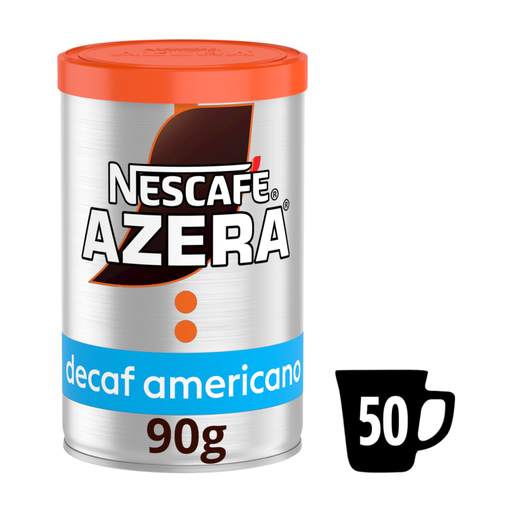 Image unavailable
This 90g Decaf Americano is an option to examine for a smaller top-up. Check its preparation directions and ingredients on the current pack if you want a hot-water-only cup.
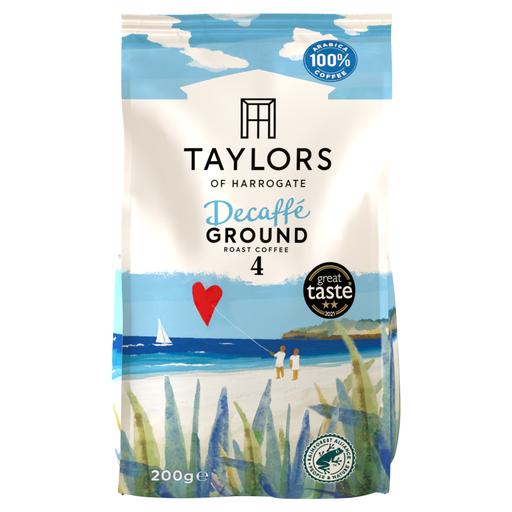 Image unavailable
This 200g ground coffee is for a brewed decaf top-up when you have suitable equipment. Check the pack’s grind and brewing directions against your cafetière, filter machine or other brewer.
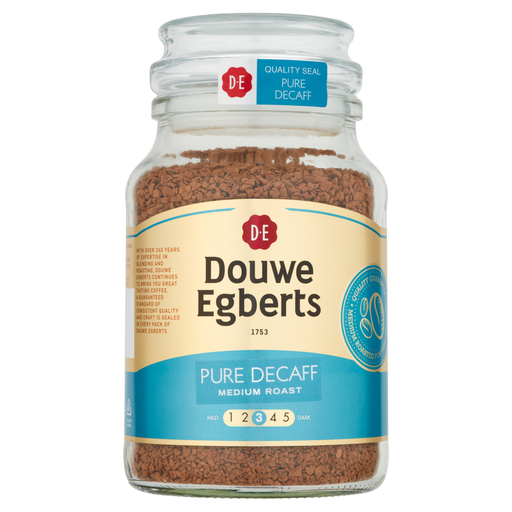 Image unavailable
The instant format makes this 190g pack relevant to a top-up without a brewer. Check the current pack’s directions for your preferred hot preparation.
 Image unavailable
This 300g pack may suit a household that makes decaf regularly, but consider whether you will use that amount after a top-up. Check the current pack for preparation and caffeine information relevant to you.
No: a decaf label does not guarantee zero caffeine. Sainsbury’s, for example, states less than 0.1% caffeine by weight for its Italian Decaf R&G; check the exact coffee’s information if residual caffeine matters to you.
Instant works when you have hot water but no brewer. Ground coffee needs suitable brewing equipment, beans also need a grinder, coffee bags steep in a mug, and pods require a matching machine.
Start with the maker’s description of the particular coffee rather than treating a bean type or roast name as a quality score. NESCAFÉ describes Gold Decaf as medium roasted, while Taylors of Harrogate describes caramel and malt notes for Decaffé; decide which description fits the cups you usually make.
Yes, when an allergen affects your purchase. Marks & Spencer says its Decaf Americano Micro-Ground Instant Coffee is not suitable for people with a milk allergy, so read the current pack rather than assuming every coffee has the same warnings.