Evening brewed-coffee drinkers
If you want to make coffee later in the day while reducing caffeine, check that the decaf format suits your filter machine, pour-over equipment or cafetière. The word ‘decaf’ alone does not identify a brewing method.


For a filter brew, start with decaffeinated ground coffee whose pack or manufacturer instructions specify filter preparation; Taylors Decaffé and Lavazza Decaf are examples, although the current guidance on the exact pack still matters. Whole beans offer control over grinding if you have a grinder, while instant decaf is a different format and will not make the brewed coffee you are choosing for.
If you want to make coffee later in the day while reducing caffeine, check that the decaf format suits your filter machine, pour-over equipment or cafetière. The word ‘decaf’ alone does not identify a brewing method.
Roast, bean composition and the maker’s tasting notes give you more to compare than a ‘premium’ label. Taylors, Lavazza and M&S describe different decaf coffees, but their flavour notes are product descriptions, not independent taste-test results.
Choose with your total caffeine intake in mind, not just the coffee format. During pregnancy, the NHS advises no more than 200 mg of caffeine a day from all sources; seek individual clinical advice where needed.
Start with the brewer and coffee format, then compare grind, roast and the details relevant to your caffeine needs.
| Priority | What to check | Your needs |
|---|---|---|
| Brewer compatibility | Look for filter preparation on the pack or maker’s instructions. Tesco describes Taylors Decaffé for cafetière or filter use; Lavazza lists filter among the preparations for its Decaf ground coffee. | I’m buying for a filter brewer, so I want preparation guidance for that method rather than relying on a decaf label. |
| Format and grind | Distinguish ground coffee, whole beans and instant coffee. Beans require a grinder; Lidl’s filter-brewing guide specifies a medium grind as one guideline. | Pre-ground coffee keeps my routine simpler. If I already grind beans, I can adjust the grind for my filter method. |
| Roast and flavour | Compare the stated roast, bean composition and maker’s tasting notes. Taylors describes 100% Arabica with caramel and malt notes; Lavazza describes an Arabica-and-Robusta blend with dried-fruit notes. | I’d rather choose a stated flavour direction and bean type than assume every decaf coffee tastes alike. |
| Caffeine information | Check product-specific caffeine information if the amount matters to you. During pregnancy, the NHS advises a limit of 200 mg a day from all sources, including foods, drinks and supplements. | If I need to manage caffeine closely, I need to consider everything else I consume as well as this coffee. |
| Paper filter or cafetière | Decide which brewing method you intend to use. Coffee & Health says paper filters largely retain coffee diterpenes, whereas these compounds pass into cafetière brews; that distinction does not establish a benefit for any decaf brand. | I prefer a paper-filtered brew, so I’ll check both the coffee’s preparation guidance and the equipment I plan to use. |
Ground coffee, beans and instant coffee can all appear in a decaf range. Instant coffee does not use the roast-and-ground brewing method of a filter machine or pour-over.
Choose the format for your equipment first, then check the current pack for preparation instructions.
Taylors, Lavazza and M&S describe different bean compositions and flavour notes. A broad label cannot tell you which of those descriptions you prefer.
Compare roast, composition and the maker’s tasting notes, and try a smaller pack before buying more of an unfamiliar coffee.
Changing coffee does not account for caffeine elsewhere in the day. The NHS pregnancy guidance covers total caffeine from sources including tea, chocolate and some supplements.
If you need to manage caffeine closely, check product information alongside your other sources and seek individual clinical advice where appropriate.
Coffee & Health distinguishes the methods by how much of the coffee’s diterpenes pass into the drink. This is a brewing-method distinction, not a comparison of decaf brands.
Decide which method you intend to use before choosing coffee and checking its preparation guidance.
These examples show how product formats and stated characteristics differ; a brand’s inclusion does not mean every coffee it makes suits filter brewing.
Taylors Decaffé is a 200 g roast-and-ground coffee that Tesco describes as suitable for cafetière or filter preparation.
Lavazza lists filter, moka and French press preparations for its 250 g Decaf ground coffee.
M&S Collection Single Origin Colombian Decaf Ground Coffee is described as a 227 g, 100% Arabica medium roast.
Sainsbury’s lists Fairtrade Colombian Decaff Taste the Difference options in both ground and 100% Arabica whole-bean formats.
Tesco Finest Decaffeinated Colombian Ground Coffee is listed as a 227 g roasted-and-ground coffee.
Sainsbury’s lists Douwe Egberts Pure Decaf as instant coffee.
These ground-coffee options are relevant if you want a decaf brew without grinding beans. Check the current pack’s filter instructions for the exact product you choose, especially where its description also discusses another brewing method.
 No image available
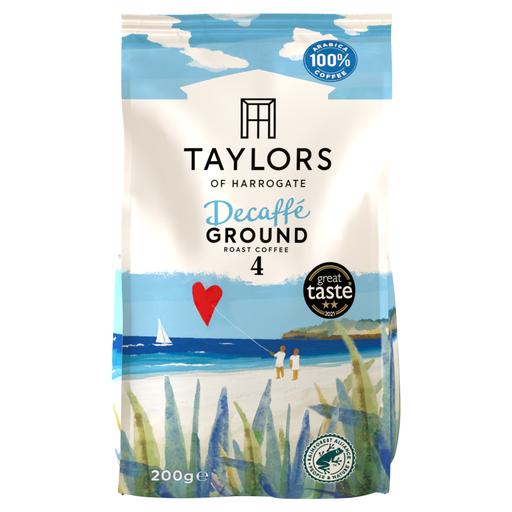
For a pre-ground decaf brew: Tesco describes the matching Taylors coffee as suitable for cafetière or filter preparation. The product is described as 100% Arabica, roast level 4, with caramel and malt notes; check the current pack for preparation guidance and product-specific caffeine information if needed.
 No image available
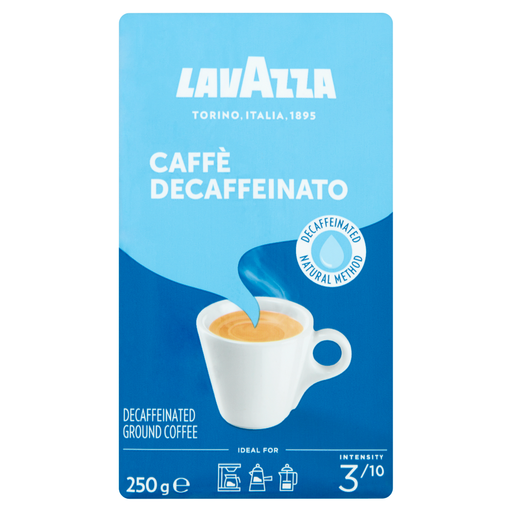
For shoppers considering pre-ground decaf, Lavazza lists filter among the preparations for its Decaf ground coffee. It describes a medium-roast Arabica-and-Robusta blend with dried-fruit notes; because this Joybuy product’s description emphasises espresso, confirm filter guidance on the current Classico pack before buying it for a filter brewer.
Check the preparation guidance rather than relying on ‘ground decaf’ alone. Tesco describes Taylors Decaffé for cafetière or filter use, and Lavazza lists filter among the preparations for its Decaf ground coffee; confirm the instructions on the exact pack you intend to buy.
No: a decaffeinated designation does not give you the caffeine amount in a serving. If you need to avoid caffeine strictly, ask the manufacturer for information about the exact product and seek advice from an appropriate healthcare professional.
Consider it alongside caffeine from everything else you consume. The NHS advises no more than 200 mg of caffeine a day during pregnancy and identifies sources beyond coffee, including tea, chocolate and some supplements; seek individual clinical advice if needed.
Choose pre-ground coffee if you want to brew without a grinder and can confirm that the product suits your filter method. Whole beans let you set the grind if you have the equipment; Lidl’s filter-brewing guide gives a medium grind as one guideline, so check the bean product’s instructions and adjust for your brewer.