Who is this for?
The choice changes depending on whether guests care most about caffeine, flavour variety or a familiar cup of tea.
Hosts serving a group
If you do not know everyone’s preferred flavour, a mixed box lets guests choose their own drink. Twinings says its Fruit & Herbal Classic Collection has four blends in individually sealed envelopes; check the format of any other box rather than assuming its bags are wrapped separately.
Fruit-tea drinkers avoiding caffeine
A fruit infusion without tea leaves can be a more suitable route than decaffeinated black tea. Twinings notes that fruit and herbal blends can contain naturally caffeinated ingredients such as mate or guarana, so read the particular blend’s ingredients.
Guests who prefer conventional tea
Someone who wants a tea-leaf flavour, perhaps with milk, may prefer decaffeinated black tea alongside the fruit infusions. Clipper describes its Organic Everyday Decaf as decaffeinated black tea; it is a different choice from a fruit infusion and may retain trace caffeine.
What matters when choosing?
Check caffeine status first, then decide how much flavour choice the table needs and inspect each blend’s ingredients.
| Priority |
What to check |
Your needs |
| Caffeine status |
Check whether the drink is a fruit or herbal infusion or decaffeinated tea made from tea leaves. For an infusion, check the ingredients for mate or guarana; Twinings identifies both as natural caffeine sources. |
I want a fruity drink without relying on decaffeination. A naturally caffeine-free infusion fits that aim if its particular blend contains no added caffeine source. |
| Flavour choice |
Compare the flavours in a mixed box and whether its bags are individually wrapped. Teapigs describes its hibiscus-based Super Fruit as punchy and slightly tart, which is a distinct choice from a mixed selection. |
With several friends coming, I would rather offer a choice than assume everyone enjoys one tart berry blend. |
| Ingredients |
Read the ingredient and allergen information for each flavour, not just the box name. Check any precautionary statement against guests’ known restrictions. |
Before serving someone with an ingredient restriction, I want to know which particular sachet they have chosen. |
| Classic tea option |
Check whether a decaffeinated black tea is wanted as a separate drink. Twinings says UK decaffeinated teas typically contain no more than 0.2% caffeine; that is not the same claim as naturally caffeine-free. |
Some guests may want a conventional tea-leaf cup with milk, even if fruit infusions are the main brunch choice. |
Relevant brands and retailers
These examples show different fruit-infusion, decaffeinated tea and grocery-shopping routes; the details apply to the named products or listings, not every item from each brand.
Twinings
Offers both fruit and herbal infusions and a separate decaffeinated tea range.
- Twinings describes its Fruit & Herbal Classic Collection as four naturally caffeine-free blends in individually sealed envelopes, including Strawberry & Raspberry.
- Its decaffeinated tea-leaf products are not interchangeable with naturally caffeine-free infusions; check which range and blend you are buying.
Teapigs
Its Super Fruit infusion offers a defined hibiscus-and-berry flavour rather than a selection of different blends.
- Teapigs describes Super Fruit as naturally caffeine-free, deep red, punchy and slightly tart.
- The hibiscus-led tartness is worth checking against guests’ preferences before choosing one flavour for the whole table.
Pukka
Has fruit and botanical blends with notably different ingredient lists.
- Pukka describes Elderberry & Echinacea as an organic, naturally caffeine-free fruit tea containing elderberries and echinacea root and leaf.
- Its Morning Berry listing also names hibiscus, rooibos, rosemary and ginseng. Check the exact blend rather than assuming all Pukka fruit teas contain the same botanicals.
Clipper
Provides a conventional decaffeinated tea option for guests who do not want a fruit infusion.
- Clipper describes Organic Everyday Decaf as decaffeinated organically grown black tea blended with Assam.
- This black tea does not fill the fruit-tea role; offer a fruit infusion separately if guests want one.
Tesco
Its UK decaf fruit-and-herbal grocery category provides a way to browse different tea styles.
- The category includes fruit and herbal products as well as decaffeinated tea options.
- A category label does not establish the ingredients or caffeine status of an individual product; inspect its current listing or pack.
Sainsbury's
Its listed own-brand options include both fruit tea and conventional decaffeinated tea.
- Sainsbury's search results list Strawberry, Raspberry & Cranberry Tea Bags alongside Red Label Fairtrade Decaf Tea Bags.
- Check the current strawberry-blend pack or product page for its full ingredients and caffeine statement before selecting it for caffeine avoidance.
Joybuy fruit tea options
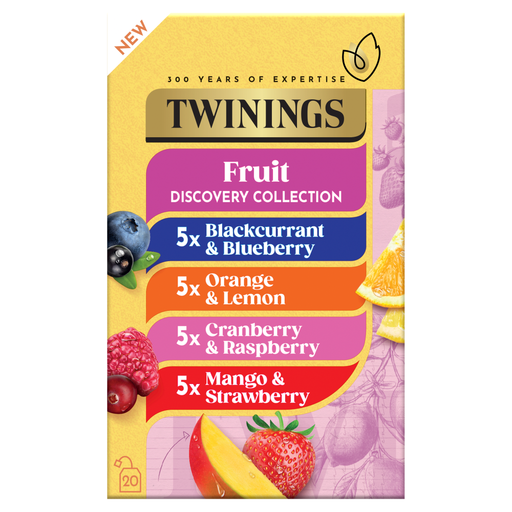
This fruit selection is an option to consider when putting out tea bags for guests with different fruit-flavour preferences. Check its individual blends against any guest-specific ingredient or caffeine requirements.
 No image available
Twinings Fruit Selection, 20 Tea Bags, 40g
A fruit selection gives brunch guests a choice of blends rather than one shared flavour. Check the ingredients of the particular blend a guest chooses; the selection information lists liquorice root in its Cranberry & Raspberry, Mango & Strawberry, and Blackcurrant & Blueberry blends. If individually wrapped bags matter for self-service, confirm the packaging format before buying.
Joybuy
Common questions
Is decaf fruit tea always caffeine-free?
No. Fruit and herbal infusions without tea leaves are generally naturally caffeine-free, but Twinings notes that mate and guarana can add caffeine to a blend. Decaffeinated black or green tea is a separate tea-leaf drink and may retain trace caffeine, so check the exact product.
What format works for brunch with several guests?
A mixed selection lets guests choose a flavour, and individually wrapped bags can make a self-serve table straightforward. Twinings says its Fruit & Herbal Classic Collection has four blends in sealed envelopes; check the packaging of a different selection if separate wrapping matters.
Can fruit tea be served cold?
Yes, if the particular product’s preparation instructions allow it. Twinings describes its fruit and herbal teas as suitable hot or cold; follow the chosen blend’s brewing and chilling directions.
What should I check before serving a guest with an ingredient restriction?
Check the current pack for the exact flavour’s ingredients, declared allergens and any precautionary statement. Different sachets in a selection can contain different botanicals, so the box name alone is not enough to assess a particular blend.
Should I offer decaf black tea as well as fruit tea?
Offer it as a separate option if a guest wants a conventional tea-leaf flavour, including a cup with milk. Decaf black tea does not provide a fruit-infusion flavour and may retain trace caffeine, so it should not replace a naturally caffeine-free option for someone avoiding caffeine.


