What should you check before buying?
For a Bonfire Night hot drink, decide whether keeping green tea or avoiding caffeine matters more. Then check the particular pack, rather than relying on the word “green” or a brand name.
Decaffeinated green tea
Choose it when: You want green tea as the base of your evening drink while reducing caffeine.
Bear in mind: Twinings says decaffeination can leave traces of caffeine, so “decaf” does not mean caffeine-free.
Caffeine-free herbal infusion
Choose it when: Avoiding caffeine matters more to you than retaining a green-tea drink.
Bear in mind: It is not green tea; its flavour and ingredients depend on the particular infusion.
| Priority |
What to check |
Your needs |
| Caffeine status |
Look for an explicit decaf or caffeine-free statement. Twinings and Tetley label the relevant green teas “decaffeinated to 0.2%”; Twinings says traces may remain. |
I want a green-tea cup later in the evening, but do not want to pick up ordinary green tea by mistake. |
| Tea type |
Read the ingredient list to distinguish decaffeinated green tea from a herbal infusion. Do not assume every product described as herbal is caffeine-free; check its own label. |
If avoiding caffeine takes priority, I can choose a differently flavoured infusion instead of green tea. |
| Brewing |
Follow the pack's water and infusion instructions. Clipper advises cooling boiled water for a minute and infusing for 1–3 minutes; Tesco lists three minutes in 200ml of freshly boiled water for Twinings decaf green tea. |
For a hot drink at the gathering, I want to know how to prepare the particular bags I buy. |
| Pack size |
Check the bag count and net weight of the exact variant. The Tesco listings identify Twinings decaf green tea as 20 bags/40g and Tetley as 50 bags/100g; Clipper lists a 40-bag decaf pack. |
A larger gathering changes how many bags I need; the box size matters more than the brand name alone. |
| Availability |
Confirm the current retailer listing and the pack details before ordering. A listing seen earlier does not establish what can be ordered now. |
I need enough of the chosen drink for the gathering, so I will check that the pack I select is available. |
Brand and product-line references
These product-line examples help distinguish decaf green tea from other teas and infusions; check the exact pack when shopping.
Twinings
Twinings lists Pure Green Decaffeinated in a 20-bag pack for shoppers seeking decaf green tea.
- Its decaf range states “decaffeinated to 0.2%”, and Twinings explains that minor traces of caffeine can remain.
- Check the particular retailer listing for the pack and its current availability.
Clipper
Clipper lists Organic & Fairtrade Decaf Green Tea in a 40-bag pack.
- The Clipper listing identifies decaffeinated organically grown green tea and says the tea is traded in compliance with Fairtrade standards.
- Clipper describes using carbon dioxide for decaffeination; that process statement does not establish a flavour or quality advantage over other products.
Tetley
Tesco identifies Tetley Green Tea Decaffeinated as a 50-bag, 100g product.
- The Tesco listing gives the ingredient as 100% decaffeinated green tea and states “decaffeinated to 0.2%”.
- That wording does not state an exact caffeine amount per prepared cup or mean the tea is caffeine-free.
Pukka
Pukka separates its caffeine-free herbal infusions from its green-tea products.
- Its caffeine-free herbal range offers a different drink type when keeping green-tea flavour is not essential.
- Do not assume a Pukka green-tea product is decaf; check the individual product label and ingredients.
Teapigs
Teapigs presents its green-tea collection as green tea with caffeine, rather than as a decaf range.
- The collection helps shoppers identify green-tea flavours when decaf is not a requirement.
- For a lower-caffeine purchase, check whether the exact product is explicitly labelled decaffeinated instead of assuming it from the category.
Joybuy options for the two drink types
These options include one decaffeinated green tea for keeping a green-tea drink and three differently flavoured herbal infusions for shoppers considering that alternative. Check each pack's caffeine wording and ingredients before choosing.
 No image available
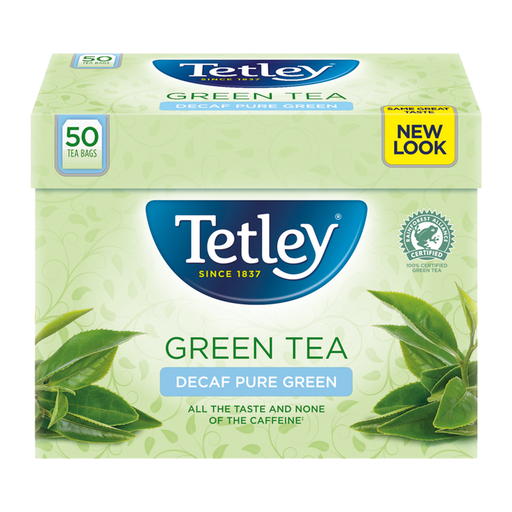
Tetley Green Tea Decaffeinated, 50 bags, 100g
Consider this if you want green tea rather than a herbal substitute for an evening drink. Tesco identifies this 50-bag, 100g variant as 100% decaffeinated green tea and states “decaffeinated to 0.2%”; that is not a zero-caffeine claim.
View on Joybuy
 No image available
Twinings Lemon & Ginger, 20 bags
For a lemon-and-ginger drink instead of green tea, this is a 20-bag alternative. If avoiding caffeine is your reason for switching, check the caffeine statement and ingredients on this pack.
View on Joybuy
 No image available
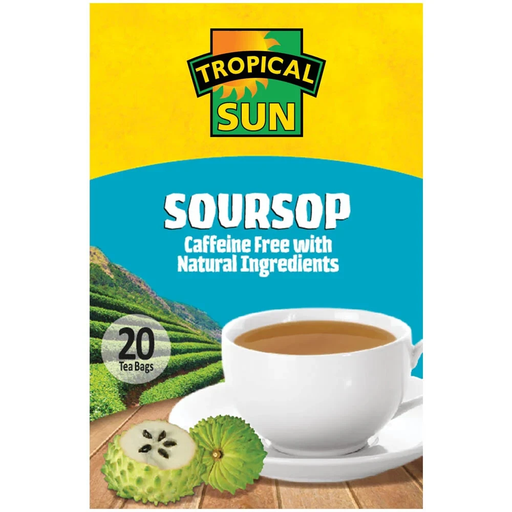
Tropical Sun Soursop Tea, 20 bags
This 20-bag soursop tea is a different drink from decaf green tea. Check the pack's ingredients, caffeine wording and hot-drink instructions if you are considering it for the gathering.
View on Joybuy
 No image available
Twinings Pure Peppermint, 80 bags
Choose peppermint only if a different flavour from green tea suits the drinks you plan to serve. This is an 80-bag pack; check its caffeine statement, ingredients and preparation instructions on the product you receive.
View on Joybuy
Common questions
Is decaf green tea the same as caffeine-free tea?
No. Decaf green tea remains green tea, and Twinings says minor traces of caffeine can remain after decaffeination. If you want to avoid caffeine, look for an infusion explicitly labelled caffeine-free and check its ingredients, including for mate or guarana.
How should I brew decaf green tea for a Bonfire Night drink?
Follow the instructions for the pack you buy. Clipper advises letting boiled water cool for a minute before infusing its decaf green tea for 1–3 minutes. Tesco's Twinings listing specifies one bag in 200ml of freshly boiled water for three minutes; those instructions are not universal.
Does decaf green tea count towards caffeine intake during pregnancy?
Do not assume it contains no caffeine. The NHS advises no more than 200mg of caffeine a day during pregnancy and includes tea among the sources to count. Check the product information and account for caffeine from other foods and drinks.
How can I identify decaf green tea in a grocery listing?
Look for “decaffeinated green tea” in the exact product name and check the ingredients. For example, Tesco identifies Tetley Green Tea Decaffeinated 50 Tea Bags 100g as 100% decaffeinated green tea. A rooibos or other herbal product is a different type of drink, even if it appears beside green tea in shopping results.


