Green-tea drinkers reducing caffeine
Decaf green tea keeps the type of tea you want while reducing caffeine. Twinings UK cautions that minor traces can remain, so it is not the same choice as a caffeine-free infusion.


Choose decaffeinated green tea if keeping a green-tea cup matters and you want to reduce caffeine, but not if you need to avoid it entirely: Twinings UK notes that decaf tea can retain minor traces. If caffeine avoidance takes priority over green-tea flavour, consider a labelled caffeine-free herbal or fruit infusion and check its ingredients.
Decaf green tea keeps the type of tea you want while reducing caffeine. Twinings UK cautions that minor traces can remain, so it is not the same choice as a caffeine-free infusion.
Clipper declares organically grown green tea and Fairtrade-compliant sourcing for its decaf product. If the decaffeination method also matters to you, Clipper says it uses CO2; that is the brand's account of its process, not a cross-brand quality comparison.
A labelled caffeine-free herbal or fruit infusion is a different route from decaf green tea. Check the ingredients of any blend, particularly for additions such as mate or guarana.
Decide whether keeping green tea or avoiding caffeine matters more, then compare the ingredients and format of the products that fit.
| Priority | What to check | Your needs |
|---|---|---|
| Caffeine | Check whether the label says decaffeinated or caffeine-free, and read the ingredients of herbal blends. Twinings UK notes that decaf tea can retain minor traces of caffeine. | I want to keep drinking green tea while reducing caffeine. If avoiding it takes priority, I would choose a labelled caffeine-free infusion instead. |
| Ingredients and sourcing | Check the tea ingredients and any product-specific organic or Fairtrade declarations. Clipper declares both for its decaf green tea and says it uses a CO2 decaffeination process. | Sourcing declarations matter to me, so I want to compare what each product actually states rather than assume every decaf tea has the same credentials. |
| Pack format | Compare the stated number of tea bags and whether the pack is green tea or a herbal infusion. A larger pack does not resolve uncertainty about flavour. | I would rather try a smaller pack if I am unsure whether I will enjoy a particular decaf green tea. |
| Flavour and preparation | Check the product's brewing instructions and whether it is plain green tea or another infusion. A decaffeination method alone does not establish how different teas will taste. | Keeping a green-tea flavour matters to me; a peppermint infusion would be a different drink, even if it suits my caffeine preference. |
Green tea naturally contains caffeine, and Twinings UK says minor traces can remain after decaffeination. Herbal and fruit infusions are a different category, although their ingredients still need checking.
Choose decaf green tea for caffeine reduction; if avoiding caffeine is essential, look for a labelled caffeine-free infusion and read its ingredient list.
Clipper says it uses CO2 to decaffeinate its tea. That process description does not establish a taste comparison with other products or mean the tea contains no caffeine.
Treat the stated method as one product detail to weigh alongside the ingredients, sourcing declarations and whether you like the resulting tea.
An option for comparing sourcing declarations and decaffeination methods in a green-tea product.
Its Pure Green Decaffeinated tea offers a plain green-tea option.
Relevant when a herbal infusion is more important than retaining green tea.
Its range provides a distinction between regular green tea and other tea or infusion choices.
These options cover decaffeinated green tea and a peppermint infusion for shoppers considering a non-green alternative. If avoiding caffeine is essential, check the infusion's ingredients and caffeine-free labelling.
 No image available
A green-tea option for reducing caffeine without switching to a herbal infusion. The pack contains 50 tea bags and weighs 100g; Joybuy's product description states it is decaffeinated to 0.2%, not that it is caffeine-free.
 No image available
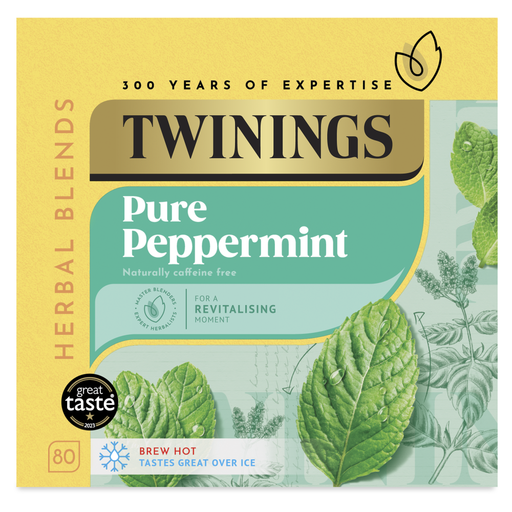
Consider this peppermint infusion if you are willing to switch away from green tea. It is an 80-pack; check its ingredient list and caffeine-free labelling if caffeine avoidance is your priority.
No. Twinings UK explains that decaffeination removes nearly all the caffeine but minor traces can remain. Choose decaf green tea to reduce caffeine, not as a guarantee of none.
Consider a labelled caffeine-free herbal or fruit infusion instead of decaf green tea. Twinings UK distinguishes these infusions from tea made with green-tea leaves; check the particular blend for caffeine-containing additions such as mate or guarana.
No. CO2 describes a decaffeination method, not a zero-caffeine guarantee. Clipper says it uses CO2 for its decaf tea; check the product's caffeine information separately if remaining caffeine matters to your choice.