Choose decaffeinated green tea with revision snacks if you want to keep drinking green tea while reducing caffeine; the listed Clipper, Twinings and Tetley options contain decaffeinated green tea. If avoiding caffeine altogether matters more than green-tea flavour, choose a naturally caffeine-free herbal infusion instead: decaf does not necessarily mean caffeine-free. For younger readers studying later in the day, NHS guidance for 11–19-year-olds advises avoiding caffeine after lunch because it can prevent sleep.
Who is each option for?
Students revising later in the day
If you want a hot drink with a snack but are watching your caffeine intake, distinguish reduced-caffeine tea from a caffeine-free infusion. NHS guidance for 11–19-year-olds advises avoiding caffeine after lunch because it can prevent sleep.
Green-tea drinkers reducing caffeine
Plain decaf green tea keeps tea leaves in the cup. Product listings from Clipper, Twinings and Tetley describe options made with 100% decaffeinated green tea; compare their pack sizes and brewing directions to choose between them.
Readers seeking a caffeine-free drink
If caffeine-free matters more than green-tea flavour, look for a herbal infusion explicitly described as naturally caffeine-free. Pukka lists a caffeine-free herbal range separately from its green-tea range.
What should you check before choosing?
Decaffeinated green tea
Choose when: You want green tea with a revision snack but prefer to reduce caffeine.
Bear in mind: Decaffeinated tea is not necessarily caffeine-free; Tetley describes its green tea as decaffeinated to 0.2%.
Caffeine-free herbal infusion
Choose when: Avoiding caffeine takes priority over drinking green tea.
Bear in mind: Herbal ingredients give you a different drink, not a caffeine-free version of green tea.
| Priority |
What to check |
Your needs |
| Later study sessions |
Check whether the drink is ordinary tea, decaf tea or a caffeine-free infusion. NHS guidance for 11–19-year-olds advises avoiding caffeine after lunch because it can prevent sleep. |
I want a drink for an afternoon or evening break without assuming that a decaf label means no caffeine. |
| Caffeine requirement |
Read the product description for a caffeine-free statement rather than relying on “decaf”. Tesco lists Tetley green tea as decaffeinated to 0.2%; Pukka describes its selected herbal range as naturally caffeine-free. |
If avoiding caffeine altogether matters most, I would choose an explicitly caffeine-free herbal infusion, even though it is not green tea. |
| Ingredients and brew |
Compare ingredient lists and pack directions. Holland & Barrett lists Twinings Decaf Pure Green Tea as 100% decaffeinated green tea and suggests brewing it for no more than two minutes. |
With snacks, I prefer a plain tea and a brewing routine that fits a short study break. |
| Pack size |
Check the number of bags against how often you expect to make a cup. The cited listings describe Twinings packs of 20, Clipper packs of 40 and Tetley packs of 50. |
A smaller pack suits me if I am trying a drink; for repeated breaks, I may prefer more bags in one pack. |
| Sourcing preferences |
Check the particular product's designation. Clipper lists its 40-bag decaf green tea as Organic & Fairtrade and says it uses carbon dioxide to decaffeinate its teas. |
Organic or Fairtrade credentials matter to me, so I would check them on the tea I actually choose. |
Common buying mistakes
-
Reading “decaf” as “caffeine-free”
That distinction matters if you intend to avoid caffeine altogether. Tetley describes its green tea as decaffeinated to 0.2%, while Pukka describes selected herbal teas as naturally caffeine-free.
Decide whether you want less caffeine or a caffeine-free drink before choosing between decaf green tea and a herbal infusion.
-
Assuming ordinary green tea suits a late session
Ordinary green tea contains caffeine. NHS guidance for 11–19-year-olds says caffeine can prevent sleep and advises avoiding it after lunch.
For a later study break, check the drink's caffeine description rather than treating all green teas as interchangeable.
-
Choosing by decaffeination method alone
Clipper says it uses carbon dioxide to decaffeinate its teas, but the method does not by itself establish whether the finished drink meets your caffeine or flavour preference.
Check the product type, ingredients, pack size and brewing directions as well as any process claim.
-
Using an online listing as the final ingredient check
Asda cautions that product ingredients and dietary information can change. GOV.UK guidance says pre-packed food labels must provide an ingredients list and emphasise any of the 14 allergens that must be declared.
Read the delivered pack's ingredients, allergen declaration and warnings before use, particularly if you need to avoid an ingredient.
Relevant brand references
These examples describe particular tea ranges or products; they do not imply that every product from a brand is decaf green tea.
Clipper
Clipper lists an Organic & Fairtrade Decaf Green Tea in a 40-bag pack, made with decaffeinated organically grown green tea.
- Clipper says it uses carbon dioxide to decaffeinate its teas.
- Clipper acknowledges that decaffeination can affect flavour; its process claims do not establish a taste comparison with other teas.
Twinings
Twinings lists Pure Green Decaffeinated in a 20-bag pack. Holland & Barrett lists its ingredients as 100% decaffeinated green tea.
- Holland & Barrett suggests brewing this product for no more than two minutes.
- The decaf designation should not be read as a caffeine-free statement.
Tetley
Tesco lists Tetley Green Tea Decaffeinated in a 50-bag pack, with an ingredient list of 100% decaffeinated green tea.
- The 50-bag format is an option to compare if you expect to make tea across several study sessions.
- The listing says “decaffeinated to 0.2%”, not caffeine-free.
Pukka
Pukka lists naturally caffeine-free herbal teas separately from its green-tea range.
- The herbal range offers a route for readers seeking a drink described as caffeine-free.
- A herbal infusion is not plain decaf green tea; check the ingredients and flavour before choosing.
Joybuy options for study breaks
These options include one decaffeinated green tea for readers who want to keep drinking green tea, followed by herbal infusions for readers who would rather choose a drink described as caffeine-free.
 No image available
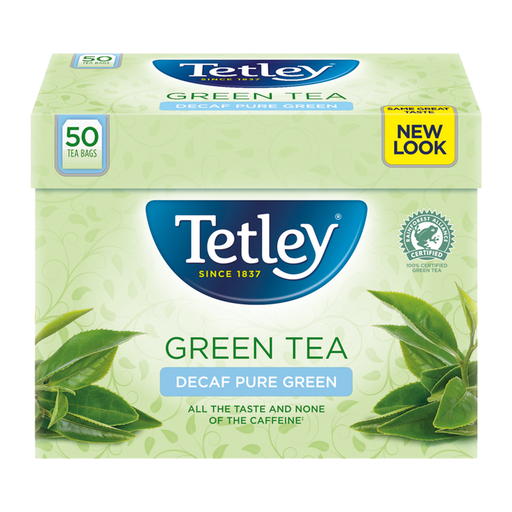
Tetley Green Tea Decaffeinated, 50 tea bags, 100g
For a green-tea drink when the aim is to reduce caffeine rather than avoid it altogether. Tesco lists this same Tetley product as 100% decaffeinated green tea and describes it as decaffeinated to 0.2%; do not treat it as caffeine-free.
View on Joybuy
 No image available
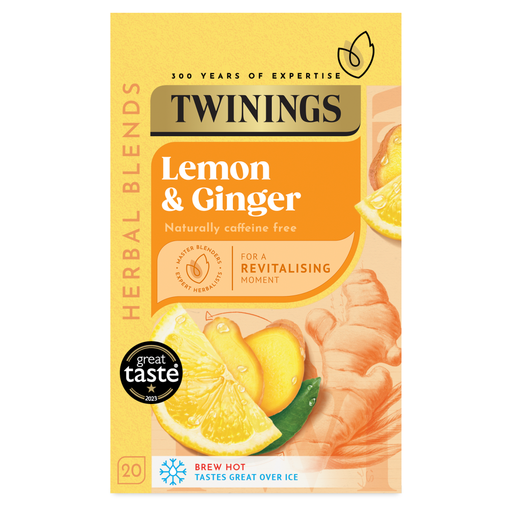
Twinings Lemon & Ginger Tea Bags, 20 pack
Consider this lemon-and-ginger herbal infusion if you would rather switch from green tea to an option the product description calls naturally caffeine-free. The description gives a brewing time of 3–5 minutes; it is not decaf green tea.
View on Joybuy
 No image available
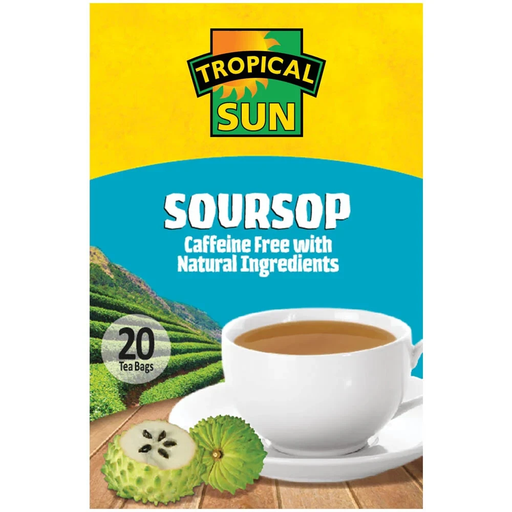
Tropical Sun Soursop Tea, 20 tea bags
This soursop-leaf herbal infusion is an alternative when green-tea flavour is not the priority. Its product description calls it caffeine-free and gives both hot- and cold-brewing directions; it is not decaf green tea.
View on Joybuy
 No image available
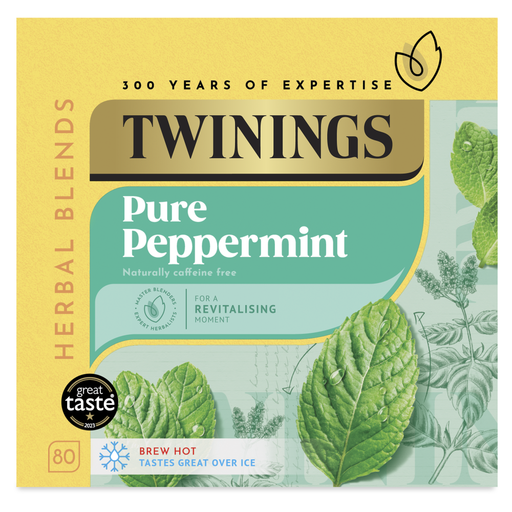
Twinings Pure Peppermint, 80 tea bags
For repeated study breaks if a peppermint infusion suits you better than green tea. The product description identifies it as caffeine-free and made with 100% peppermint; follow the directions on the pack when brewing.
View on Joybuy
Questions about decaf green tea
Does decaf green tea contain no caffeine?
No: a decaf label does not establish that a tea is caffeine-free. Tesco describes Tetley Decaf Green Tea as decaffeinated to 0.2%, while Pukka describes its selected herbal range as naturally caffeine-free. If you need a caffeine-free drink, check for that explicit description rather than relying on “decaf”.
What should I choose for a later revision break?
Choose decaf green tea if keeping green-tea flavour while reducing caffeine is your priority; choose an explicitly caffeine-free herbal infusion if avoiding caffeine matters more. NHS guidance for 11–19-year-olds advises avoiding caffeine after lunch because it can prevent sleep.
How long should I brew decaf green tea with a snack?
Follow the directions for the particular tea. Clipper advises letting freshly boiled water cool for a minute before infusing its decaf green tea for one to three minutes. Holland & Barrett suggests a maximum two-minute brew for Twinings Decaf Pure Green Tea.
Where should I check ingredients and allergens?
Check the delivered pack, especially if you need to avoid an ingredient in a flavoured or blended tea. GOV.UK guidance says pre-packed food labels must show an ingredients list with any of the 14 allergens that must be declared emphasised; Asda cautions that product information can change.


