Serve decaffeinated green tea when guests want green tea with less caffeine, but do not present it as caffeine-free. A 20-bag Twinings pack has a stated residual-caffeine specification, Clipper offers a 40-bag organic and Fairtrade option, and Tetley comes in a 50-bag pack; choose according to the number of guests and the product details that matter to them. Offer a separately labelled herbal infusion for anyone seeking a caffeine-free alternative.
Who is this choice for?
The important distinction at a coffee morning is whether a guest wants green tea with less caffeine or a different drink that is caffeine-free.
Hosts serving mixed caffeine preferences
Provide a decaf green tea for guests who want green tea, and label a caffeine-free herbal infusion separately. Twinings explains that decaffeinated tea can retain traces of caffeine, while Pukka describes its caffeine-free range as herbal tea.
Green-tea drinkers cutting down on caffeine
Decaffeinated green tea keeps tea leaves as the drink's ingredient rather than replacing them with herbs. If the amount of residual caffeine matters, check the statement for the exact product; a product percentage does not tell you the amount in a prepared cup.
Hosts considering sourcing credentials
Clipper's Organic & Fairtrade Decaf Green Tea is a 40-bag option when those credentials influence your choice. Clipper says it uses CO2 to decaffeinate its teas; that process claim does not establish how much caffeine is in a brewed cup.
What should you check before buying?
Decide which drinks to offer, then count the tea drinkers and check the instructions for each pack. A residual-caffeine statement, pack size and sourcing claim answer different questions, so none should stand in for the others.
| Priority |
What to check |
Your needs |
| Type of drink |
Check whether the ingredients are decaffeinated green tea or a herbal infusion. Label the drinks separately: decaf tea can retain caffeine traces, whereas Pukka describes its caffeine-free options as herbal teas. |
I would like green tea with less caffeine, but I also want guests seeking a caffeine-free drink to recognise their separate option. |
| Caffeine statement |
Twinings states that its Pure Green Decaffeinated tea is decaffeinated to 0.02% caffeine. Check the exact product's wording; do not convert a product percentage into caffeine per brewed cup. |
If I need a disclosed residual-caffeine specification, I want to know what the figure describes before using it to choose a pack. |
| Pack and preparation |
Count bags against expected servings and refills: the researched Twinings, Clipper and Tetley packs contain 20, 40 and 50 bags respectively. Follow the selected pack's water and infusion directions. |
For a larger gathering, I want enough bags on hand and instructions that are straightforward to follow when making several cups. |
| Sourcing and process |
Check claims on the exact pack. Clipper identifies its 40-bag decaf green tea as organic and Fairtrade and says it uses CO2 for its decaf teas; these claims do not measure prepared-cup caffeine. |
Organic or Fairtrade credentials may matter to my guests, even if I cannot use them to compare caffeine amounts. |
What can go wrong when planning drinks?
-
Assuming decaf means no caffeine
A guest avoiding caffeine altogether may mistake decaffeinated green tea for a caffeine-free drink. Twinings explains that decaffeination removes nearly all caffeine, not necessarily every trace.
Label decaf green tea clearly and offer a separately identified herbal infusion if guests want a caffeine-free alternative.
-
Reading a product percentage as caffeine per cup
A residual-caffeine percentage stated for tea does not provide a measured caffeine amount for a prepared serving. It cannot, by itself, answer how much caffeine a guest will drink.
Keep the product statement in its original terms rather than calculating a per-cup figure from it.
-
Planning bags but not preparation
Pack counts help with serving plans, while brewing instructions differ between products. For example, Twinings specifies 200ml and three minutes for its Pure Green Decaffeinated tea; Clipper advises a one-to-three-minute infusion after allowing boiled water to cool briefly.
Count likely servings and refills, then keep the chosen pack's directions beside the kettle or teapot.
If planned servings exceed the bags on hand, you will need another pack.
Which brands are relevant?
These references describe particular products or ranges, not every tea made by each brand. Check the exact pack when deciding what to serve.
Twinings
Pure Green Decaffeinated is a 20-bag green-tea option. Twinings states that the tea is decaffeinated to 0.02% caffeine.
- The product directions specify 200ml of water and a three-minute infusion.
- The stated percentage is not a measured caffeine amount per prepared cup.
Clipper
Organic & Fairtrade Decaf Green Tea comes in a 40-bag pack. Clipper says it uses CO2 for its decaf teas.
- The product offers specified organic and Fairtrade credentials.
- Those credentials and the stated process do not establish a caffeine amount per brewed cup.
Tetley
Tetley Green Tea Decaffeinated is listed by Tesco as a 50-tea-bag pack, a count worth considering when planning for several guests.
- The Tesco listing gives mug and teapot preparation guidance.
- Check the directions on the pack you buy rather than applying instructions from another green tea.
Pukka
Pukka's caffeine-free herbal teas are a different drink option from decaffeinated green tea.
- The herbal range gives hosts a separately identifiable caffeine-free alternative.
- Check the ingredients of the exact blend; do not substitute a green-tea blend for a caffeine-free herbal infusion.
Teapigs
Teapigs describes green tea on its UK green-tea category page as containing caffeine.
- Choose by the exact product label rather than assuming a green tea is decaffeinated.
A Joybuy option for a larger group
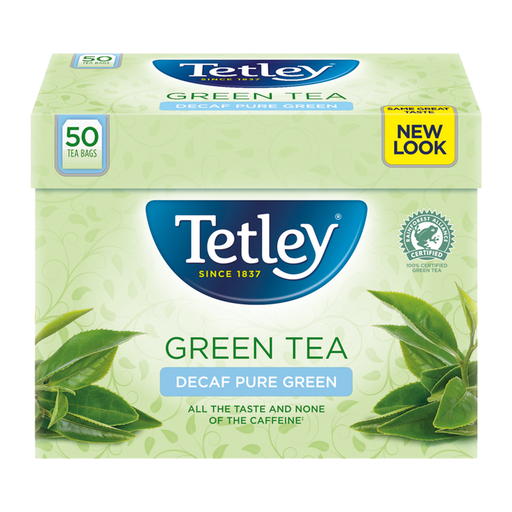
This 50-bag Tetley decaf green tea is a pack-size option for a coffee morning with several green-tea drinkers. Check its pack directions when planning how to prepare the drinks.
 No image available
Tetley Green Tea Decaffeinated, 50 Tea Bags, 100g
The 50-bag pack gives you a count to plan around when serving decaf green tea to a group. It is decaffeinated green tea, not a caffeine-free herbal infusion; check the pack's preparation instructions before serving.
View on Joybuy
Questions about decaf green tea
Is decaf green tea caffeine-free?
No. Decaffeinated green tea can retain traces of caffeine. If a guest wants a caffeine-free drink, offer a separately labelled herbal infusion and check that blend's ingredients.
How do I brew decaf green tea for several guests?
Use the directions for the product you serve rather than one method for every pack. Twinings specifies one bag in 200ml of freshly boiled water for three minutes; Clipper advises allowing boiled water to cool for a minute and infusing for one to three minutes; Tesco's Tetley listing gives one bag per mug or per person in a warmed teapot, brewed to the preferred strength.
Can a product's decaffeination percentage tell me the caffeine in a cup?
No. A percentage stated for the tea product is not a measured amount in a prepared cup. Keep that distinction in mind when comparing product statements, particularly if a guest is monitoring their total caffeine intake.
Does an organic claim mean a decaf green tea has less caffeine?
No conclusion about caffeine amount follows from an organic claim. Clipper's organic and Fairtrade credentials describe sourcing; compare caffeine information only where it is stated for the exact tea, and do not treat a product-level percentage as a brewed-cup measurement.


