Hosts making a shared pot
If you are using a cafetière, filter machine or filter cone, start with the preparation guidance on the pack. Rombouts explicitly describes its decaf as medium-ground for those methods.


Choose decaf ground coffee to suit the brewer you will use: Rombouts specifies a medium grind for cafetières and filters, while Lavazza lists moka, filter and French press preparation for its My Easy Day decaf. Compare the makers’ flavour descriptions for the cup you want to serve, but check the exact pack if a guest needs to know its residual caffeine content.
If you are using a cafetière, filter machine or filter cone, start with the preparation guidance on the pack. Rombouts explicitly describes its decaf as medium-ground for those methods.
Flavour descriptions can help you choose a cup to offer alongside cakes and savouries. Lavazza UK describes dried-fruit notes in its My Easy Day decaf; illy UK describes caramel, orange blossom and jasmine in its ground decaf espresso coffee.
Decaf is not necessarily caffeine-free. illy UK states that its ground decaf espresso coffee has a caffeine content no higher than 0.1%; check the exact product label rather than applying that figure to other coffees.
Decide how you will brew and serve the coffee, then compare flavour descriptions, caffeine information and pack quantities for that plan.
| Priority | What to check | Your needs |
|---|---|---|
| Brewing method | Match the stated grind and preparation methods to your brewer. Rombouts specifies medium-ground coffee for cafetières, filter machines and filter cones; Lavazza UK lists moka, filter and French press for My Easy Day. | I’m making one pot in a cafetière or filter machine, so I want guidance that names that method. |
| Flavour | Compare descriptions for the exact product rather than treating roast or intensity numbers as a shared taste scale. Taylors of Harrogate describes caramel and malt in Decaffé; illy UK describes caramel, orange blossom and jasmine in its ground decaf espresso coffee. | For coffee served after cakes and sandwiches, I’d like to choose a flavour description my guests may enjoy. |
| Caffeine information | Read the exact pack’s caffeine statement if the amount matters. illy UK states no higher than 0.1% caffeine for its ground decaf espresso coffee; that figure does not describe every decaf. | I want to offer decaf without telling guests that it contains no caffeine. |
| Quantity | Check the pack weight against the amount you plan to brew. Rombouts gives 60 g per litre as a starting ratio for its decaf, to be adjusted after the first brew. | With several guests coming, I’d rather plan the pots I’ll make than assume one pack yields a particular number of cups. |
Preparation guidance differs between products: Rombouts specifies a medium grind for filter and cafetière use, while Lavazza UK lists moka, filter and French press for its My Easy Day decaf.
Choose against the equipment you will actually use, and follow the instructions for that pack and brewer.
Lavazza UK labels its My Easy Day decaf 3/10, while illy UK labels its ground decaf espresso coffee 5/9. Those different brand scales do not establish a common flavour ranking or caffeine content.
Use each product’s preparation guidance and flavour description, and look for a product-specific caffeine statement when relevant.
illy UK states a caffeine content no higher than 0.1% for its ground decaf espresso coffee. The word “decaf” alone is not a zero-caffeine statement.
Offer it as decaffeinated coffee, and check the exact pack before making a more specific claim to guests.
These descriptions apply to the named products, not to every coffee from each brand.
Lavazza UK lists its My Easy Day decaf ground coffee for moka, filter and French press preparation.
illy UK positions its 250 g ground decaf espresso coffee primarily for Italian espresso.
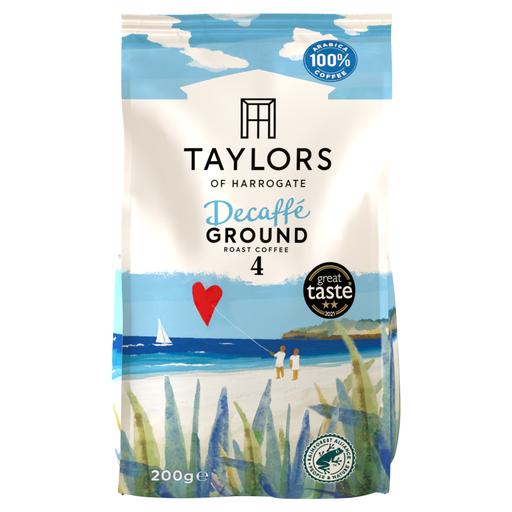
Taylors describes Decaffé ground coffee with caramel and malt flavours and says it uses a Pure Water Process to remove caffeine.
Rombouts specifies its decaf as medium-ground for cafetières, filter machines and filter cones.
Sainsbury's lists a 227 g Fairtrade Colombian Decaff ground coffee labelled strength 3.
These are decaf ground-coffee packs to consider for an afternoon tea party. Check each pack’s brewing instructions against the equipment you plan to use.
 No image available
Consider this decaf ground coffee if caramel-and-malt flavour descriptions appeal for coffee served after afternoon food. The pack is 200 g; check its brewing instructions for your cafetière, filter or other planned equipment, and consult the exact pack if residual caffeine content matters.
 No image available
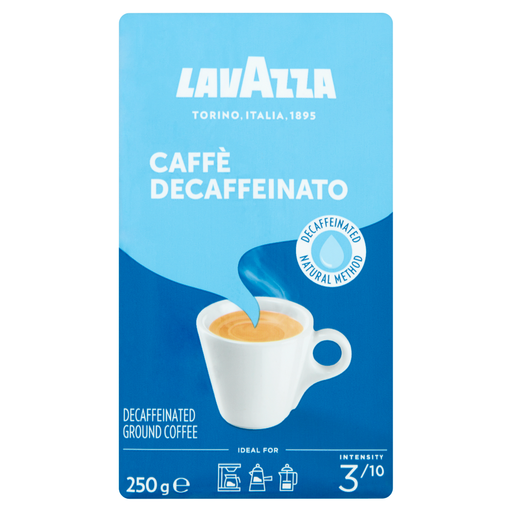
This 250 g pack is an option when you want to serve decaf ground coffee. Check the Classico pack’s own preparation guidance for your brewer: directions for Lavazza’s differently named My Easy Day decaf should not be assumed to apply to this product. Check the exact pack for residual caffeine information if needed.
Do not assume that it is. illy UK states that its ground decaf espresso coffee contains no more than 0.1% caffeine; check the exact pack if a guest needs to know what is in the coffee you are serving.
For its decaf ground coffee, Rombouts recommends starting with 60 g per litre of water and adjusting to taste after the first brew. Follow your machine’s instructions where applicable; the Rombouts figure is not a fixed dose for every coffee or brewer.
Check the food name, net quantity, date and any storage directions before buying for guests. UK food-labelling guidance from the Department for Environment, Food & Rural Affairs and the Food Standards Agency also covers ingredient information, including allergens, and the responsible food business operator’s details.