Afternoon coffee drinkers choosing decaf
If you want ground coffee during an afternoon tea break but prefer a decaffeinated blend, compare the named brewing methods and flavour descriptions. Decaf products are not interchangeable in either respect.


For an afternoon decaf, choose a ground coffee that names your brewer, then compare its roast and flavour description with the cup you want. A cafetière-focused option with caramel and malt notes offers a different choice from a dark, nutty blend; neither is a substitute for checking the pack if residual caffeine matters to you.
Your usual brewing method and preferred cup style are more useful starting points than the word “decaf” alone.
If you want ground coffee during an afternoon tea break but prefer a decaffeinated blend, compare the named brewing methods and flavour descriptions. Decaf products are not interchangeable in either respect.
Look for a pack that explicitly names your cafetière, filter machine or filter cone. Rombouts provides a starting dose for filter-style brewing, while Taylors of Harrogate provides a cafetière brew time.
Brand descriptions range from Taylors of Harrogate’s caramel and malt notes to Tesco Finest’s dark-roast, nutty profile. Roast and intensity describe the intended cup style; they do not tell you how much caffeine remains.
Start with the brewer you own. Once a product fits that method, compare flavour, caffeine information and pack size.
| Priority | What to check | Your needs |
|---|---|---|
| Brewer fit | Check the exact pack for named methods and grind guidance. Rombouts specifies medium-ground coffee for filter and cafetière use; Tesco Finest lists cafetières, filter machines, moka pots and percolators. | My afternoon coffee needs to work with the brewer I already use, rather than merely being labelled ground coffee. |
| Cup style | Compare roast and the brand’s flavour notes. Taylors describes caramel and malt; Tesco Groceries describes its Finest decaf as dark roasted and nutty. | For a gentler-tasting break, I would look at the flavour description before choosing a dark-roast option. If I want a bolder cup, the darker profile may appeal more. |
| Residual caffeine | Read the declaration for the exact product rather than using roast, intensity or decaffeination method as a caffeine measure. illy declares caffeine content not higher than 0.1% for its 250 g decaf ground coffee. | If the amount of caffeine matters to me, I need the declaration for the coffee I am buying, not a figure borrowed from another decaf. |
| Pack and storage | Compare the stated pack size with how often you make coffee. Follow the product’s storage directions after opening; Lavazza advises cool, dry storage and careful resealing. | I would rather choose a pack I expect to use and store it as directed between afternoon breaks. |
A decaffeinated ground coffee may list particular preparation methods, so the word “ground” alone does not establish a match for your equipment.
Check the methods named on the exact pack before choosing by roast or flavour. For a cafetière or filter machine, look for those methods explicitly.
Decaf does not by itself establish that a coffee contains no caffeine. For example, illy declares caffeine content not higher than 0.1% for its UK decaf ground coffee.
If residual caffeine affects your choice, check the declaration for the specific product rather than applying illy’s figure to other coffees.
Lavazza lists an intensity of 3/10 for Decaf Classico, while Tesco describes its Finest decaf as dark roasted. Those descriptions help distinguish cup styles, not residual-caffeine amounts.
Use roast and tasting notes for flavour decisions, and the exact product’s caffeine information for caffeine decisions.
Storage instructions matter once a pack is open, particularly if afternoon coffee is only an occasional drink.
Choose a pack size that fits how often you brew, then follow its directions. Lavazza advises keeping ground coffee cool and dry and resealing the pack carefully.
These brand references describe particular decaf coffees or listings, not every coffee made by each brand.
Lavazza describes a 250 g decaf ground coffee for moka, filter and French press preparation.
illy positions its 250 g, 100% Arabica decaf ground coffee around Italian espresso preparation.
Taylors describes its 200 g Decaffé ground coffee with caramel and malt flavours and provides a cafetière method.
Rombouts describes its 250 g decaf as medium ground for cafetières, filter machines and filter cones.
Tesco Groceries describes its 227 g Decaffeinated Colombian Ground Coffee as a dark-roast, nutty option.
Sainsbury's lists own-label decaf ground coffees alongside branded choices.
These two ground decaf coffees offer different starting points for an afternoon break: Taylors of Harrogate has cafetière guidance, while Lavazza Decaf Classico calls for checking the pack against your chosen brewer.
 No image available
For a cafetière afternoon coffee, Taylors describes caramel and malt flavours and suggests a 4–5 minute brew. The pack is 200 g; check its directions if you plan to use another brewing method.
 No image available
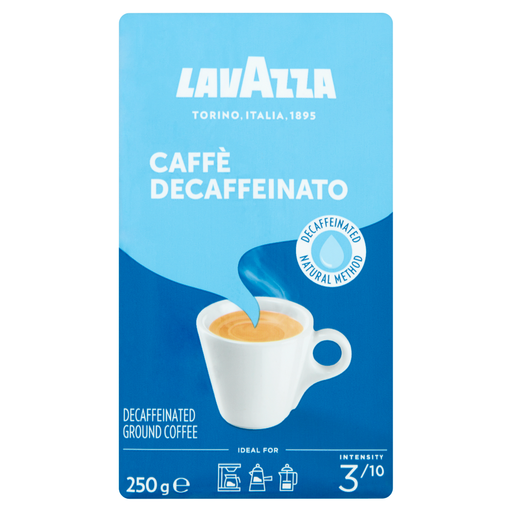
For an afternoon cup using your chosen brewer, check the Decaf Classico pack’s preparation guidance rather than applying directions for another Lavazza decaf. This is a 250 g ground-coffee pack; Sainsbury's lists Decaf Classico at intensity 3/10.
Start with the preparation methods named for the exact coffee. Rombouts lists cafetières, filter machines and filter cones, while Tesco Finest lists those first two methods alongside moka pots and percolators. Do not assume every ground decaf suits every brewer.
Compare the brands’ flavour descriptions rather than choosing on the word “decaf”. Taylors of Harrogate describes caramel and malt notes; Tesco Groceries describes a darker, nuttier Finest decaf. Check brewing compatibility before deciding between them.
Do not assume it is. illy declares caffeine content not higher than 0.1% for its UK decaf ground coffee; that figure does not describe other products. Check the exact label if residual caffeine matters to your choice.
Use the directions for your chosen coffee as a starting point. Taylors of Harrogate suggests about one tablespoon per mug and a 4–5 minute brew for Decaffé; Rombouts recommends starting with 60 g per litre and adjusting to taste.
Follow the exact product’s storage directions. Lavazza advises a cool, dry place and careful resealing, while illy advises keeping its coffee away from light and heat.