What should you check before choosing?
Start with how you want to serve the coffee, then check caffeine and brewing-method information for the particular product.
| Priority |
What to check |
Your needs |
| The finished drink |
Check what you add after brewing, including sugar, flavoured syrup, milk or cream. Diabetes UK advises tea and coffee without sugar and suggests skipping sugar, syrup and cream in coffee-shop drinks. |
I want to choose the additions myself rather than assume that decaf or a ‘diabetic’ label settles the question. |
| Residual caffeine |
Look for a decaffeinated designation. If strict caffeine avoidance matters, check information for the particular product and brewing method; illy says decaf can retain caffeine and extraction varies with preparation. |
A later cup appeals to me, but I do not want to mistake reduced caffeine for none. |
| Brewer compatibility |
Check the stated preparation methods rather than assuming all ground decaf suits every brewer. Rombouts specifies medium grounds for filter and cafetière; Lavazza lists moka, filter and French press for its Decaf ground coffee. |
My grounds need to match the cafetière, filter brewer or moka pot I use at home. |
| Beans and blend |
Check the bean composition when it matters to your choice. illy describes its Ground Espresso Decaffeinated Coffee as 100% Arabica; Lavazza describes its Decaf ground coffee as an Arabica-and-Robusta blend. |
I have a preference for a particular blend or an espresso-oriented product, separate from my decision to reduce caffeine. |
| Pack size |
Check the weight on the particular pack. The cited product listings include 200 g, 227 g and 250 g decaf ground-coffee packs. |
A pack should fit how often I brew coffee and how much I keep at home. |
Decaf ground coffee on Joybuy
These ground decaf options suit shoppers choosing what to add to a home-brewed cup. Check the preparation guidance for each pack against your brewer; neither product’s name establishes suitability for a particular brewing method.
 No image available
Taylors of Harrogate Decaf Ground Coffee 200 g
Choose what to add to your brewed cup rather than relying on decaf alone when considering the finished drink. Check the grounds against your brewer’s guidance, and check residual-caffeine information if strict avoidance matters to you.
View on Joybuy
 No image available
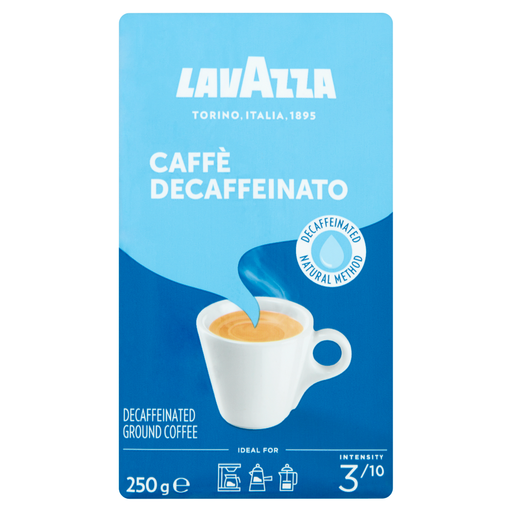
Lavazza Decaf Classico Ground Coffee 250 g
This ground decaf is an option when reducing caffeine while preparing coffee at home; additions still determine what goes into the finished drink. Confirm brewing-method suitability for this Classico product rather than applying guidance for a different Lavazza decaf, and check residual caffeine if you need strict avoidance.
View on Joybuy
Frequently asked questions
Do I need coffee labelled ‘diabetic’?
No. Diabetes UK says tea and coffee can be included and advises against relying on foods labelled ‘diabetic’. For a prepared coffee, consider added sugar and the milk, cream or syrup used, rather than treating the label or decaffeination as an answer on its own.
Is decaf ground coffee caffeine-free?
Not necessarily. illy states that decaffeinated coffee contains less than 0.1% caffeine and estimates approximately 6–8 mg per espresso cup, while noting that brewing method affects extraction. If strict avoidance matters for an individual reason, check the particular product and follow advice from your clinician or dietitian.
What should I choose for a cafetière or filter machine?
Choose grounds explicitly described for your method. Rombouts lists its Decaf ground coffee as medium ground for filter and cafetière use, including filter machines and cones, and suggests 60 g per litre as a starting point.
Can the same decaf grounds work in a moka pot, filter brewer and French press?
A product can be listed for all three methods: Lavazza gives moka, filter and French-press preparation guidance for its Decaf ground coffee. Check the particular pack before buying, since that guidance should not be assumed to apply to every decaf product or variant.


