Choose decaf ground coffee by the brewer you use, then by the roast and flavour notes you would enjoy with winter desserts or an after-dinner cup. Check the preparation guidance for your brewer and, if you track caffeine, the product-specific caffeine statement: decaf is not necessarily caffeine-free.
Who is choosing ground decaf?
After-dinner coffee drinkers
If you enjoy a warm coffee with dessert but want to reduce caffeine, ground decaf lets you keep your usual brewing routine. Decaf can still contain small amounts of caffeine, as University Hospitals of Leicester NHS Trust notes.
Cafetière, filter and moka-pot users
Your brewer is a useful starting point. The preparation methods named for individual ground coffees differ, so check the pack rather than assuming every decaf grind suits your equipment.
Shoppers choosing coffee for desserts
Stated notes such as caramel, malt, nuts or dried fruit can help you choose a flavour direction for biscuits, baked puddings or a milk-based drink. They describe the product, not how every person will taste it.
What matters when choosing?
Start with the brewer already in your kitchen, then compare the stated roast and flavour profile. If reducing caffeine is a particular concern, check the individual product rather than relying on the word “decaf” alone.
| Priority |
What to check |
Your needs |
| Brewing method |
Look for your brewer in the preparation guidance. Rombouts lists a medium grind for filter and cafetière use; Lavazza Decaf lists moka, filter and French press preparation. Check the exact product and variant before applying that guidance. |
“I use a moka pot” calls for a product that names moka preparation; “I make coffee in a cafetière” calls for cafetière guidance. |
| Flavour and roast |
Compare the stated roast and tasting notes, remembering that notes are descriptions rather than a taste guarantee. Taylors describes caramel and malt; Tesco Finest lists a dark roast with caramel, blood-orange and nutty notes. |
For biscuits or a baked pudding, I might prefer caramel-and-malt notes. With a richer dessert or milk-based drink, I might instead want the dark-roast direction described for Tesco Finest. |
| Caffeine information |
Read any caffeine statement for the exact product and consider other drinks and foods if you are tracking intake. illy UK states that its Decaffeinated Ground Coffee contains no more than 0.1% caffeine. |
I want an after-dinner decaf, but I do not want to mistake “decaffeinated” for “caffeine-free”. |
What should you avoid assuming?
-
Assuming every ground decaf suits every brewer
Preparation guidance differs between products. A coffee labelled for a filter machine or cafetière is not automatically a match for a moka pot or espresso machine.
Check the exact pack for your equipment. Lavazza Decaf and Tesco Finest name moka preparation, while Rombouts explicitly describes filter and cafetière use.
-
Reading “decaf” as “zero caffeine”
Decaffeinated coffee can retain small amounts of caffeine, according to University Hospitals of Leicester NHS Trust. That distinction matters if you keep track of caffeine across drinks and food.
Use a product-specific caffeine statement where one is given rather than assuming all ground decafs have the same residual amount.
-
Choosing by decaffeination process alone
A stated process does not tell you whether you will enjoy a coffee’s roast, flavour notes or preparation method.
Treat process information as one preference, then check brewer guidance and the flavour description. Do not infer a guaranteed taste or health outcome from the process name.
Ground-decaf lines to compare
These details describe particular ground-decaf products or lines; they do not apply to every coffee bearing the same brand name.
Lavazza
Lavazza Decaf is a medium-roast Arabica-and-Robusta blend with stated dried-fruit notes.
- Lavazza UK lists moka, filter and French press preparation and rates this Decaf product at intensity 3/10.
- Check which Lavazza variant you are buying before applying those preparation details to it.
illy
illy’s Decaffeinated Ground Coffee is a 100% Arabica option with an espresso-led description.
- illy UK describes caramel, orange-blossom and jasmine notes and states a caffeine content no higher than 0.1%.
- Its floral description is a different flavour direction from a dark, nutty roast; choose according to the cup you prefer.
Taylors of Harrogate
Taylors describes its Decaffé ground coffee with caramel and malt notes.
- The brand provides cafetière brewing guidance for Decaffé and describes its Pure Water Process.
- If you use another brewer, check the instructions on the exact pack rather than relying on the cafetière guidance.
Rombouts
Rombouts Decaf is described as medium ground for filter and cafetière brewing.
- Rombouts identifies filter and cafetière preparation and gives a starting dose of 60g per litre of water.
- Check the pack if you intend to use a different brewer; its stated filter and cafetière guidance does not establish moka suitability.
Tesco Finest
Tesco Finest Decaffeinated Colombian Ground Coffee is described as a dark roast with caramel, blood-orange and nutty notes.
- Tesco lists instructions for cafetières, filter machines, moka pots and percolators.
- Its dark-roast direction may be less appealing if you prefer a lighter-tasting cup; check the current pack for product details.
Ground-decaf options on Joybuy
These ground-decaf options offer two starting points for an after-dinner cup. Check each variant’s pack for the brewer guidance and flavour details that matter to you.
 No image available
Taylors of Harrogate Decaf Ground Coffee 200g
For a cafetière cup alongside biscuits or a baked pudding, Taylors describes its Decaffé coffee with caramel and malt notes. This is a 200g pack of ground decaf; check its label for guidance if you use another brewer or need a product-specific caffeine statement.
View on Joybuy
 No image available
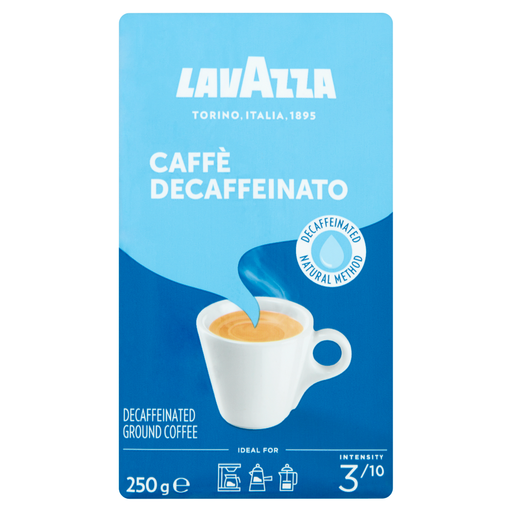
Lavazza Decaf Classico Ground Coffee 250g
This 250g ground-decaf pack is another option for an after-dinner coffee. Check the Decaf Classico pack for your brewer, its flavour description and any product-specific caffeine information; guidance for a differently named Lavazza decaf should not be assumed to apply.
View on Joybuy
Common questions
Is decaf ground coffee completely caffeine-free?
No. University Hospitals of Leicester NHS Trust notes that decaf coffee can still contain very low levels of caffeine. For one product-specific example, illy UK states that its Decaffeinated Ground Coffee has a caffeine content no higher than 0.1%; check the statement for the coffee you choose.
What ground decaf could I choose for a cafetière and winter desserts?
Start with a product that names cafetière preparation, then choose a flavour direction. Taylors describes Decaffé with caramel and malt notes and gives cafetière guidance; Tesco Finest lists a dark roast with caramel and nutty notes; Rombouts specifies a medium grind for cafetière use.
Can I use any ground decaf in a moka pot?
Do not assume so. Lavazza UK names moka preparation for its Decaf ground coffee, and Tesco lists moka-pot instructions for its Finest Decaffeinated Colombian Ground Coffee. Check the exact variant’s guidance before buying, particularly when a product only names filter or cafetière brewing.


