Hosts using a cafetière, filter machine or moka pot
Check that the ground coffee is stated to suit the equipment you will use for the gathering. A roast description alone will not tell you which preparation methods the maker recommends.


Choose decaf ground coffee that suits the brewer you will use for your guests: Rombouts specifies filter and cafetière use, while Tesco Finest lists cafetières, filter machines, moka pots and percolators. Then compare the makers’ flavour descriptions and pack sizes, without assuming that decaf is caffeine-free; the British Coffee Association says a small amount of caffeine remains after decaffeination.
Check that the ground coffee is stated to suit the equipment you will use for the gathering. A roast description alone will not tell you which preparation methods the maker recommends.
Choose coffee clearly labelled decaffeinated, but do not describe it to guests as caffeine-free. The British Coffee Association says a small amount of caffeine remains after decaffeination.
Compare the stated brewing methods, pack sizes and makers’ flavour descriptions for the particular products. A familiar brand or an own-label name does not, by itself, settle which coffee fits your brewer and guests’ preferences.
Start with the brewer you will use, then consider caffeine information, flavour descriptions and how much ground coffee you plan to prepare.
| Priority | What to check | Your needs |
|---|---|---|
| Brewing method | Match the product’s stated preparation methods to your equipment and follow its dosing directions. Rombouts specifies medium-ground coffee for filter and cafetière use and suggests starting at 60g per litre; Tesco Finest lists cafetières, filter machines, moka pots and percolators. | I want to make coffee for several friends using the brewer I have, without assuming every ground coffee suits it. |
| Residual caffeine | Look for a clear decaffeinated label and check the exact product if its caffeine declaration matters. The British Coffee Association says decaf is not completely caffeine-free; illy states no more than 0.1% caffeine for its Ground Espresso Decaffeinated Coffee. | Some guests want less caffeine but would still like coffee. I would not tell them a decaf cup contains none. |
| Flavour description | Compare descriptions as indications of the intended flavour, not independent tasting results. Taylors describes caramel and malt notes for Decaffé; Lavazza describes dried-fruit notes for My Easy Day Decaf; Tesco describes its Finest Colombian decaf as dark roasted and nutty. | For a group with different preferences, I want to choose a flavour direction before committing to a pack. |
| Decaffeination process | If the process matters to you, check that it is named for the particular coffee. Taylors states a Pure Water Process for Decaffé, while Lavazza describes carbon-dioxide decaffeination for My Easy Day Decaf. Neither description establishes a taste or health advantage. | I may prefer a disclosed process, but I would not use its name as a guarantee of how the coffee will taste. |
| Pack and preparation | Check the pack size and the product’s dosing guidance against the coffee you intend to make. The named Taylors pack is 200g, the Tesco Finest Colombian pack is 227g, and the named Lavazza, illy and Rombouts packs are 250g. | I want enough coffee for the planned gathering without treating pack weight alone as a fixed number of cups. |
The British Coffee Association says a small amount of caffeine remains after decaffeination. That distinction matters when a guest is making a choice based on caffeine content.
Call it decaffeinated rather than caffeine-free, and check the exact product label if residual caffeine matters to a guest.
A flavour description does not establish brewing compatibility. Rombouts specifies filter and cafetière use, while Tesco Finest lists several preparation methods, including moka pot and percolator.
Identify the equipment you will use, then check the preparation guidance for the particular coffee before comparing flavour descriptions.
These examples show what particular product descriptions can help you compare; they do not establish a taste ranking or imply that every named coffee is in the Joybuy selection below.
Lavazza describes its 250g My Easy Day Decaf as a medium-roast ground coffee with dried-fruit notes, suited to hosts considering its stated preparation methods.
illy’s 250g Ground Espresso Decaffeinated Coffee is a 100% Arabica option in a tin with a product-specific caffeine declaration.
Taylors describes Decaffé as a 200g ground coffee with caramel and malt notes for shoppers interested in its disclosed process.
Rombouts describes its 250g Decaf as medium-ground coffee for filter and cafetière preparation.
Tesco describes its 227g Decaffeinated Colombian Ground Coffee as dark roasted, with nutty, caramel and blood-orange notes.
Sainsbury's lists own-label ground decaf choices, including Fairtrade Colombian Decaff, Italian Decaf R&G and Fairtrade Decaff House Blend.
These two ground-decaf packs offer different sizes and product descriptions for a coffee gathering. Check the preparation guidance for your brewer before choosing either one; the Lavazza Classico product here is distinct from the Lavazza My Easy Day Decaf discussed above.
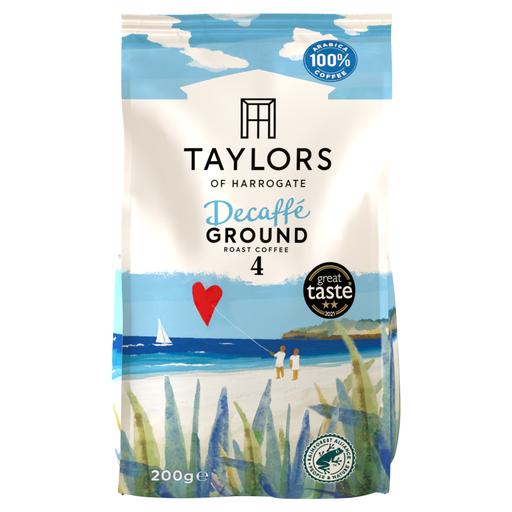 Image unavailable
A 200g ground-decaf option if you want to compare a disclosed process and flavour description for your gathering. Its product description states a water-based decaffeination method, 100% Arabica coffee, roast level 4 and caramel and malt notes. Check the pack’s preparation guidance against the brewer you will use, and do not assume that decaf means caffeine-free.
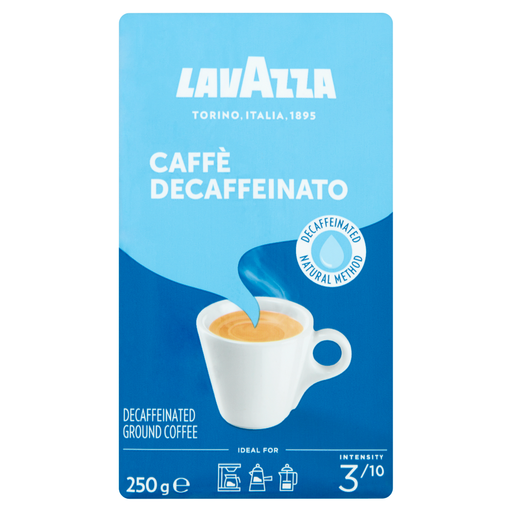 Image unavailable
This 250g decaf ground-coffee pack is another option for serving friends. Check the Classico pack for suitability with your brewer: the preparation methods and carbon-dioxide process described for Lavazza My Easy Day Decaf should not be assumed to apply to Classico. Decaf should not be presented as caffeine-free.
Start with products that name your brewing method. Rombouts specifies its medium-ground Decaf for filter and cafetière use and suggests starting at 60g per litre; Tesco Finest lists both cafetières and filter machines for its Decaffeinated Colombian Ground Coffee. Check the instructions on the pack you choose.
No. The British Coffee Association says a small amount of caffeine remains after decaffeination. For a product-specific declaration, illy states that its Ground Espresso Decaffeinated Coffee contains no more than 0.1% caffeine; that figure should not be applied to other products.