Hosts with mixed coffee preferences
Keep decaf and regular coffee clearly labelled when you do not know which guests want to reduce caffeine.


If you do not know everyone’s preference, serve clearly labelled decaf alongside regular instant coffee so guests can choose. Serve only decaf when the group has asked for it; whichever approach you take, choose the decaf by its stated flavour, pack size and preparation directions, and do not promise that it contains no caffeine.
The choice depends on what your guests want to drink and how many decaf cups you expect to make.
Keep decaf and regular coffee clearly labelled when you do not know which guests want to reduce caffeine.
Compare the brands’ stated bold, balanced and medium-roast profiles rather than assuming all decaf instant coffees taste alike.
Consider pack size, preparation directions and current availability before relying on one product for the gathering.
Choose this when: Guests’ caffeine preferences are mixed or unknown.
Trade-off: You need to provide two clearly labelled coffees.
Choose this when: The group has specifically asked for decaf.
Trade-off: It gives guests who want regular coffee no coffee alternative.
| Priority | What to check | Your needs |
|---|---|---|
| Guest preferences | Ask whether everyone wants decaf. If preferences are mixed or unknown, label decaf and regular coffee separately. | I would rather let guests choose than assume the whole group wants the same coffee. |
| Caffeine | Check the specific pack if caffeine content matters to a guest. Nescafé says most caffeine is removed from its Original Decaf; that is not a zero-caffeine promise. | Some guests want a decaf option, but I do not want to describe it as caffeine-free. |
| Stated flavour | Compare product descriptions, not assumed taste: Nescafé calls Original Decaf bold; Kenco describes its Decaf as balanced; Tesco lists Douwe Egberts Pure Decaffeinated as medium roast, strength 3. | I want to pick a description that sounds suitable for the group, knowing that these are brand or retailer descriptions rather than taste-test results. |
| Servings and format | Check pack size and directions against the likely number of decaf drinkers. Sainsbury’s gives 1.8g and 200ml hot water per mug for its Nescafé Original Decaf 100g jar; a different product may use different directions. | A refill works for me if I have a suitable container; otherwise I want a self-contained pack and enough coffee for the planned servings. |
| Availability | Check the current listing before planning around one product. The Sainsbury’s listing for Carte Noire Decaffeinated 100g showed it as out of stock when assessed. | If I have chosen a particular decaf for brunch, I want another option in mind in case I cannot get it. |
A decaf label does not establish zero caffeine in a particular cup. Nescafé, for example, says most caffeine is removed from its Original Decaf.
Describe it as decaf, and check the specific product information if a guest needs a precise caffeine answer.
Nescafé, Kenco, Douwe Egberts and Carte Noire use different flavour or roast descriptions. Those descriptions do not establish which coffee your guests will prefer.
Ask about preferences where you can, and treat the stated profiles as a starting point rather than a taste guarantee.
The amount used per mug changes how many drinks a pack makes. Sainsbury’s bases its 55-mug statement for Nescafé Original Decaf 100g on 1.8g per mug.
Use the directions on the pack you buy and the expected number of decaf drinkers to plan the quantity.
Sainsbury’s listing for Carte Noire Decaffeinated 100g showed it as out of stock when assessed, so a product page alone is not a dependable brunch plan.
Check availability near the gathering and keep another decaf option in mind.
These product-line descriptions can help narrow a flavour or format choice; they are not independent taste comparisons.
Nescafé describes Original Decaf as a bold instant coffee and offers 100g, 190g and 300g jar sizes.
Kenco describes its Decaf as smooth and balanced, with an intensity rating of 7.
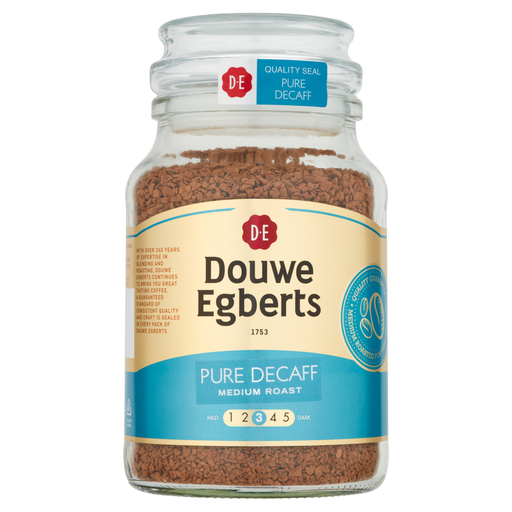
Tesco lists Pure Decaffeinated 190g as medium roasted and strength 3.
Sainsbury’s describes its Decaffeinated 100g as a 100% Arabica blend with a full-bodied, slightly caramelised profile.
These decaf instant coffees offer different stated pack sizes and styles for a brunch where guests may choose decaf. They do not replace the decision about whether to serve regular coffee as well.
 No image available
A 100g decaf option for guests choosing a separate coffee at brunch. Check the pack directions for the number of cups you plan to make, and confirm the container format if that affects your choice.
 No image available
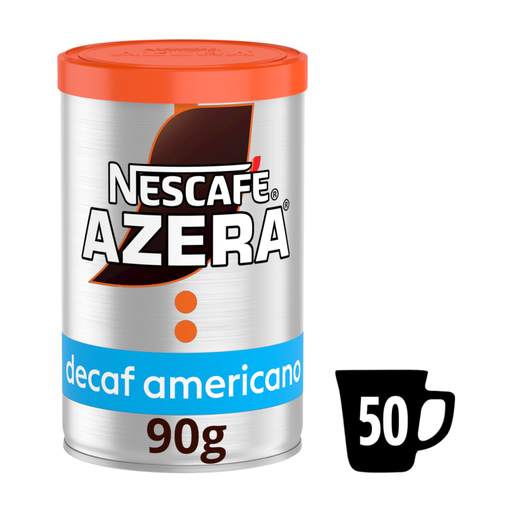
A 90g decaf Americano-style option if that is the style your guests have asked for. Check its own preparation directions and serving quantity when planning for a group.
 No image available
The 300g Original Decaf pack is worth considering when you expect several guests to choose decaf. Nescafé describes Original Decaf as bold; use this pack’s directions rather than applying the serving estimate from its 100g listing automatically.
 No image available
This 190g decaf option has a medium-roast, strength-3 description on Tesco’s listing for the same product. If you plan to serve it hot at brunch, check the pack’s preparation directions.
 No image available
A 190g Gold Blend Decaf option for a brunch decaf selection. Its product description calls the flavour smooth and full-bodied; treat that as a stated profile, and check the pack directions when working out servings.
Do not assume it is. Nescafé says most caffeine is removed from its Original Decaf, which is not a measurement for a particular cup. Check the specific product information if an exact caffeine amount matters.
Serve only decaf if the group has specifically asked for it. When preferences are unknown, clearly labelled decaf alongside regular coffee lets guests choose.
Follow the directions for the product you serve. Sainsbury’s gives one teaspoon (1.8g) with 200ml hot water for a mug of Nescafé Original Decaf from its 100g listing; its Carte Noire listing instead suggests one or two teaspoons per cup.
A refill is convenient if you already have a suitable container; a jar is self-contained. Sainsbury’s lists a 150g Kenco Decaff refill, so compare its format and quantity with the number of decaf servings you expect.
Use a stated serving basis only for the product and preparation amount it describes. Check the pack you buy for directions, ingredients and any information your guests need, and check current availability before depending on a particular coffee.