Start with a plain decaffeinated instant coffee if you want to control what goes into your mug, then check the ingredients and prepared-drink nutrition before choosing a flavour or jar size. Diabetes UK includes unsweetened coffee among drinks for people living with diabetes, but a decaf cappuccino sachet can contain milk powder and glucose syrup even when labelled unsweetened. Decaf also retains some caffeine, so it is a choice for reducing caffeine, not eliminating it.
Who is choosing?
People who usually drink coffee black
If you want to control what is added to your drink, look for a decaf jar listing coffee as its ingredient and prepare it without added sugar. Diabetes UK includes unsweetened coffee among drinks for people living with diabetes.
Coffee drinkers reducing caffeine
Decaf may fit a preference for less caffeine, including in an evening coffee, but it is not necessarily caffeine-free. If you have an individual caffeine limit, check what advice applies to you.
Buyers considering cappuccino sachets
A pre-portioned, frothy drink is different from plain instant coffee. Sainsbury's lists skimmed milk powder and glucose syrup in NESCAFÉ Cappuccino Decaf Unsweetened; one mug prepared with water contains 7.7g carbohydrate and 4.0g sugars.
What should you check?
Choose between plain coffee and a mixed coffee drink before comparing roast descriptions or jar sizes. Read nutrition figures on the basis of the drink you will actually prepare.
| Priority | What to check | Your needs |
|---|
| Ingredients |
Check whether the pack lists coffee alone or also contains ingredients such as milk powder or glucose syrup. Do not use “decaf” or “unsweetened” as a substitute for reading the list. |
I want to decide for myself what goes into my coffee, rather than buy a ready-mixed coffee drink. |
| Prepared-drink nutrition |
Compare carbohydrate and sugars for the stated serving, noting whether figures are per mug or per 100ml. NESCAFÉ lists 0.1g sugars per prepared mug for its Original Decaf and Gold Blend Decaf; Sainsbury's lists 7.7g carbohydrate and 4.0g sugars per prepared mug for NESCAFÉ Cappuccino Decaf Unsweetened. |
If I add milk, sugar or syrup, I need to account for those additions as well as the coffee. A sachet's “unsweetened” name does not tell me its carbohydrate content. |
| Caffeine |
Look for an explicit decaf label, but do not interpret it as zero caffeine. NESCAFÉ explains that decaf coffee retains a small amount. |
I'm choosing decaf to reduce caffeine; if I have a specific limit, I need advice appropriate to that limit. |
| Flavour and format |
Compare the stated roast or blend and choose a jar size you will use. Check ingredients separately: a flavour description does not establish the drink's nutrition. |
A coffee I enjoy matters, but I don't want roast or flavour wording to distract me from what is in the mug. |
Common label mistakes
-
Reading “decaf” as a nutrition claim
Decaf describes caffeine reduction, not the carbohydrate or milk content of a drink. Sainsbury's lists glucose syrup and skimmed milk powder in NESCAFÉ Cappuccino Decaf Unsweetened.
Decide whether you want plain coffee or a mixed coffee drink, then check ingredients and nutrition for the prepared serving.
-
Checking the coffee but not your additions
A plain coffee made with water is not the same drink once you add milk, sugar or syrup.
Use the stated preparation as your starting point and account for anything you put in the mug separately.
-
Assuming decaf contains no caffeine
NESCAFÉ explains that a small amount of caffeine remains in decaf coffee. This matters if you have been given a specific caffeine limit.
Treat decaf as a caffeine-reduction choice and seek individual advice when a strict limit applies.
-
Relying on an older product description
Tesco warns that food ingredients and nutrition can change when products are reformulated.
Check the current pack for ingredients, allergens and nutrition, particularly when comparing a plain coffee with a coffee-drink sachet.
Brand and product-line references
These examples describe named decaf products, not every drink or sachet sold under the same brand.
NESCAFÉ
Original Decaf and Gold Blend Decaf are plain soluble-coffee options with different stated flavour profiles.
- NESCAFÉ describes both named products as coffee-only and lists 0.1g sugars per prepared mug for each.
- Those figures do not describe NESCAFÉ's mixed coffee-drink sachets or any additions to your mug.
Kenco
Kenco describes its Decaf instant coffee as a medium, balanced roast; Tesco lists a 200g decaffeinated freeze-dried product.
- The stated roast profile gives you a flavour point to consider.
- Check the exact pack's ingredients and prepared-drink nutrition rather than assuming that a roast description answers those questions.
Tesco
Tesco Decaff Gold is a 200g freeze-dried decaf instant coffee.
- Tesco lists Robusta Coffee and Arabica Coffee as its ingredients.
- Tesco advises checking the current label because food-product details can change.
Douwe Egberts
Tesco describes Pure Decaffeinated Instant Coffee 190g as a medium-roasted, freeze-dried coffee.
- The listing identifies the decaf format, jar size and roast description.
- Check the current pack when ingredients or prepared-drink nutrition affect your choice.
Carte Noire
The 100g Decaffeinated Instant Coffee is described by UK retailers as soluble or freeze-dried coffee.
- Sainsbury's gives a suggested serving of 1.8g per cup for this product.
- Check the current pack's ingredients and nutrition before comparing it with a named coffee-only product.
Plain decaf options on Joybuy
These decaf instant-coffee jars are options for preparing a drink yourself, rather than pre-mixed cappuccino sachets. Check the current label and account for anything you add to the cup.
 No image available
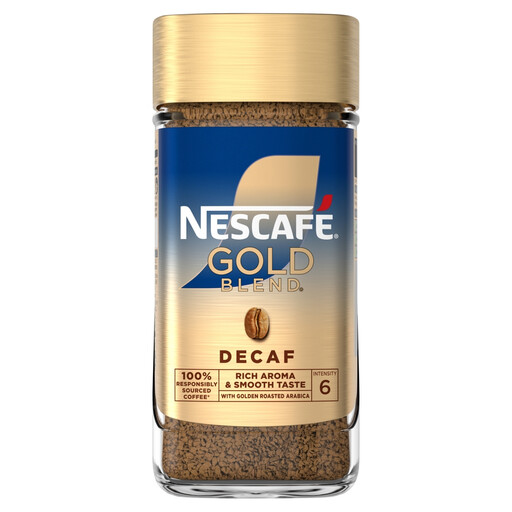
NESCAFÉ Gold Blend Decaf Coffee 190g
A decaf jar for preparing your own coffee and controlling additions. NESCAFÉ describes Gold Blend Decaf as soluble coffee and lists 0.1g sugars per prepared mug for the named product. Check the current pack for the serving basis and any other nutrition figures you need.
View on Joybuy
 No image available
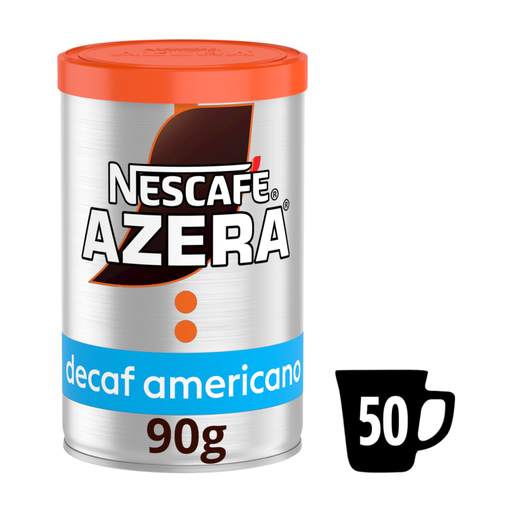
NESCAFÉ Azera Decaf Americano 90g
An Americano-style decaf option if you prefer to prepare the drink yourself. Its listed carbohydrate and sugars figures are each 0.1g per 100ml; check the preparation instructions before comparing them with figures stated per mug.
View on Joybuy
 No image available
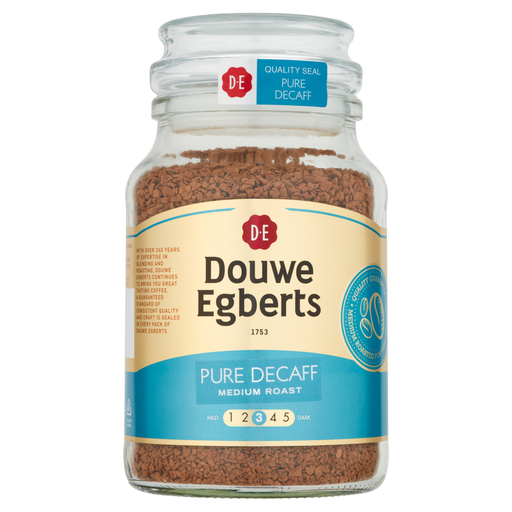
Douwe Egberts Pure Decaffeinated Instant Coffee 190g
A 190g decaf instant-coffee jar for a drink whose additions you choose. If you compare carbohydrate, sugars or caffeine against a specific limit, use the current pack's figures and their stated serving basis.
View on Joybuy
 No image available
NESCAFÉ Original Decaff Coffee 300g
A 300g decaf coffee format for preparing individual mugs. Check the current jar's ingredients and serving-based nutrition, then account separately for any milk or sugar you add.
View on Joybuy
 No image available
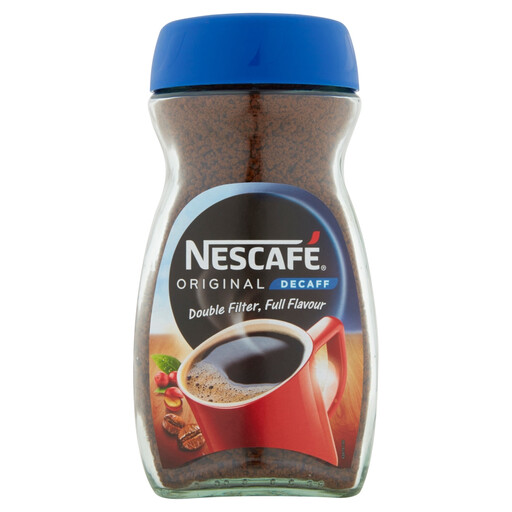
NESCAFÉ Decaf (New Shape) 200g
A 200g decaf jar for making coffee with additions under your control. Read the current label for ingredients and prepared-drink nutrition if those details determine your choice.
View on Joybuy
Frequently asked questions
How do I choose plain decaf coffee for a diabetes-conscious routine?
Start with an unsweetened, coffee-only decaf product and consider what you add to the mug. Diabetes UK includes unsweetened coffee among drinks for people living with diabetes; the ingredients and nutrition of milk, sugar, syrup or creamer change the finished drink.
Does decaf mean there is no caffeine?
No. NESCAFÉ explains that decaf coffee retains a small amount of caffeine. If you have an individual caffeine limit, seek advice appropriate to that limit rather than relying on “decaf” alone.
Is an unsweetened decaf cappuccino sachet the same as plain decaf coffee?
No. Sainsbury's lists skimmed milk powder and glucose syrup in NESCAFÉ Cappuccino Decaf Unsweetened, with 7.7g carbohydrate and 4.0g sugars per mug prepared with water. Compare its prepared-drink figures with your own dietary plan rather than treating it as black coffee.
What should I check on a new jar?
Read the current pack's ingredients, allergen information and nutrition, including the serving basis. Tesco notes that food products can be reformulated, so an earlier product description may not describe the jar you are buying.


