Households making decaf regularly
A larger jar may mean fewer replacements during routine shopping. Choose a size that fits your storage space and that the household is likely to finish while its quality is still acceptable.


For a household that makes decaf regularly, choose a jar size you can finish and store properly; a refill makes sense when you already have a clean, dry container that closes securely. If family members prefer different coffee styles, consider a smaller separate option before committing to several large jars. Brand intensity and flavour descriptions can help narrow the choice, but they do not establish which coffee everyone will prefer.
How often the household makes decaf, whether tastes differ and whether there is a suitable refill container all affect the format worth choosing.
A larger jar may mean fewer replacements during routine shopping. Choose a size that fits your storage space and that the household is likely to finish while its quality is still acceptable.
One everyday jar may not suit everyone. If a particular flavour description appeals to only some drinkers, a smaller separate pack lets the household try it without making it the sole decaf option.
A refill is practical when there is already a clean, dry container that closes securely. Check the refill size against that container before adding it to a large shop.
Start with how much decaf the household uses, then compare pack format, storage requirements and the product descriptions that matter to its drinkers.
| Priority | What to check | Your needs |
|---|---|---|
| Pack size | Check the weight in grams and whether the pack is a jar, tin or refill. Consider where an opened pack will be kept. | We make decaf often, so a larger pack could mean fewer replacements. If only one person drinks it, I may prefer a smaller one. |
| Refill storage | Check that a refill fits a clean, dry container that closes properly. Follow the storage directions on the purchased pack. | I already have a suitable container and would rather refill it than add another jar. |
| Coffee style | Check whether the product is described as freeze-dried, standard instant coffee or a blend with finely milled coffee. Treat brand strength ratings and tasting notes as product descriptions, not a shared scale. | Different people in our household like different styles, so I would try an unfamiliar coffee before buying several packs. |
| Decaf labelling | Check the label of the pack you buy, including any product-specific caffeine information relevant to your needs. Decaffeinated does not mean caffeine-free. | I want decaf for the household, but I would not rely on that word alone if complete caffeine avoidance matters. |
Decaffeination removes most caffeine; it does not establish that a coffee contains none. Nescafé describes its Original Decaf beans as having most of their caffeine removed.
Check the individual product label if caffeine content is important. If complete avoidance is required for a medical reason, seek appropriate professional guidance rather than relying on the word decaf.
Kenco presents its decaf refill as a way to refill a jar. An opened refill still needs suitable storage.
Check that you have a clean, dry container that closes securely and can hold the refill before choosing it over a jar.
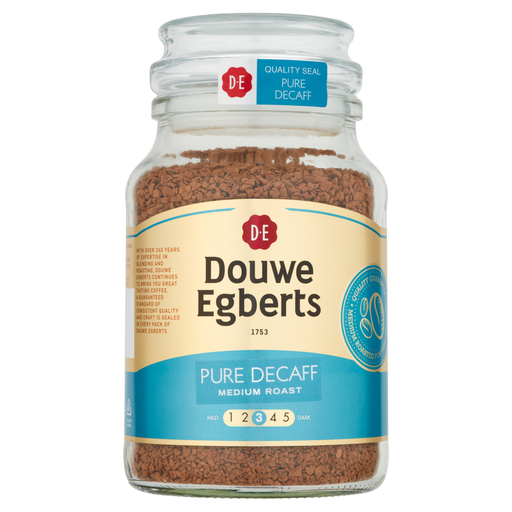
Kenco describes its Decaf as intensity 7, while a Tesco listing describes Douwe Egberts Pure Decaffeinated as strength 3. Those product-specific descriptions are not an independent comparison of how the coffees taste.
Use the descriptions to shortlist a style, then try an unfamiliar coffee before buying several packs for a household with mixed preferences.
These product-line descriptions can help narrow the choice; a brand name alone does not establish which coffee a household will prefer.
Tesco lists own-label Decaffeinated Classic Coffee and Decaff Gold Instant Coffee in 200g packs.
Nescafé lists Original Decaf in 100g, 190g and 300g jars.
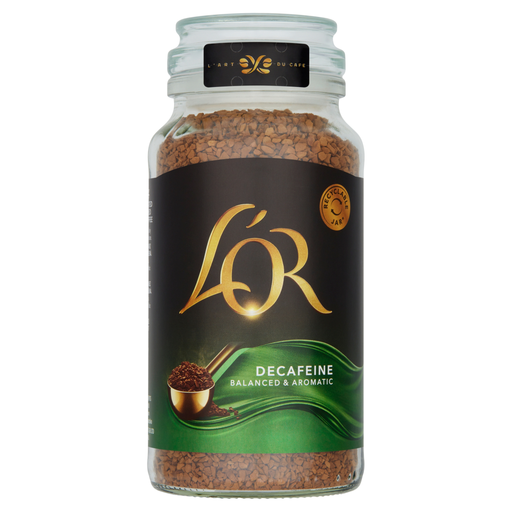
Kenco offers Decaf jars and a 150g decaf refill for an existing suitable container.
A Tesco listing identifies Pure Decaffeinated Instant Coffee as a 190g freeze-dried product.
These instant decaf options include a 300g everyday jar and smaller packs that a household might choose for a different coffee style. Compare the pack details with how regularly each coffee will be used.
 No image available
The 300g pack is an option for a household making this decaf regularly. Check that its size suits your storage space and expected use.
 No image available
This 190g option is worth considering if the household wants to try the medium-roast, strength-3 profile described in Tesco's listing for the same product. It is listed as freeze-dried instant coffee; the strength description is not a cross-brand taste measure.
 No image available
The 190g pack offers another named decaf coffee for an everyday jar. If choosing between this and a larger pack, consider which one the household is likely to use regularly.
 No image available
This 150g decaf pack offers a smaller format if the household wants a separate coffee to try. Follow the directions on the purchased pack when preparing and storing it.
 No image available
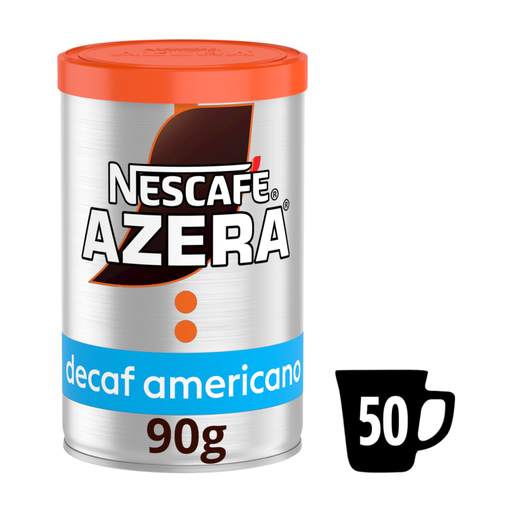
The 90g pack offers an Americano-style decaf option to try alongside a household's regular coffee. Its smaller pack size may matter if several people will drink it often.
No. Decaffeination does not mean complete caffeine removal: Nescafé describes the beans used for Original Decaf as having most of their caffeine removed. Check product-specific information if the remaining caffeine matters to your choice; seek appropriate professional advice if complete avoidance is medically required.
Choose a size according to how many people actually drink decaf and how quickly they will use it. A 300g jar may mean fewer replacements for regular use, while a smaller pack can be more practical for an unfamiliar style or one household member's preference.
Choose a refill when you already have a clean, dry container that closes securely and fits the coffee. Kenco offers a 150g decaf refill intended for refilling a jar; check the pack's storage instructions before transferring it.
Follow each pack's instructions and keep opened coffee dry in a properly closed container. Tesco's Kenco product listing specifies a dark, dry place, while its Douwe Egberts listing specifies a cool, dry place.