First-home shoppers stocking a hot-drinks cupboard
Instant coffee needs a mug and hot water for a basic cup. Choose a jar size according to how often you expect to make it and whether you have tried that coffee before.


A 90g or 100g decaf instant coffee is a smaller commitment if you are still working out which flavour you like; a 190g or 200g jar makes more sense if you expect to use it regularly. Compare the stated roast or blend and check availability before planning your first shop around a particular jar. Decaf does not necessarily mean caffeine-free.
Instant coffee needs a mug and hot water for a basic cup. Choose a jar size according to how often you expect to make it and whether you have tried that coffee before.
Product descriptions offer different starting points: Tesco calls its blend rich and mellow, Nescafé describes Original Decaf as bold, and Tesco lists Douwe Egberts Pure Decaffeinated as medium roasted. These are supplier descriptions, not taste guarantees.
Decaffeinated coffee may still contain caffeine. If you need to avoid it altogether under individual medical advice, do not rely on the word ‘decaf’ as a zero-caffeine assurance.
For a first food shop, settle on a jar size before using roast and flavour descriptions to narrow the choice. Check the pack and live listing before adding a particular product to your basket.
| Priority | What to check | Your needs |
|---|---|---|
| Jar size | Compare the labelled quantity. The checked Nescafé Original Decaf jar is 100g; Tesco Classic is 200g. | I would rather try a smaller jar before committing to a flavour, or buy a larger one if I already expect to use it regularly. |
| Flavour direction | Read the stated roast and bean information. Tesco describes a Robusta-and-Arabica blend; its Douwe Egberts listing states medium roast and strength 3. Flavour descriptions are supplier claims. | A stated roast or blend gives me somewhere to start, but I will not assume it guarantees how the coffee will taste to me. |
| Caffeine | Check that the pack says decaffeinated, and do not treat that description as a promise of zero caffeine. | If avoiding caffeine altogether matters to me, I need more than a decaf label to establish whether a product meets that restriction. |
| Availability | Check the live listing for the pack you want. The Tesco listings checked on 2 October 2026 marked the Kenco and Carte Noire 100g jars out of stock. | Before building my first basket around one brand, I want to know whether that exact jar can be ordered. |
| Preparation | Read the pack directions for the amount of coffee and water. The checked Tesco Classic listing advises 1–2 teaspoons per cup with hot, not boiling water. | I want a straightforward mug, so I will check the directions for the jar I actually buy. |
Decaffeination does not necessarily remove every trace of caffeine, so the label alone cannot establish that a coffee meets a zero-caffeine restriction.
If you have been told to avoid caffeine completely, ask the clinician responsible for that advice rather than assuming any decaf jar is suitable.
Tesco marked its checked Kenco and Carte Noire 100g listings out of stock on 2 October 2026. That does not establish availability for another shop or a later basket.
Check the live listing for your chosen retailer and pack before placing the order.
Words such as ‘bold’, ‘mellow’ and ‘velvety’ describe how suppliers position their coffees, not how every shopper will experience them.
Use the stated roast and blend to narrow your choice; if the flavour is unfamiliar, consider a smaller jar first.
These descriptions concern the specific decaf products named, rather than every coffee sold under each brand.
Tesco Classic Decaffeinated Coffee is a 200g own-label instant coffee.
Original Decaf is one Nescafé option for shoppers who want a 100g jar.
The checked Kenco Decaffeinated Instant Coffee is a 100g freeze-dried option.
Pure Decaffeinated Instant Coffee is a 190g jar for shoppers considering a stated medium roast.
The checked Carte Noire Decaffeinated Instant Coffee is a 100g, Arabica-rich option.
These instant-decaf packs offer different quantities for a first food shop: smaller 90g and 100g options alongside 190g and 200g jars. Choose by the exact product and pack size rather than assuming that similarly named coffees taste alike.
 No image available
A 100g instant-decaf pack if you would rather try a smaller quantity before choosing a larger jar. Check the live listing for availability.
 No image available
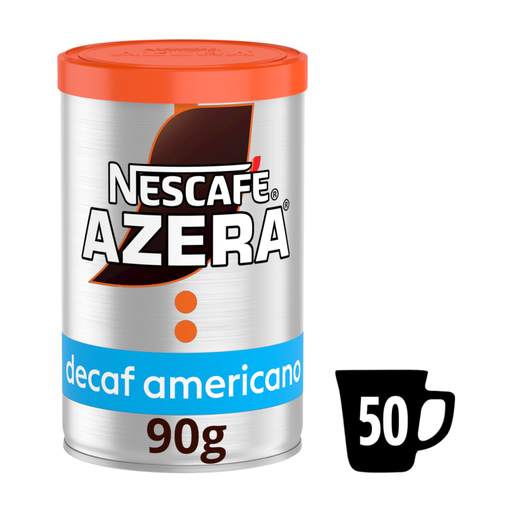
The 90g pack is a smaller-quantity option if you want to try this particular decaf Americano. It is a different product from NESCAFÉ Original Decaf, so do not assume their descriptions apply to both.
 No image available
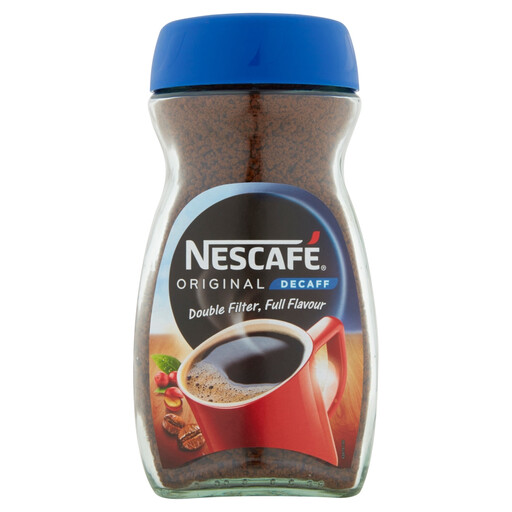
A 200g decaf jar to consider if you expect to use more than a small trial pack. Confirm that this is the NESCAFÉ variant you want rather than treating it as interchangeable with other NESCAFÉ decaf products.
 No image available
The 190g Gold Blend Decaf jar is another larger-pack option. Check the full product name when comparing it with NESCAFÉ Original Decaf or Azera Decaf Americano.
 No image available
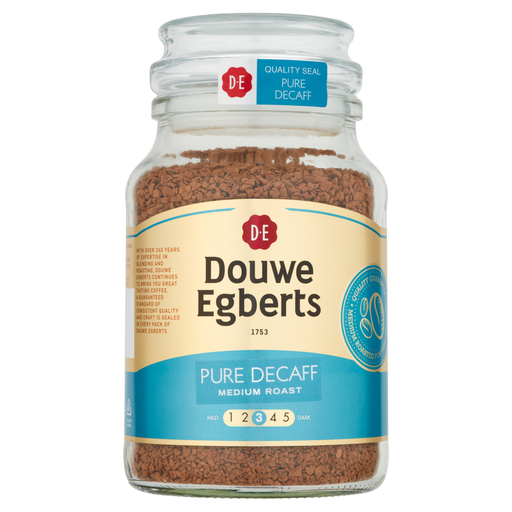
A 190g jar if you want to consider the Pure Decaffeinated product described as medium roasted in Tesco’s listing. Check the pack directions if you plan to make it as a hot drink.
No: decaffeinated does not necessarily mean zero caffeine. If you have been given an individual instruction to avoid caffeine entirely, do not assume a decaf label meets it; ask the clinician responsible for that advice.
A 90g or 100g jar limits how much of an unfamiliar coffee you commit to. If you already know you will use the product regularly, you may prefer to consider a 190g or 200g jar instead; check the exact variant and availability before ordering.
Follow the directions on the jar you buy. The checked Nescafé Original Decaf 100g listing specifies one teaspoon (1.8g) with 200ml hot water, while the Tesco Classic 200g listing advises 1–2 teaspoons per cup with hot, not boiling water. Directions for one product should not be assumed to apply to another.
Keep it in a cool, dry place and check the pack’s best-before and storage instructions. The checked listings for Nescafé Original Decaf, Tesco Classic, Kenco Decaffeinated and Douwe Egberts Pure Decaffeinated give cool, dry storage guidance.